Event · 4th c. BCE – 106 CE · Pre Islamic Arabia
Nabataean kingdom
- Also known as
- An Ríocht Nabataech
- Fanjakana nabateana
- Kerajaan Nabatea
- Kerajaan Nabath
- Keyaniya Nebatî
- Nabataea
Long before their stone-carved capital became a wonder of the ancient world, the Nabataeans survived on the margins of the Arabian Desert by mastering the seasonal rhythms of an unforgiving landscape.
In the dry hills of the southern Levant, three days’ march from the Mediterranean, lies a canyon of pink sandstone that guards one of the ancient world’s most lucrative secrets. Long before the stone-cut theaters and towering temple facades of Petra were carved directly into the cliffs, this "rock"—known to ancient Greek chroniclers simply as Sela—served as a natural vault. Here, nomadic clans stored tons of silver, frankincense, and myrrh, gathered from the southern edges of the Arabian Peninsula and destined for the elite of Greece and Rome. In 312 BCE, when the Macedonian general Antigonus "the One-Eyed" attempted to seize this wealth, his army discovered that these nomads, the Nabataeans, were not mere wanderers of the waste. They were the masters of a silent, subterranean infrastructure, capable of vanishing into a waterless desert where their pursuers routinely died of thirst.
The Greek historian Diodorus Siculus, drawing on the eyewitness accounts of Alexander the Great’s generals, recorded the shock of this first major encounter. Antigonus sent his officer Athenaeus with four thousand infantry and six hundred cavalry to plunder the Nabataean stronghold while the tribe’s men were away at a seasonal market. The Greeks scaled the rock, looted the accumulated spices and silver, and marched away, confident that the desert would swallow any attempt at pursuit. Instead, they were tracked by eight thousand Nabataeans who caught the Macedonian camp asleep, slaughtering all but fifty of the horsemen. When Antigonus sent his son, Demetrius "the Besieger," to avenge the disaster with another army, the Nabataeans used smoke signals to transmit warnings across the peaks, dispersed their herds into secret mountain redoubts, and defended the single, narrow approach to their stronghold with such ferocity that Demetrius was forced to accept gifts and retreat.
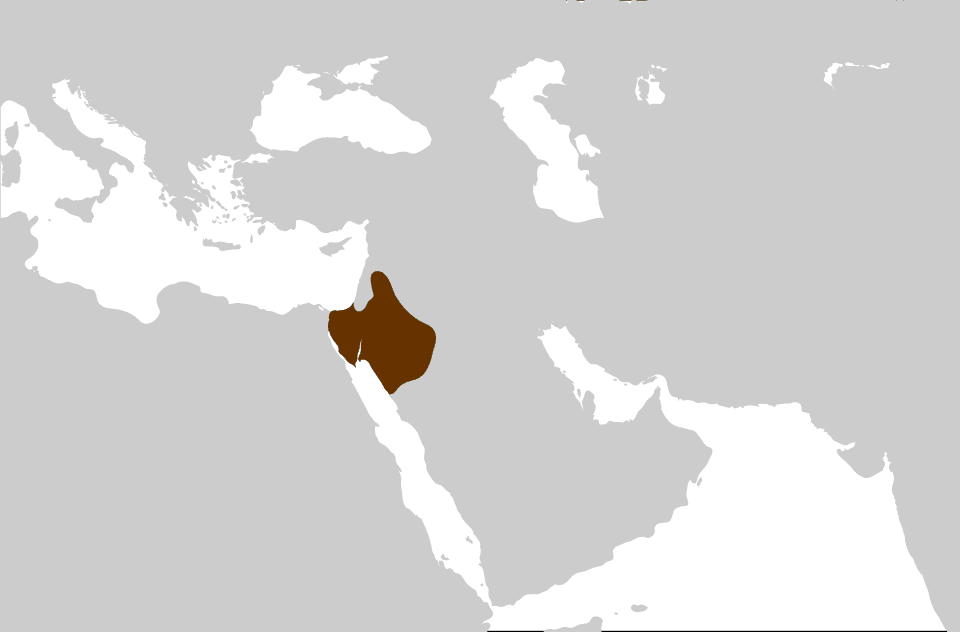
The secret of Nabataean survival in these early centuries lay in their absolute control over water. In a landscape that received only a few inches of rainfall a year, they engineered an invisible network of plaster-lined cisterns, carved into the bedrock and covered with earth to make them indistinguishable from the surrounding desert. They left no markers save those known to themselves. This mastery of hydrology transformed them from nomadic pastoralists into the indispensable middlemen of the ancient luxury trade. For centuries, the Qedarites had dominated the overland frankincense routes, but after a failed fourth-century BCE rebellion against the Achaemenid Empire, the Persian authorities stripped the Qedarites of their privileges. The Nabataeans stepped into the vacuum, establishing a trade corridor that stretched from the kingdom of Lihyan in northwestern Arabia all the way to the Mediterranean port of Gaza.
Connected to
3 links to entries not yet ingested in the Library.