Organization · 1500 BCE · Persian Empires
Zoroastrianism
- Also known as
- An Sorastrachas
- an Sóróstarachas
- baihojgyau
- Bái hỏa giáo
- Magianism
- Majusi
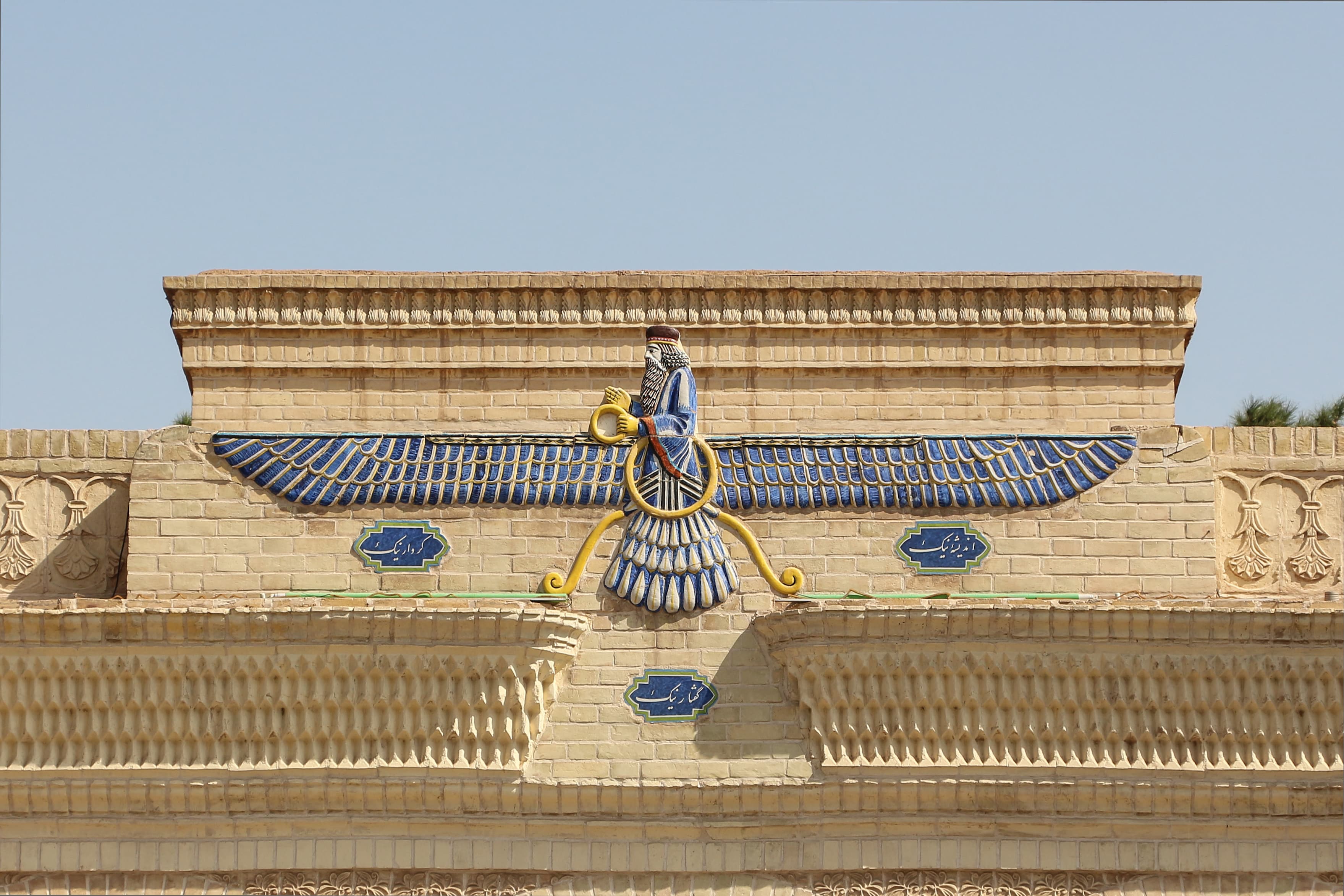
Long before the rise of the global faiths that dominate the modern mind, a transformative moral vision emerged from the Iranian plateau, dividing the cosmos into an eternal struggle between light and chaos.
Before the great stone palaces of Persepolis were carved into the cliffs of Fars, and long before the first scribes committed the sacred dialects of the Avesta to parchment, there was the fire. In the harsh, wind-swept steppes of Central Asia during the second millennium BCE—perhaps as early as 1500 BCE—the ancestors of the Iranians lived in a world populated by a shifting pantheon of unseen forces. They shared these gods with their cousins who migrated south into the Indus Valley: the ahuras and the daevas, spirits of the storm, the waters, the contract, and the hearth. It was a cosmos of perpetual negotiation, maintained by animal sacrifice and the intoxicating pressing of sacred libations. Then, according to the oldest fragments of the faith, a priest and poet named Zarathushtra Spitama—known to the Western world by his Greek moniker, Zoroaster—experienced a series of radical, disruptive visions that severed his community from its ancient Indo-Iranian paganism. He did not merely introduce a new deity; he reordered the architecture of the universe itself, transforming the ancient gods into a stark, cosmic drama of moral choice.
At the center of Zarathushtra’s vision was Ahura Mazda, the "Lord of Wisdom." Unlike the older deities who bargained with humanity for offerings, Ahura Mazda was revealed as an uncreated, supreme, and benevolent creator. He was the source of infinite light, the architect of both gētīg (the visible, material realm) and mēnōg (the invisible, spiritual and mental realm), and the guardian of Asha—the cosmic law of truth, order, and righteousness. Yet, this supreme god was not unopposed. In Zarathushtra’s cosmology, the universe is defined by a fundamental dichotomy. Opposing the creative, life-giving spirit of Ahura Mazda is Angra Mainyu, the destructive, opposing spirit born of evil thought. Angra Mainyu is no fallen angel or errant creation of the supreme god; he is an independent, primal adversary, the embodiment of Druj—falsehood, deceit, wrath, and chaos. This cosmic struggle is not a distant theater of the gods but an intimate reality for every human soul. Humanity, gifted with free will, stands as the crucial battleground. By choosing Asha over Druj, and by committing to the core triadic formula of the faith—good thoughts (humata), good words (hukhta), and good deeds (huvarshta)—ordinary individuals participate in the gradual purification of the cosmos, steering it toward the ultimate, guaranteed triumph of light over darkness.
This theological structure has long puzzled external observers who seek to categorize it. Is Zoroastrianism a monotheism, a dualism, or a polytheism? The answer depends on which century, and which text, one queries. The oldest layer of the Avesta, the —hymns attributed directly to Zarathushtra—reveals a system where Ahura Mazda reigns supreme, yet he acts through a court of seven divine entities known as the , who represent both moral virtues and physical elements of creation. Below them are the , "beings worthy of worship," such as Mithra, the ancient god of covenants, and Anahita, the goddess of the waters. While some modern scholars and historic texts view the faith as a henotheism—reverence for one supreme father-god alongside lesser, venerated divinities—others emphasize its radical dualism, wherein good and evil are co-eternal and locked in absolute combat. This ambiguity became a source of profound vulnerability and transformation in the nineteenth century when the Parsi community of India, descendants of Iranian refugees, came under the scrutiny of Christian missionaries. Led by the Reverend John Wilson, British-era missionaries attacked the Parsis for their "polytheistic" reverence of fire and their "dualistic" cosmology. In response, a German philologist named Martin Haug reinterpreted the Avesta through a Protestant lens, arguing that Zarathushtra had preached a pure, modern monotheism in which all other divinities were merely angels, and Ahura Mazda was the sole source of all energy. This Westernized, reformed interpretation was quickly adopted by the Parsis to defend their ancient faith, permanently reshaping how Zoroastrians understood and presented their theology to the world.
Connected to
- followerAchaemenid Empire550 BCE
- followerDarius I550 BCE
- followerSasanian Empire224 CE
- followerXerxes I519 BCE
+ 12 further connections to entries not yet ingested