Organization · 1810 CE · Enlightenment and Revolutions
Chile
- Also known as
- An t-Sile
- An tSile
- ba
- bangsâ king mauling Amerika
- CHI
- CHI
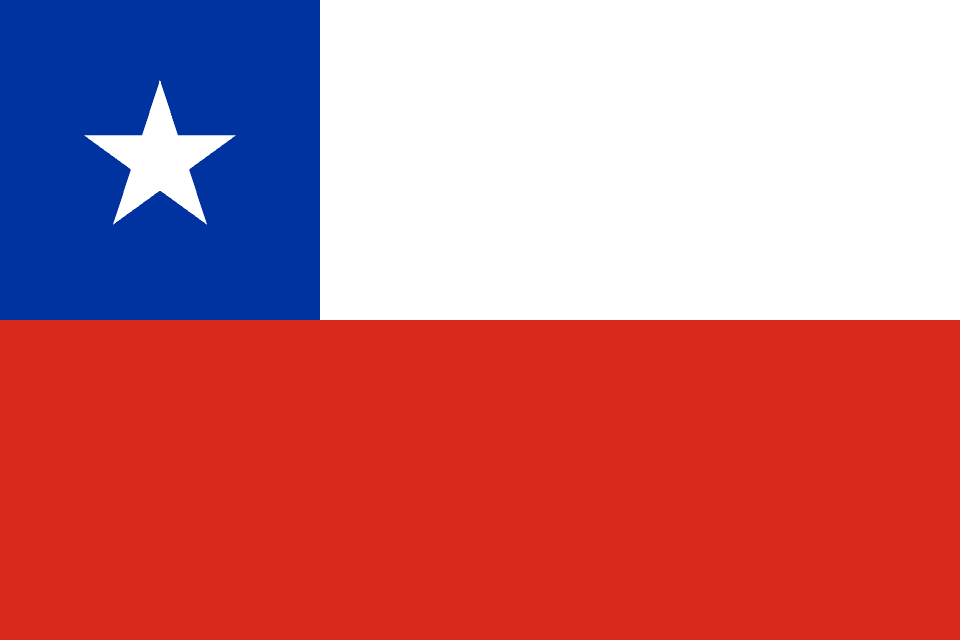
Pressed against the western edge of South America, Chile is defined by its dramatic geography: a narrow sliver of land squeezed between the towering peaks of the Andes Mountains and the vast Pacific Ocean, stretching further south than any other country on Earth.
On the eighteenth of September, 1810, a group of prominent citizens gathered in Santiago to take a step that was both profoundly conservative and radically transformative. Napoleon Bonaparte’s armies had swept across the Iberian Peninsula, deposing the Spanish King Ferdinand VII and placing his brother, Joseph Bonaparte, on the throne in Madrid. Faced with a suddenly illegitimate crown, the elite of Santiago did not declare a revolution; instead, they formed a national government junta to administer the territory in the name of their captive, rightful Bourbon sovereign. Yet this act of professed loyalty contained the seeds of an irreversible departure. Cut off from Europe by the sheer geography of their home—hemmed in by the driest deserts to the north, the towering wall of the Andes to the east, and the vast Pacific to the west—the colonists of this narrow strip of land had long operated with a distinct sense of isolation. By establishing an autonomous government, they crossed a political Rubicon. Today, Chile commemorates this September day as its National Day, marking the moment when a frontier garrison of the Spanish Empire began its metamorphosis into an independent republic.
For nearly three centuries before this fateful gathering, the territory had been shaped by its unique, fortress-like geography and an unusually fierce military reality. When Pedro de Valdivia, a lieutenant of Francisco Pizarro, marched south from Peru in 1540 to begin the conquest of the region in earnest, he was seeking the same glittering fortunes of gold and silver that had enriched his compatriots in the central Andes. He found little of either. Instead, after founding Santiago on February 12, 1541, the Spanish realized that the true wealth of this territory lay in the fertile, Mediterranean-style soils of its central valley—a region that would eventually be celebrated as the highly productive "Vale of Chile." However, utilizing this agricultural bounty required securing a volatile southern frontier. Just beyond the Maule River lay the territory of the Mapuche, a decentralized, farming and hunting people who had successfully resisted the expansion of the Inca Empire decades earlier. They proved equally unyielding to the Spanish. A massive Mapuche insurrection in 1553 resulted in Valdivia’s death and the destruction of Spain’s southernmost settlements. Major revolts in 1598 and 1655 continually pushed the colonial border back northward, forcing the Spanish crown to eventually abolish indigenous slavery in 1683 in a bid to ease Mapuche resistance.
As a result of this perpetual conflict, Chile became one of the most militarized possessions in the Spanish Americas, hosting a massive standing army that drained the treasury of the Viceroyalty of Peru. This constant state of defense, combined with geographic barriers, forged a highly centralized and remarkably homogeneous society. Unlike other parts of the empire, the colony's population was heavily weighted toward those of European descent, a demographic reality captured in late eighteenth-century censuses. A general census conducted under Governor Agustín de Jáuregui between 1777 and 1778 recorded just under 260,000 inhabitants, with 73.5 percent identified as being of European descent, alongside smaller populations of mestizos, indigenous peoples, and Black inhabitants. Secure in their mountain-ringed valley, the landowning elite of Santiago developed a cohesive identity, distinct from both the viceregal court in Lima and the imperial administration in Madrid.
Connected to
- in country · containsChile1810 CE
+ 9 further connections to entries not yet ingested