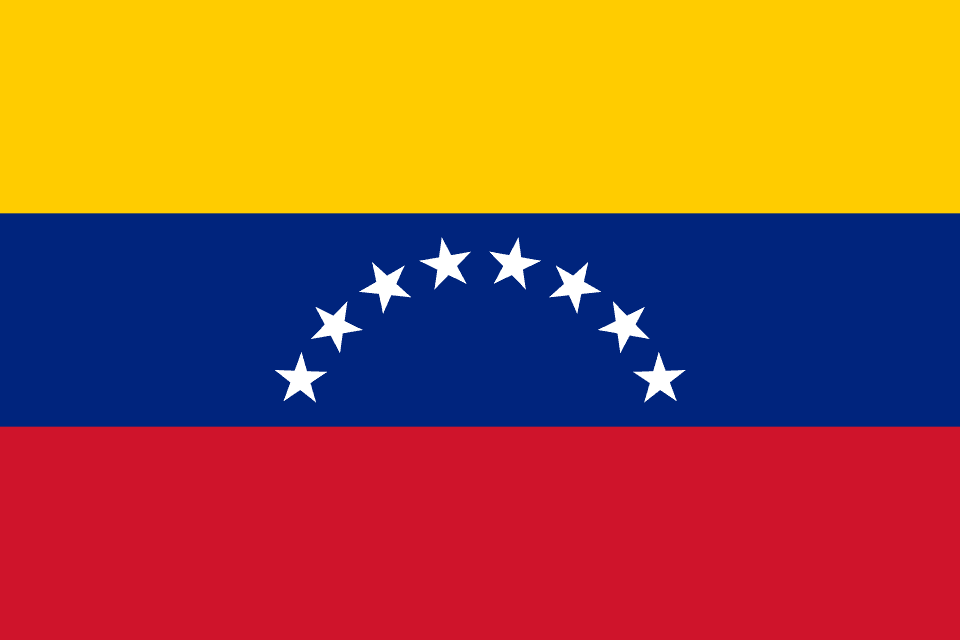
On the northern coast of South America, where the continental landmass meets a scatter of Caribbean islands, Venezuela has spent centuries navigating the volatile currents of sovereignty and power.
In the sweltering coastal heat of July 1811, a group of wealthy landowners, merchants, and radical intellectuals gathered in the colonial capital of Caracas to take a step from which there could be no retreat. For nearly three centuries, the land stretching from the Caribbean coastline to the dense forests of the Orinoco basin had been bound to the Spanish Crown, a territory defined by its complex geography of rugged coastal ranges, vast llanos, and isolated highlands. But the Napoleonic upheaval in Europe had fractured the old imperial authority, leaving a vacuum that the local elite rushed to fill. On the eleventh of July, under the influence of radical voices and veterans of foreign revolutions like Francisco de Miranda, they formally declared the establishment of the First Republic of Venezuela. It was one of the very first Spanish-American territories to attempt to sever its ties with Madrid, embarking on a bold experiment in self-governance that would plunge the region into two decades of devastating warfare and fundamentally reshape the northern tier of South America.
The territory that these early republicans sought to govern was a land of stark environmental contrasts, where human settlement had long been dictated by the contours of the terrain. To the north stood the Maritime Andes, whose elevated valleys provided a temperate refuge from the tropical heat and became the densely populated heartland of the colony. Caracas itself, founded in 1567, sat nestled in one of these defensive mountain valleys, high enough to escape the worst of the coastal diseases and the raids of Caribbean pirates, yet close enough to the port of La Guaira to command the region’s trade. Beyond these northern ranges lay the llanos—a vast, flat basin of grasslands that Spanish explorers and later travelers described as an endless sea of grass. During the wet season, these plains transformed into a massive network of interconnected waterways, while the dry season baked the earth, creating an environment that bred a fiercely independent population of cattle herders known as llaneros. Further south and east rose the ancient Guiana highlands, heavily forested, largely unexplored by Europeans, and home to independent Indigenous groups who had long resisted imperial encroachment.
This diverse geography had supported a pre-Columbian population estimated at one million people, ranging from the nomadic groups of the eastern plains to the highly organized Timoto–Cuica culture in the western highlands, who built stone houses and terraced fields. The Spanish conquest, beginning in earnest in 1522 with the establishment of Cumaná, shattered these societies through warfare and the introduction of European diseases. The early colonial period also saw brief, unusual experiments, such as the German colonization initiative of the Welser banking family in the mid-sixteenth century, who sought the mythical riches of El Dorado before their concession was revoked by the Spanish Crown. Over the centuries, Spain consolidated its rule, eventually organizing the territory into an autonomous Captaincy General in 1777. The colonial economy relied on the labor of enslaved Africans and Indigenous peoples to cultivate agricultural commodities like cocoa and coffee, but this stable, highly stratified society harbored deep internal tensions that the crisis of 1811 would violently unleash.
+ 6 further connections to entries not yet ingested
The high-minded idealism of the First Republic’s founders quickly collided with the harsh realities of a deeply divided society. The declaration of independence was not met with universal acclaim; instead, it triggered a brutal civil war. The royalist cause found powerful allies among the llaneros of the plains, who viewed the Caracas-based republican elite with deep suspicion. The vulnerability of the infant republic was laid bare in 1812 when a catastrophic earthquake struck Caracas, leveling much of the city. Royalist clergy successfully framed the natural disaster as divine retribution for defying the Spanish monarch, breaking the morale of the republican forces and bringing a swift end to the First Republic. This pattern of brief republican ascendancy followed by crushing defeat defined the decade. Simón Bolívar, emerging as the dominant figure of the independence struggle, launched a daring campaign from neighboring New Granada in 1813 to establish a Second Republic, only for it to be destroyed by the royalist commander José Tomás Boves and his devastating cavalry of llaneros.
It was not until the establishment of the Third Republic in 1817, situated in the defensible southern regions of Guayana and the plains, that the patriots found a stable base. Realizing that the liberation of Venezuela was inextricably linked to the fate of the rest of the continent, Bolívar and his generals coordinated their efforts across colonial borders. At the Congress of Angostura in 1819, they decreed the union of Venezuela with New Granada to form a grand, unified state known as the Republic of Colombia, or Gran Colombia. The decisive blow against Spanish power on Venezuelan soil was struck on the plains of Carabobo on June 24, 1821, where republican forces, aided by the British Legion, routed the royalist army. Final independence was sealed in 1823 at the naval Battle of Lake Maracaibo, bringing an end to a conflict that had cost the lives of up to one-third of the Venezuelan population.
The legacy of the 1811 declaration and the long war that followed cast a shadow over the new nation. When Gran Colombia fractured in 1830, Venezuela emerged as a fully sovereign state under the leadership of the legendary general José Antonio Páez, but it was a country devastated by war, stripped of its colonial wealth, and dominated by regional military strongmen. The nineteenth century became an era of political instability and civil strife, as rival caudillos fought for control of a weak state. The old agricultural economy, based on coffee and cocoa, struggled to recover from the decades of chaos. It was not until the early twentieth century that the discovery of vast oil reserves in the Maracaibo basin transformed Venezuela from an impoverished agricultural exporter into one of the world’s leading oil producers, fundamentally altering its economic trajectory and embedding it deeply within the global financial system.
This sudden, immense mineral wealth created a modern state of striking contradictions. For a time in the latter half of the twentieth century, Venezuela stood as a rare beacon of democratic stability and economic prosperity in a region otherwise dominated by military dictatorships. Yet, this prosperity was precarious, built entirely on the volatile price of a single commodity. When global oil markets collapsed in the late twentieth century, the resulting economic shocks triggered severe political crises, widespread social unrest, and a total collapse of public trust in the traditional political establishment. This disillusionment paved the way for the rise of a highly polarizing populist movement under Hugo Chávez, which promised to redistribute the nation's wealth but ultimately initiated a period of severe democratic backsliding. In the twenty-first century, the nation that had pioneered South American independence in 1811 found itself trapped in a profound humanitarian and political crisis, characterized by hyperinflation, international sanctions, and the flight of millions of its citizens, leaving the modern republic to grapple with the enduring question of how to translate its immense natural wealth into lasting stability for its people.