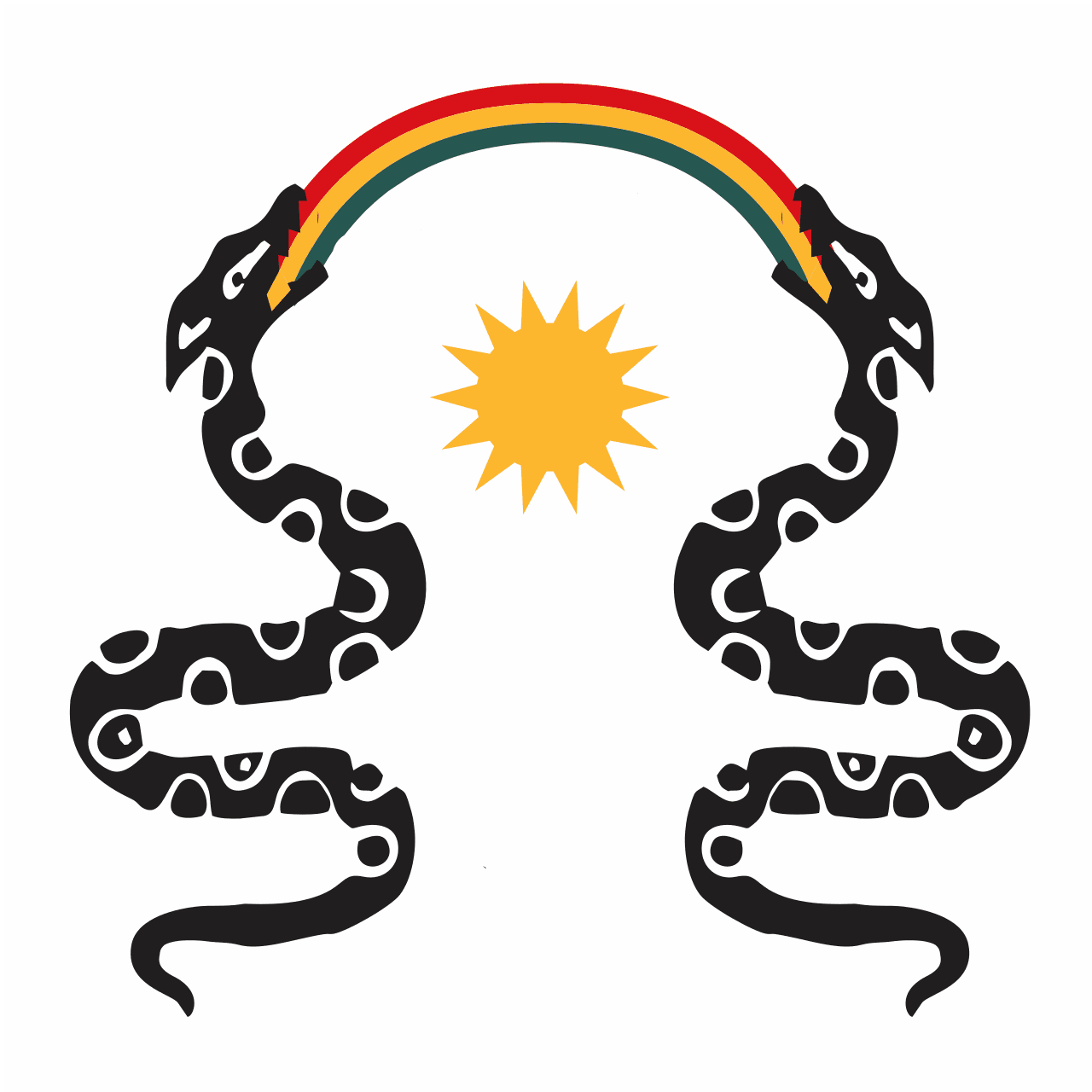
High in the Peruvian Andes, a civilization arose in the early thirteenth century that would build the largest empire in the pre-Columbian Americas without the use of the wheel, draft animals, iron, steel, or a system of writing.
At the high-altitude nexus where the Andean peaks scrape the sky, there is a place where four valleys meet. Today, we know it as Cusco, but to the people who walked its stone-paved streets in the fifteenth century, it was the navel of the world. From this singular mountain valley, a pastoral tribe of the twelfth century transformed themselves into the architects of Tawantinsuyu—the "Realm of the Four Parts." In less than a century, between 1438 and 1533 CE, this state expanded to encompass a territory that stretched from the southwesternmost tip of modern Colombia, through the jagged spine of Ecuador and Peru, across the high altiplano of Bolivia and northwest Argentina, and deep into the sun-baked valleys of Chile. It was an empire comparable in scale and population to the grandest realms of Eurasia, yet it was built entirely on its own terms, thriving in one of the most rugged, vertical landscapes on Earth.
The rise of the Inca was not a sudden burst of genius from a historical vacuum, but the brilliant, final chapter of thousands of years of pristine Andean civilization. Before the Inca, there were the great, expansive empires of the Wari and the Tiwanaku, which had collapsed around 1100 CE. These older cultures had already carved thousands of miles of roads into the mountainsides, mastered the art of terraced agriculture, and constructed massive stone administrative centers. The Inca inherited these ancient landscapes and technologies, but they infused them with an unprecedented organizational intensity. To understand their success is to understand the geography that shaped them. The unique environment of the central Andes allowed for the development of chuño—potatoes freeze-dried in the freezing nocturnal air of the highlands—providing a reliable, long-lasting food source that could support standing armies and massive labor forces. Along with this high-altitude staple came the llama and the alpaca, the only large domesticated beasts of burden in the pre-Hispanic Americas. The boundaries of the Inca Empire roughly traced the natural habitat of these animals, which carried the state’s goods across a landscape defined by sheer drops and dizzying elevations.
For generations, the Inca existed as a modest, localized power in the Sacred Valley, their origins obscured by beautiful, stone-hewn mythologies. In one tradition, the sun god sent a holy couple, Manco Cápac and Mama Ocllo, rising from the depths of Lake Titicaca with a golden staff. Where the staff sank effortlessly into the earth—at Mount Guanacaure in the Cusco Valley—they founded their capital, teaching the local populations the arts of agriculture and weaving. In another, darker legend, four brothers and four sisters stepped out of the central cave of Tambo Tocco. Through betrayal, transformation, and martial prowess—including the fierce Mama Huaco, who routed enemies with her spinning stone —only Ayar Manco survived to establish the dynasty under the name Manco Cápac. For two centuries, his descendants ruled a small city-state, slowly expanding their influence through localized skirmishes, marriages, and strategic alliances.
+ 6 further connections to entries not yet ingested
Everything changed in 1438 CE with the outbreak of the Chanka–Inca War. Facing an existential invasion by the rival Chanka tribe, the ninth Sapa Inca, Pachacuti Cusi Yupanqui, rose to power. His name, meaning "the turn of the world," proved prophetic. After defeating the Chankas, Pachacuti reorganized the Kingdom of Cusco into Tawantinsuyu, dividing the realm into four vast provinces: Chinchaysuyu to the northwest, Antisuyu to the northeast toward the Amazon, Kuntisuyu to the southwest, and Qullasuyu to the southeast. Pachacuti was a visionary who reimagined the physical and political landscape. He is believed to have ordered the construction of Machu Picchu as a royal retreat or agricultural outpost, and he perfected a highly sophisticated system of imperial expansion.
Pachacuti’s strategy of conquest was remarkably diplomatic before it was militaristic. He would send spies into target territories to assess their military strength, political structure, and wealth. Armed with this intelligence, Inca envoys arrived at the borders bearing lavish gifts—exquisite textiles and luxury goods—extolling the material benefits of joining the empire. If the local rulers accepted the Sapa Inca’s sovereignty, they were assimilated peacefully, keeping their local forms of worship and much of their administrative authority. If they refused, the Inca military machine was unleashed. Following a military conquest, the rebellious local rulers were executed. Their children, however, were brought to Cusco to be educated in the imperial administrative systems, effectively indoctrinating the next generation of provincial elites into the Inca nobility before sending them back to govern their homelands. Through this mixture of carrot and steel, a ruling class of perhaps 15,000 to 40,000 Inca nobles successfully governed a diverse subject population of roughly ten million people.
What makes the Inca Empire a marvel of human history is that it achieved this level of complex statehood without many of the tools long considered essential to civilization. The Inca constructed their empire without the wheel, without draft animals like horses or oxen, without knowledge of iron or steel, and without a formal system of writing. Instead of writing, they used the quipu (or khipu)—an intricate system of knotted, colored strings that recorded census data, tax obligations, calendar information, and military logistics with astonishing precision.
Furthermore, the Inca state functioned entirely without money and without markets. The economy was built on the principles of reciprocity and redistribution. The Sapa Inca theoretically owned all land, resources, and means of production. In place of monetary taxes, every able-bodied citizen owed the empire a labor obligation, known as mit'a. This labor built the monumental stone temples, the agricultural terraces that turned vertical cliffs into cascading green stairs, and the Qhapaq Ñan—an extraordinary road network of suspension bridges and stone pathways that connected the most remote corners of the empire. In return for this labor, the state redistributed food, clothing, and beer during elaborate, state-sponsored feasts. The Inca rulers ensured that even in times of drought or crop failure, the state storehouses were filled, providing a safety net for their subjects. Scholars have debated how to classify this unique economic engine, variously describing it as feudal, socialist, or a highly organized system of reciprocal redistribution.
Though the Inca promoted the worship of Inti, the sun god, and considered the Sapa Inca to be his living son, they did not entirely suppress local traditions. Sacred natural features, rocks, and ancestral shrines—known as huacas—were allowed to persist alongside the official solar cult, weaving a complex spiritual tapestry across the Andes.
This vast, interconnected world, which had survived and thrived in the thinnest air on Earth, was ultimately shattered by the arrival of the Old World. In 1524 CE, the Portuguese explorer Aleixo Garcia became the first European to make contact with the empire's periphery. By 1532 CE, Spanish conquistadors had begun their campaign of conquest, capitalizing on a devastating civil war and European diseases that had already begun to ravage the population. By 1572 CE, the last remnant of the Inca state was permanently extinguished. Yet the legacy of Tawantinsuyu was not so easily erased. The monumental stonework of Cusco, built with stones so perfectly fitted that a knife blade cannot pass between them, still forms the foundations of modern Andean cities. The Quechua language, once the official tongue of the empire, is still spoken by millions of people across the highlands today, keeping alive the memory of an empire that conquered the mountains.