The modern state of Uganda traces its name to the ancient southern kingdom of Buganda, a land defined by the waters of the African Great Lakes and the pathways of the Nile basin.
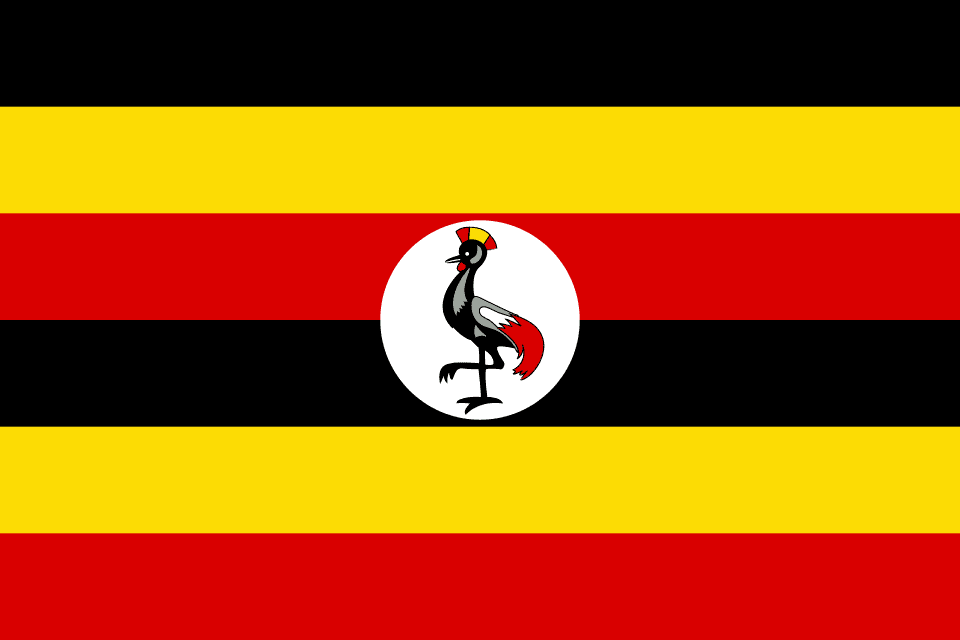
On the ninth of October, 1962, the Union Jack was lowered in Kampala, and a new flag of black, yellow, and red rose in its place. To the world watching from a distance, Uganda’s transition from a British protectorate to an independent nation appeared remarkably serene, almost genteel. Unlike neighboring Kenya, which had been convulsed by the violent Mau Mau uprising, or the Belgian Congo just across the western border, which had collapsed into immediate, bloody anarchy upon its liberation, Uganda had negotiated its freedom through constitutional conferences in London. Yet this outward tranquility masked an extraordinarily complex, fragile architecture. The new state was not a cohesive nation-friendship but a delicate, precarious compromise between a modern secular central government and several ancient, fiercely autonomous kingdoms, chief among them the wealthy and powerful realm of Buganda.
To understand the volatile chemistry of the nation born in 1962 is to look back to the late nineteenth century, when the British Empire first projected its power into the African Great Lakes region. The land they encountered was already a tapestry of sophisticated political structures. For centuries, the southern and western territories—bordered by the immense waters of Lake Victoria, the snow-topped Rwenzori range, and the fertile volcanic hills of the Western Rift Valley—had been dominated by highly organized Bantu-speaking kingdoms, including Bunyoro, Tooro, Ankole, and Buganda. When British explorers searching for the source of the Nile arrived in the 1860s, followed by Anglican and Catholic missionaries in the late 1870s, they found a regional superpower in Buganda. Under the rule of the Kabaka, or king, Buganda possessed a centralized bureaucracy, a formidable standing army, and an acute sense of diplomatic strategy.
The British, arriving with a deep-seated prejudice against Buganda's rival, the ancient western kingdom of Bunyoro, formed a fateful alliance with the Kabaka's court. When the Imperial British East Africa Company found itself sliding into bankruptcy amid local religious wars between Protestant, Catholic, and Muslim factions, the British government stepped in, formally declaring the Uganda Protectorate in 1894. In the decades that followed, the British actively favored Buganda, using its administrators as agents to pacify and govern other regions, and even partitioning half of Bunyoro’s territory to reward Buganda for its loyalty. This administrative favoritism carved a deep, lasting resentment into the geography of the protectorate, creating a north-south divide where southern Bantu agricultural kingdoms enjoyed disproportionate privilege and economic development, while the drier, Nilotic-speaking north was largely treated as a labor pool for the military and police.
+ 5 further connections to entries not yet ingested
As the wind of decolonization swept across the continent in the mid-twentieth century, the central political problem of Uganda was not how to expel the British, but how to govern a territory dominated by a single, wealthy monarchy that refused to submerge its identity into a unitary state. Buganda, whose language Luganda was widely spoken and from whose name the very word "Uganda" was derived, did not seek independence for itself; rather, its leadership sought to preserve its historic royal privileges and special status within any future national framework. Within Buganda itself, a bitter political chasm opened between those who demanded absolute loyalty to the Kabaka and those, primarily Catholics organized under the Democratic Party, who envisioned a modern, secular democracy.
The impasse was broken by a brilliant, soft-spoken politician from Northern Uganda named Milton Obote. Recognizing that no single party possessed a clear majority to govern, Obote forged a highly improbable marriage of convenience. His party, the Uganda People’s Congress—which represented a loose coalition of non-Buganda interests determined to correct the regional imbalances that favored the south—entered into a formal alliance with Kabaka Yekka ("Kabaka Only"), a royalist movement dedicated solely to preserving the Buganda monarchy. When independence arrived in October 1962, this bizarre coalition formed the first government. Obote assumed the executive authority of prime minister, while the King of Buganda, Edward Muteesa II, became the ceremonial president of the new republic.
It was a constitutional arrangement built on sand, uniting two factions with fundamentally incompatible visions for the country's future. For the first two years, the arrangement held, but the structural contradictions could not be ignored. Outside Buganda, Obote’s charismatic speeches and promises of development began to win over local assemblies, causing a steady stream of defections in parliament. As Obote’s faction grew stronger, the necessity of his alliance with the Buganda royalists withered away. By late 1964, the coalition began to fracture, setting off a chain reaction of political maneuvers and escalating tensions that would eventually culminate in the Mengo Crisis of 1966, shattering the independence constitution and setting Uganda on a path of centralized, authoritarian rule.
The political instability of the post-independence era soon invited military intervention. In 1971, Obote was overthrown in a military coup led by his army commander, Idi Amin. Amin’s subsequent eight-year dictatorship plunged the nation into a dark era of state-sponsored terror, economic collapse, and human rights abuses on a catastrophic scale. His expulsion of the country's prominent Asian minority—descendants of the indentured Indian laborers who had arrived in the 1890s to build the Uganda Railway and had stayed to become the backbone of the retail and cotton-ginning sectors—crippled the national economy. Amin's brutal regime was finally ended in 1979 by an invasion of Tanzanian forces allied with Ugandan exiles.
Yet peace remained elusive. A highly disputed general election in 1980 returned Obote to power, sparking a devastating six-year guerrilla war in the countryside. It was not until 1986, when Yoweri Museveni’s National Resistance Movement emerged victorious from the bush, that a measure of enduring stability and economic recovery was restored. Under Museveni's long tenure, Uganda rebuilt its shattered institutions, made pioneering strides in public health—particularly in combating the HIV epidemic—and saw its service-driven economy grow, aided by its fertile agricultural land, rich national parks, and newly discovered oil reserves. Yet, the challenges of political oppression, human rights concerns, and the lingering scars of regional conflicts, such as the brutal insurgency of the Lord's Resistance Army in the north, have continued to cast a shadow over its democratic aspirations.
Today, Uganda stands as a complex testament to the enduring legacies of its colonial creation. Its borders, defined by European cartographers in negotiations between Brussels, London, and Berlin in the early twentieth century, contain a vast physical diversity—from the high, glaciated peaks of the Rwenzori and the volcanic crater of Mount Elgon to the massive freshwater expanse of Lake Victoria, where the Nile begins its long journey north. Yet the underlying tension that characterized the dawn of its independence in 1962—the challenge of weaving distinct, ancient societies with their own deep-seated identities into a single, equitable, and democratic nation—remains the central theme of its ongoing history.