Person · 1837 CE – 1905 CE · East African Civilizations
Tippu Tip
- Also known as
- Hamad bin Muhammad bin Juma bin Rajab el Murjebi
- Hamed ben Mohemmed ben Juma
- Hamed ben Mohemmed ben Juma
- Hamed ben Mohemmed ben Juma
- Hamed ben Mohemmed ben Juma
- Hamed bin Mohammed
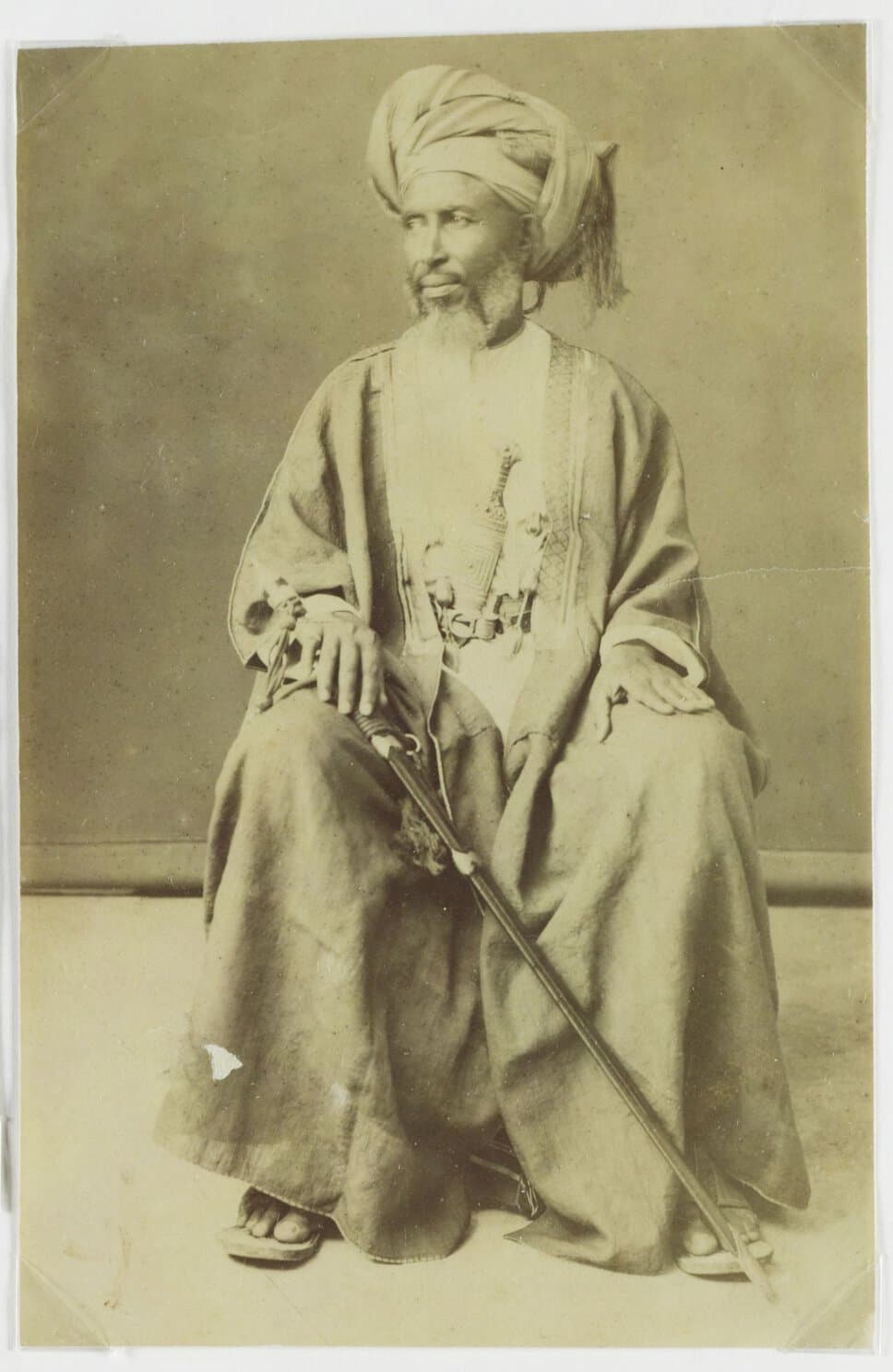
The crackle of gunfire in the Chungu territory of Central Africa earned Hamad ibn Muhammad ibn Jumah ibn Rajab ibn Muhammad ibn Said al Murjabi the moniker Tippu Tip, a name he claimed mimicked the sound of his weapons.
By the close of the nineteenth century, the global appetite for billiard balls, piano keys, and personal ornaments was met by a vast, lethal machinery operating deep within the Congo Basin. At the center of this machinery stood a man known to Western explorers, Zanzibari sultans, and Central African chiefs alike as Tippu Tip. Born Hamad bin Muhammad bin Juma bin Rajab el Murjebi around 1832 on the spice island of Zanzibar, he was a child of the Swahili Coast, where Arab and Bantu worlds had fused over centuries of maritime trade. His mother was a Muscat Arab of the ruling class; his father’s family was comprised of coastal traders who had long pushed into the African interior. The name he was born with, however, was quickly eclipsed by his moniker. To some, "Tippu Tip" translated to "the gatherer together of wealth," a tribute to his staggering commercial success. To others, and by his own account, the name was an onomatopoeia—the dry, rattling tip-tip of the muzzle-loading muskets and breech-loading rifles that accompanied his caravans, a sound that heralded either a fortune in trade or the violent destruction of a kingdom.
The world Tippu Tip inhabited was one of dramatic, shifting frontiers. The Sultanate of Zanzibar, under the Busaidi dynasty, was expanding its economic grip on the mainland, fueled by the global demand for ivory and the domestic need for labor on its lucrative clove plantations. At a young age, Tippu Tip set out into the interior with a modest force of about one hundred men. What began as a series of standard trading expeditions quickly evolved into a campaign of territorial conquest and state-building. He possessed an acute understanding of both military tactics and the political fractures of the African interior. In the late 1850s, during a campaign in Unyanyembe in modern-day central Tanzania, he allied with coastal merchants to overthrow the local chieftain, Mnywa Sere. Operating with a force of only about three hundred men armed with muskets, Tippu Tip’s contingent breached the earthen ramparts of the chieftain’s fortified village, captured Mnywa Sere, and replaced him with a puppet ruler, Mkasiva. Though Tippu Tip was wounded by an arrow in the assault, the engagement established his reputation for decisive, ruthless action.
This reputation was cemented in 1867 during his campaign against King Nsama of Itahua, a powerful ruler in the difficult, densely forested terrain of the Haut-Uele district near the Ituri forest. Hearing rumors of Nsama’s immense wealth in gold, copper, ivory, and slaves, Tippu Tip marched into Itahua. Nsama, who could reportedly mobilize thousands of warriors, grew hostile toward the coastal merchants. When Nsama’s forces ambushed Tippu Tip’s caravan, the trader rallied his small force of just over one hundred musketeers. Despite being wounded by an arrow early in the fighting, Tippu Tip maintained strict discipline among his men. While Nsama’s warriors attacked from all sides without cohesive formation, the disciplined volleys of Tippu Tip’s riflemen cut down hundreds of attackers in the opening hours.
Connected to
7 links to entries not yet ingested in the Library.