The transition of Romania from a defeated Axis power to a sovereign communist state began under the shadow of Soviet occupation at the close of World War II.
When King Michael’s name day arrived on November 8, 1945, a crowd of thousands gathered in the grand plaza before the Royal Palace in Bucharest. It was a pro-monarchy demonstration, a desperate public rally for a young king who had, only a year prior, courageously arrested the pro-Axis dictator Ion Antonescu and pivoted Romania to the Allied side. But the gratitude of the West was distant, and the shadow of the Soviet Union was immediate. As opposition supporters clashed with communist-aligned workers, police, and soldiers, the streets of Bucharest descended into chaotic violence. Soviet officers ultimately stepped in to restrain the Romanian forces from firing on the civilians, restoring a fragile, tense peace. It was a stark, early lesson in the new anatomy of Romanian power: the monarchy remained in the palace, but the keys to the state had already been handed to others.
The Soviet occupation, justified by Romania’s long and devastating participation in the German invasion of the USSR, set the stage for a systematic political dismantling. Though Romanian troops had fought bitterly under Soviet command in the war’s final chapters—driving through Transylvania, Hungary, and into Austria—the Paris Peace Treaties refused to recognize Romania as an allied co-belligerent. The Yalta Conference had already signaled that the country fell within the Soviet sphere of influence. Step by step, the minor wartime role of the Romanian Communists expanded. By March 1945, Dr. Petru Groza of the Ploughmen’s Front, a party closely tethered to the Communists, became prime minister. When King Michael attempted a "royal strike"—refusing to sign legislation to force Groza’s resignation—Groza simply bypassed the crown, enacting laws without the royal signature.
To build a popular base, Groza’s early government instituted sweepingly popular measures: a radical land reform that won over the southern and eastern peasantry, and the granting of women’s suffrage, which captured the support of educated women. Yet behind these reforms lay a relentless drive to consolidate control. The elections of November 19, 1946, saw the Communist-led Bloc of Democratic Parties claim an overwhelming eighty-four percent of the vote, a victory achieved through systemic electoral fraud, intimidation, and assassinations, as later-discovered archives would confirm. Centrist opposition was rapidly criminalized; the National Peasants’ Party was dismantled and its leaders jailed after they were caught meeting secretly with American officials. In December 1947, the final obstacle was removed. Groza and the communist leader Gheorghe Gheorghiu-Dej summoned King Michael to Bucharest, cut his telephone lines, surrounded his palace with pro-communist troops, and forced his abdication at gunpoint. Within hours, Parliament declared the Romanian People’s Republic.
+ 7 further connections to entries not yet ingested
The newborn communist state immediate took steps to reshape Romanian society through violence and economic restructuring. In 1948, the regime nationalized all banks and large businesses. Religion was systematically brought to heel; while the new 1948 Constitution guaranteed a superficial freedom of worship, the state’s true policy was the promotion of Marxist-Leninist atheism. Church properties and schools were nationalized, and the Romanian Greek-Catholic Uniate Church was forcibly dissolved and merged with the Romanian Orthodox Church. The state chose not to eradicate religion, but to make it subservient, using it as an instrument of social control. This transition was accompanied by a brutal domestic purge. Tens or even hundreds of thousands of citizens were arrested, executed, or died in custody during the Stalinist terror of the 1950s, while the party itself fractured into bitter internal rivalries. Gheorghiu-Dej emerged victorious from these factional wars, purging "Muscovites" like Ana Pauker and executing internal rivals to secure his absolute hold on power.
Yet, despite his orthodox Stalinism, Gheorghiu-Dej grew increasingly uneasy with the post-Stalin reforms initiated by Nikita Khrushchev in Moscow. He fiercely resisted plans by the Council for Mutual Economic Assistance (Comecon) to relegate Romania to the role of a mere "breadbasket" for the Eastern Bloc, opting instead to pursue an aggressive plan of heavy industrialization and energy production. In a bid to cultivate a nationalist legitimacy and assert independence from Soviet hegemony, Gheorghiu-Dej closed Romania’s largest labor camps, abandoned the grueling Danube-Black Sea Canal project, halted food rationing, and raised workers’ wages. He positioned Romania as a sovereign actor willing to cooperate with any nation that respected international equality, warming relations with China and paving the way for the withdrawal of all Soviet occupation troops from Romanian soil by 1958.
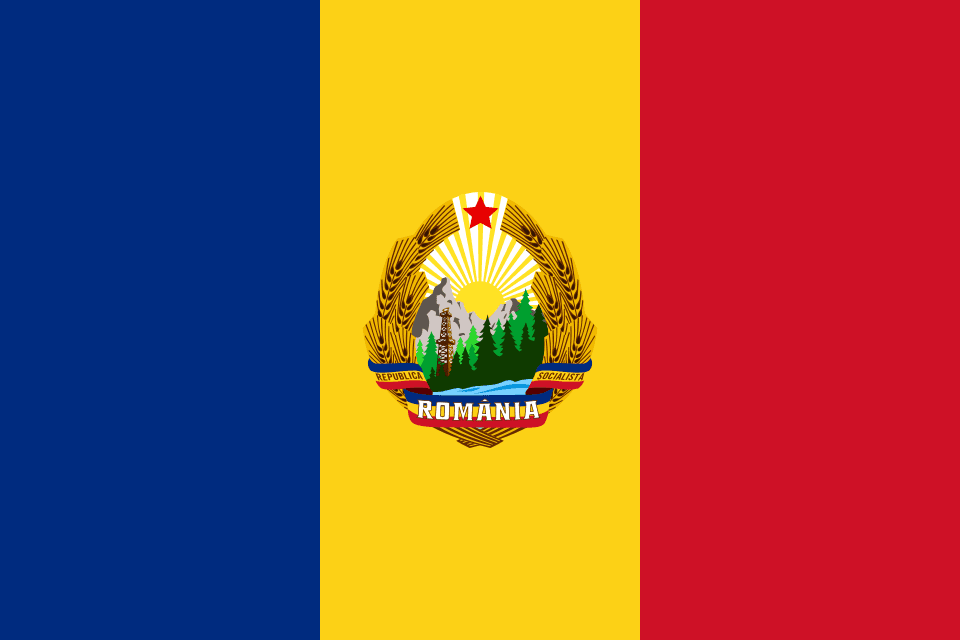
When Nicolae Ceaușescu assumed the leadership of the party in 1965, he inherited a state that had begun to chart a distinct, highly nationalistic course within the Warsaw Pact. Under the 1965 Constitution, the state was renamed the Socialist Republic of Romania, and Ceaușescu began to cultivate an image as a bold, independent-minded leader. His finest hour on the world stage came in 1968, when he publicly and passionately denounced the Soviet-led invasion of Czechoslovakia. This defiance, coupled with a temporary relaxation of domestic repression and high rates of economic growth, won Ceaușescu immense popularity at home and a highly favorable reputation in Western capitals, which viewed him as a valuable maverick within the Soviet bloc. Throughout the 1950s, 1960s, and 1970s, Romania experienced rapid urbanization, rising literacy, improvements in infant mortality and life expectancy, and expanded women's rights.
This golden era of national autonomy, however, carried the seeds of its own ruin. The rapid economic expansion of the 1970s was fueled heavily by Western credits, which the Romanian state struggled to service as the global economy shifted. In response, Ceaușescu pivoted toward a disastrous policy of extreme economic austerity and hyper-centralized control. The domestic relaxation of the late 1960s vanished, replaced by an pervasive system of state surveillance and an intense cult of personality around Ceaușescu and his wife, Elena. By the late 1970s, Romania had regressed into one of the most totalitarian and repressive regimes in modern history. The relative prosperity of the mid-century dissolved into a dark decade of stagnation in the 1980s, characterized by severe food shortages, strictly rationed electricity, and the chilling silence of a population monitored by a ubiquitous secret police.
The end, when it arrived in December 1989, was the swiftest and most violent of all the Eastern Bloc collapses. Amidst a wave of anti-communist revolutions sweeping Europe, the Romanian population rose up, and the military abandoned the regime. Ceaușescu and his wife were captured, subjected to a hasty military trial, and executed on Christmas Day. Though the 1965 Constitution remained temporarily in place to guide the initial transition, it was heavily amended to dismantle the socialist apparatus. On December 8, 1991, a nationwide referendum approved a new constitution, officially replacing the socialist system with a democratic, semi-presidential republic. Romania’s long, painful detour through the twentieth century ended where it had begun: in the difficult, chaotic rebuilding of a sovereign, pluralistic state from the ruins of totalitarian rule.