Place · 3rd c. BCE · Classical Greece
Constanța
- Also known as
- Constancia
- Constancia
- Constanta
- Constantia
- Constantsa
- Constantza
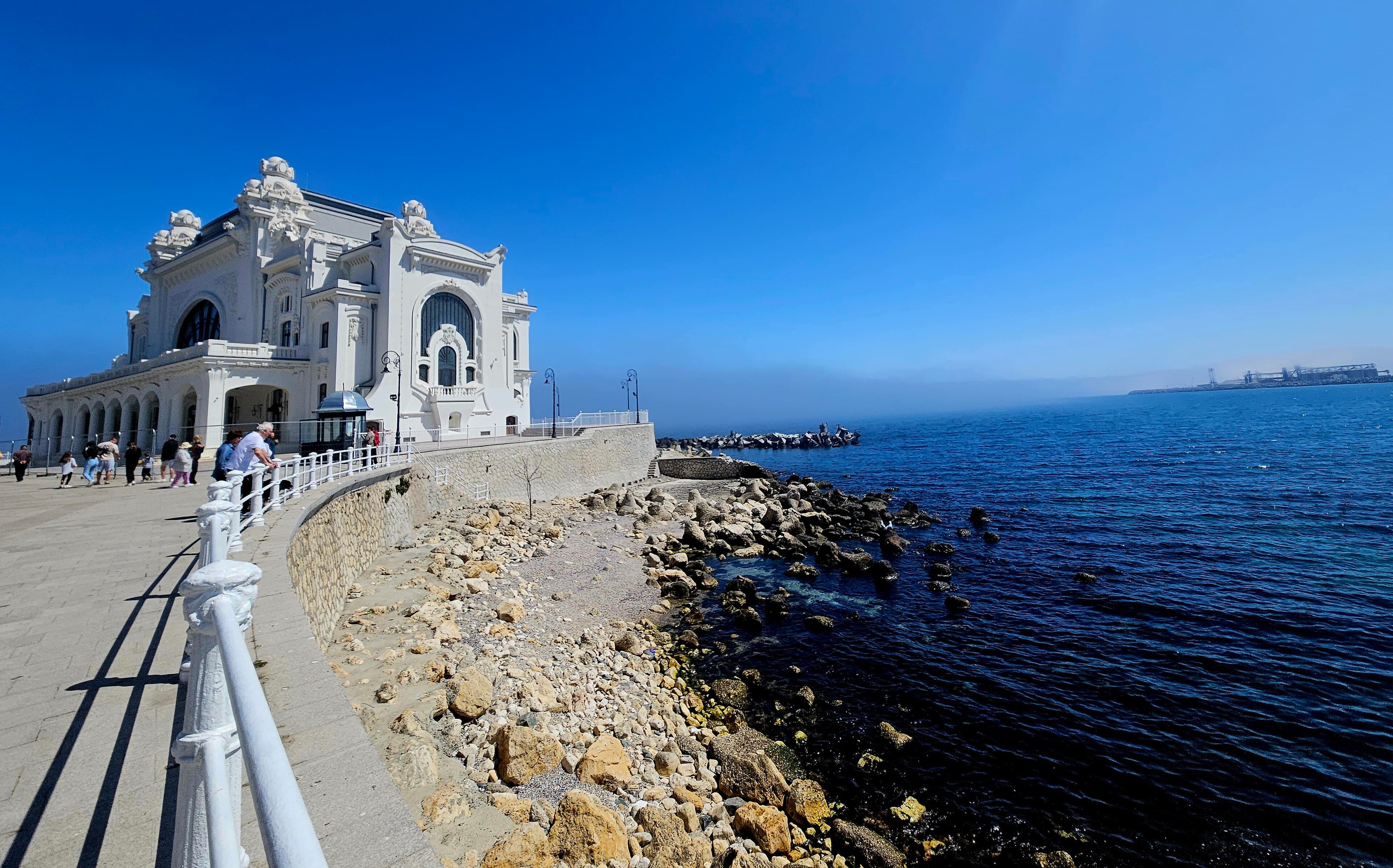
Centuries before it bore its current name, the Romanian port of Constanța was known to the Greek world as Tomis, a colony anchored to a high-cliffed peninsula on the edge of the Black Sea.
In the winter of 8 CE, a small vessel slipped into the harbor of Tomis, carrying a passenger whose despair would echo across two millennia. Publius Ovidius Naso, the most celebrated poet of the Roman world—famed for his witty, sophisticated verses on the art of love—had been banished by the Emperor Augustus to this remote outpost on the western rim of the Black Sea. Ovid found himself stranded on a peninsula of high, wind-swept cliffs, overlooking a treacherous sea that froze in winter. In his agonizing collections Tristia and Epistulae ex Ponto, he lamented his exile to what he described as a war-stricken cultural wasteland, a place where barbarian tribesmen rode past the city walls and the very wine froze in its jars. He died there eight years later, never to see Rome again. Yet the bleak, vulnerable frontier settlement that broke Ovid’s spirit was already six centuries old when he arrived, and it would endure to become Constanța, the oldest continuously inhabited city in Romania.
Long before it was a Roman place of exile, the site was defined by its geography. Founded by Greek colonists in the sixth century BCE, Tomis was blessed with a fine natural harbor, fertile hinterlands, and a strategic position near the Carasu valley, which offered a natural overland shortcut from the sea to the Danube. Sheltered by cliffs from the biting northern winds, the Greek colony grew rapidly. By the fifth century BCE, it had entered the orbit of the Delian League, transitioning from an oligarchy to a democracy. Its commercial success made it a prize worth fighting for; by the middle of the third century BCE, the city was embroiled in a fierce war for control of its emporion, or trading hub. Positioned as a key member of the Hexapolis—a powerful league of six Greek cities on the western Black Sea coast that included Histria, Callatis, and Mesambria—Tomis became a critical node where Hellenistic commerce met the Thracian and Scythian worlds. When Roman legions under Marcus Licinius Crassus swept through the region in 29 BCE, subduing the Odrysian kingdom, they recognized the settlement’s strategic value, annexing the territory up to the Danube and establishing Tomis as the capital of the province of Scythia Minor.
The city’s survival across the subsequent centuries of imperial fragmentation is a testament to its walls and its harbors. As the Roman Empire split, Tomis became Constantiana—likely named in honor of Constantia, the half-sister of Constantine the Great, or perhaps his son, Constantius II. It lay at the seaward terminus of the Great Wall of Trajan, a massive defensive line designed to keep the northern steppe nomads at bay. This protection was sorely needed. In 269 CE, a massive Gothic invasion force breached the outer defenses but failed to take the city itself, destroying only the suburbs beyond the walls. In the winter of 597/598 CE, the Avars laid siege to the city during the Byzantine Emperor Maurice’s Balkan campaigns. By 680 CE, the Bulgarians conquered the region following the Battle of Ongal, and for the next several centuries, control of the port fluctuated like the tides. It was absorbed by the First Bulgarian Empire, recaptured by the Byzantine Emperor John I Tzimiskes in 971 CE, reclaimed by the Bulgarians in 1186, and briefly held by the Wallachian prince Mircea the Elder. Yet throughout these political upheavals, maritime trade persisted. Italian maritime charts of the fourteenth century began to label the port as , reflecting the presence of Genoese merchants who navigated the Black Sea trade routes, leaving behind a modest, twenty-six-foot stone lighthouse that still stands on the peninsula.
Connected to
- in countryByzantine Empire395 CE
- in countryOttoman Empire1299 CE
- in countryRoman Empire27 BCE
+ 12 further connections to entries not yet ingested