Person · 1545 CE – 1598 CE · Korean Kingdoms
Yi Sun-sin
- Also known as
- Admiral Yi Sun-sin
- Almirante Yi
- Ch'ungmu Yi
- I Sun-sin
- I Sun-sin
- I Sun-sin
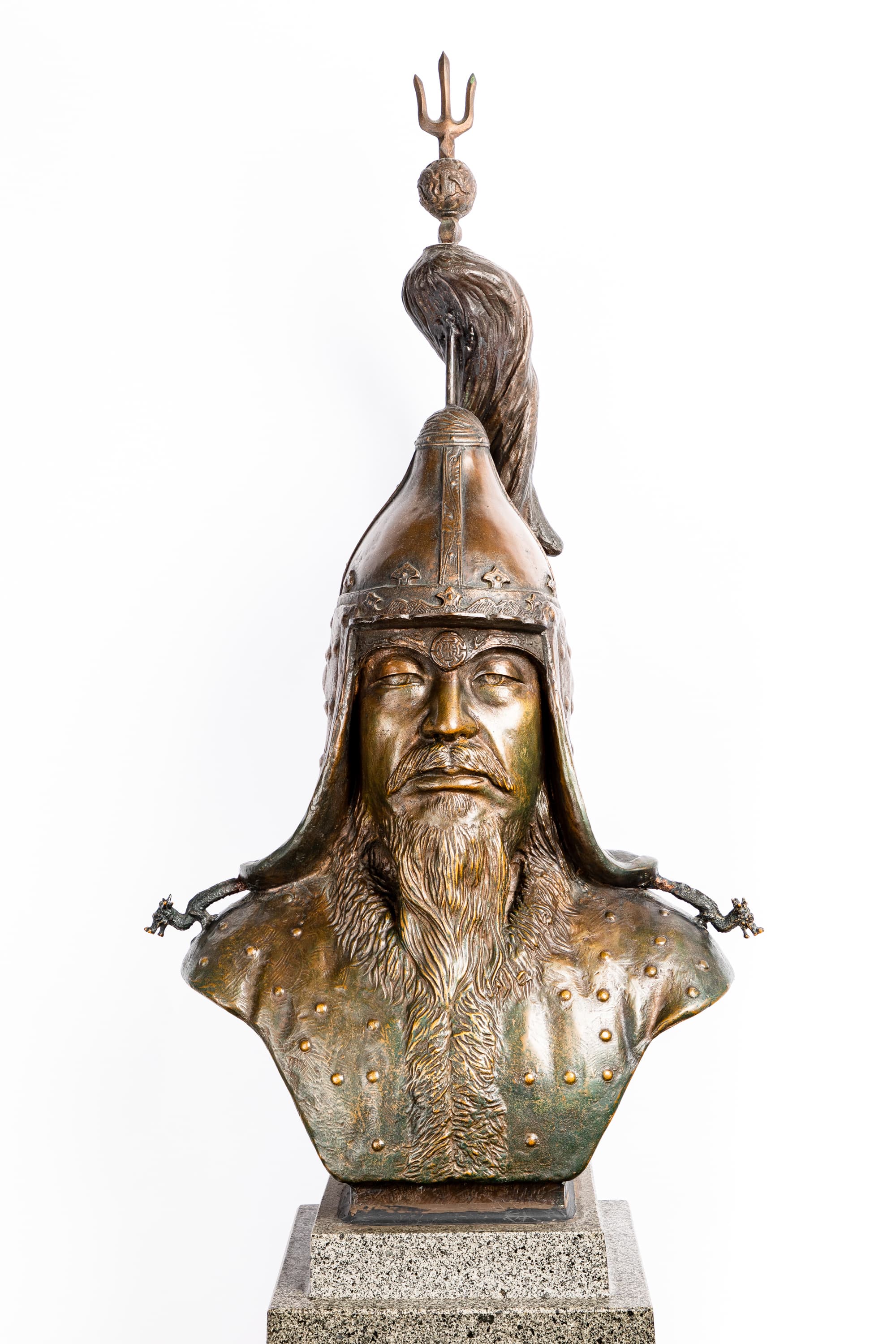
The villagers of Geoncheon-dong learned early on to avoid the home of young Yi Sun-sin, a boy who ruled his childhood war games with a miniature bow and arrow, ready to shoot at any adult he deemed unfair.
The trajectory of Korea’s survival in the late sixteenth century was decided not in the grand audience chambers of Seoul, but in the damp, salt-stung air of the peninsula’s southern coast, under the gaze of a man who had spent his youth failing to secure a place in the world. Yi Sun-sin was thirty-two years old when he finally passed the military examination of the Joseon dynasty in 1576, a late and bruised start for a man of the yangban aristocratic class. During the cavalry portion of the exam, he had fallen from his horse and broken his leg—an accident that would have ended the ambitions of a lesser candidate, but one that Yi met by binding his leg with willow branches and remounting to finish the test. It was a minor, agonizing prelude to a career defined by stubborn endurance against impossible odds. For the next decade and a half, Yi was shifted through the freezing outposts of the northern frontier, fighting the Jurchen marauders, only to be systematically sabotaged by jealous superiors who falsely accused him of desertion, stripped him of his rank, and subjected him to torture. Yet by 1591, as the shadow of a unified, expansionist Japan under Toyotomi Hideyoshi lengthened across the Korea Strait, Yi found himself appointed Commander of the Left Jeolla Naval District. He had never commanded a single ship in battle.
When the storm broke in the spring of 1592, the Joseon state was utterly unprepared. Hideyoshi’s veteran armies, hardened by decades of Sengoku-era civil war and equipped with Portuguese-style firearms, landed at Busan and swept northward with terrifying velocity. Within nineteen days, Seoul had fallen; soon, Pyongyang was occupied, and the Japanese commanders looked toward the Yalu River, planning a march into Ming China. The Japanese strategy relied on a maritime umbilical cord: their armies on land required constant nourishment of food, ammunition, and reinforcements shipped across the strait and up the western coast of the peninsula. To sever this cord was Korea’s only hope, yet the Joseon navy was small, fractured, and demoralized. Yi Sun-sin, operating from his headquarters at Yeosu, understood that he was not merely defending a coastline; he was contesting the wind pipe of the entire invasion.
What followed over the summer of 1592 was one of the most concentrated displays of tactical genius in naval history. Though the Joseon court was in chaos and his fellow commanders were often paralyzed by fear, Yi went on the offensive. He possessed a weapon of his own design: the geobukseon, or turtle ship. This was an armored vessel, low-riding and capped with a curved deck of iron-spiked hexagonal plates that prevented boarding—the primary tactic of the Japanese navy. From its bow protruded a dragon’s head that spewed sulfurous smoke to obscure the battlefield and housed a heavy cannon; more artillery bristled from its ports. On June 13, 1592, Yi sailed east with twenty-four heavy warships and a scattering of smaller support craft. In their first encounter at Okpo, Yi’s disciplined crews cornered a Japanese fleet busy plundering the harbor and annihilated twenty-six enemy vessels without losing a single ship of their own. It was a template that would be repeated with devastating regularity: meticulous intelligence-gathering, the feigned retreat to draw the enemy into open water, and the sudden, thunderous turn to deliver devastating artillery broadsides.
Connected to
- citizen ofJoseon1392 CE
- in conflictImjin War1592 CE
+ 12 further connections to entries not yet ingested