Person · 1343 BCE – 1324 BCE · Ancient Egypt
Tutankhamun
- Also known as
- jan Tutankamun
- King Tut
- Neb-cheper-re
- Nebjeperu Ra Tutankhamún
- Nebkheperure Tutankhamun
- Re Tut
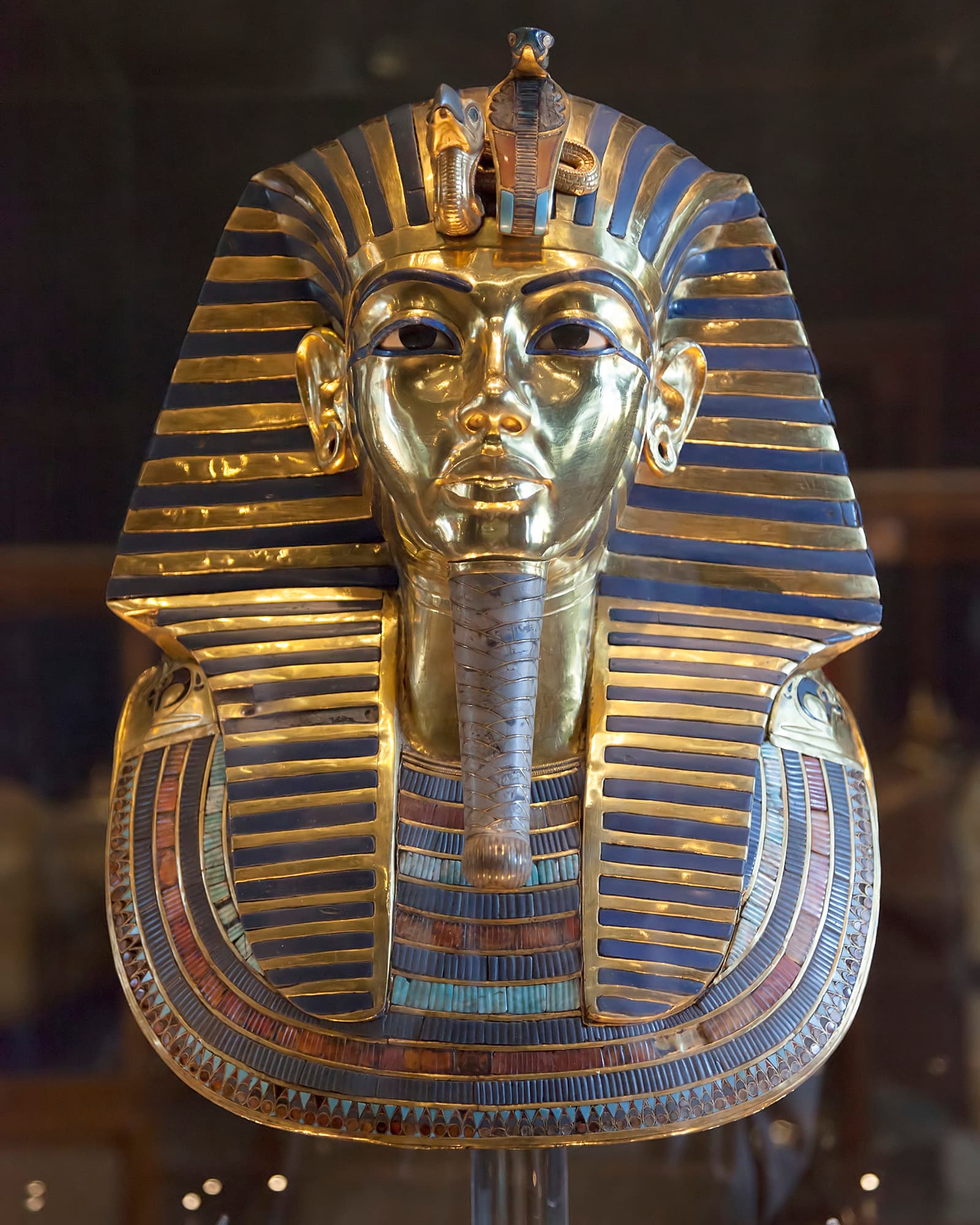
When the young boy Tutankhaten ascended the throne of Egypt around 1332 BCE, he inherited a fractured kingdom scarred by his predecessor’s radical religious revolution. Born into the twilight of the Eighteenth Dynasty, the child pharaoh was tasked with nothing less than restoring the cosmos. He abandoned the heretical capital of Amarna for Memphis, discarded the singular worship of the sun disk Aten, and changed his own name to Tutankhamun to honor the restored creator god Amun. On a monumental limestone slab known as the Restoration Stela, the king recorded the return of the old gods, rebuilding their ruined temples and reinstating their priesthoods. He ruled for barely a decade, dispatching armies to Nubia and the Near East, and receiving worship as a living god, before dying unexpectedly at the age of eighteen around 1323 BCE.
Because his sudden death left his grand royal tomb unfinished, Tutankhamun was hurried into a cramped, adapted non-royal chamber in the Valley of the Kings. His successor Ay, and the subsequent pharaoh Horemheb, eventually completed the return to orthodoxy but systematically erased Tutankhamun’s name from history, usurping his monuments to bury his memory. This ancient act of erasure inadvertently preserved him; hidden beneath the debris of centuries, his tomb escaped the total ruin that befell his grander peers. Discovered in 1922 by Howard Carter and Lord Carnarvon, the tomb yielded over 5,000 intact artifacts, including his undisturbed mummy and a gold death mask that became a global icon. In death, the forgotten restoration king achieved a permanent, glittering immortality, transforming a brief, anxious reign into the world's most enduring symbol of ancient Egyptian majesty.
Connected to
- father · child ofAkhenaten14th c. BCE
+ 12 further connections to entries not yet ingested