Person · 1537 CE – 1598 CE · Imperial Japan
Toyotomi Hideyoshi
- Also known as
- AToyotomi Hideyoshi
- Hashiba
- Hashiba Hideyoshi
- Hashiba Hideyoshi
- Hashiba Hideyoshi
- Hashiba Hideyoshi
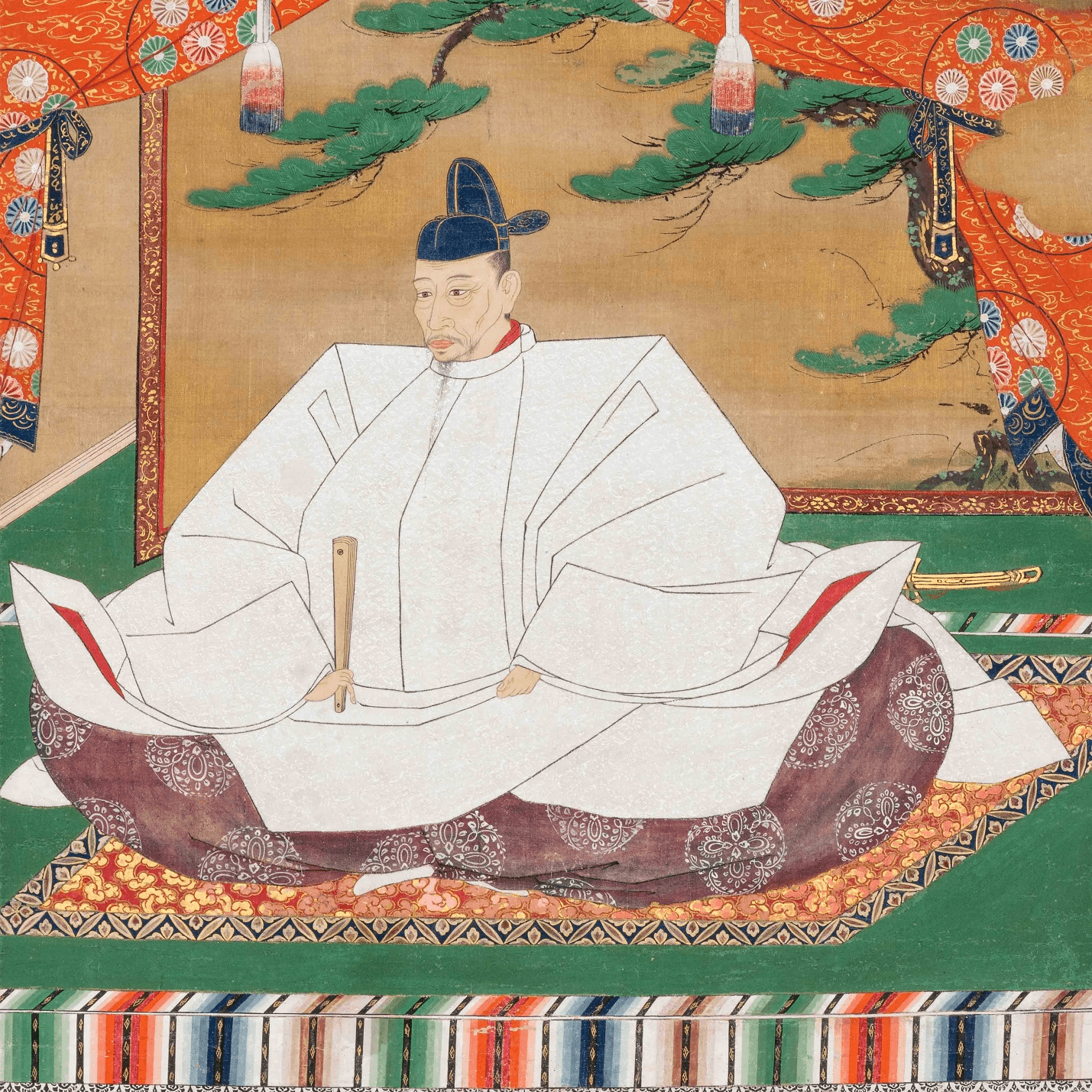
In the highly stratified world of sixteenth-century Japan, an individual’s destiny was almost always sealed by birth.
He was born a cipher, a boy with no surname, no pedigree, and no obvious path out of the mud of Nakamura. In the mid-sixteenth century, Japan was a fractured mirror of warring fiefdoms, a chaotic expanse where the Ashikaga Shogunate had collapsed into the bloody anarchy of the Sengoku period. To survive, a peasant’s son had to be invisible or indispensable. This boy, known in his youth as Hiyoshimaru, chose the latter. He was small, wire-thin, and so strikingly unconventional in his features that contemporaries would later compare his face to that of a monkey. Yet, where others saw a master-less beggar or a common foot soldier, the ambitious warlord Oda Nobunaga saw a peculiar kind of genius. Placed in Nobunaga’s service as a humble sandal-bearer, the young man—now calling himself Kinoshita Tōkichirō—did not merely carry his master’s footwear; he warmed them against his own chest in the winter chill before presenting them. He managed kitchens with the precision of a military campaign. He negotiated the defection of enemy strategists with liberal bribes rather than blood. By the time he renamed himself Hashiba Hideyoshi, borrowing characters from Nobunaga’s chief generals to weave himself into the fabric of the high-born, he had proved that in an era of steel, the sharpest weapon was often a silver tongue and an iron will.
The pivot of Japanese history, and of Hideyoshi’s life, occurred on a summer morning in 1582. While Hideyoshi was prosecuting a grueling campaign against the Mōri clan at Takamatsu, Oda Nobunaga was betrayed and forced to commit suicide at the Honnō-ji temple in Kyoto by his own general, Akechi Mitsuhide. The news threatened to shatter the fragile architecture of unified power Nobunaga had spent decades assembling. Receiving the intelligence, Hideyoshi acted with terrifying speed. He immediately concluded a quiet peace with the Mōri, wheeled his army around, and marched them back across the provinces in an astonishingly rapid forced retreat. Just thirteen days after Nobunaga’s death, Hideyoshi confronted Mitsuhide at the Battle of Yamazaki. The traitor’s forces were crushed, Mitsuhide was killed, and Hideyoshi stood amidst the smoke not merely as a grieving loyalist, but as the de facto heir to Nobunaga’s grand ambition. When the surviving Oda lords gathered at Kiyosu Castle to debate the succession, Hideyoshi bypassed Nobunaga’s squabbling adult sons and championed Nobunaga’s infant grandson, Oda Hidenobu. It was a masterstroke of political theater: by placing a baby on the seat of power, Hideyoshi ensured that the hand rocking the cradle—his own—would be the one holding the sword of state.
What followed was a masterclass in consolidation. Those who resisted his ascendancy were systematically broken. He destroyed the forces of his chief rival, Shibata Katsuie, at the Battle of Shizugatake in 1583, securing control over some thirty provinces. Yet his ultimate target was the formidable Tokugawa Ieyasu. In 1584, their forces clashed in the inconclusive, bloody engagements of Komaki and Nagakute. Recognizing that a protracted war with Ieyasu would exhaust his resources and leave his flanks vulnerable, Hideyoshi chose diplomacy over slaughter, sweetened by a calculated display of personal humility. When the devastating Tenshō earthquake of 1586 shattered his capital at Osaka and forced him to abandon military preparations, Hideyoshi pivoted. He sent his own sister, Asahi no kata, and his mother, Ōmandokoro, to Ieyasu as hostages. This extraordinary concession disarmed the proud Tokugawa lord, who finally traveled to Osaka to pledge his formal submission. With Ieyasu secured, Hideyoshi turned his gaze outward. He subjugated the warrior monks of Negoro-ji, burning their temple complex and cutting down those who fled. He conquered Shikoku in 1585 and Kyūshū in 1587. When the Hōjō clan surrendered after the colossal Siege of Odawara in 1590, and the Kunohe rebellion was extinguished in the far north the following year, the blood-soaked jigsaw puzzle of Japan was finally whole. For the first time in over a century, a single man ruled from the northern wilds of Mutsu to the southern tips of Kyūshū.
Yet, for all his power, Hideyoshi remained haunted by his origins. The office of Shōgun—the supreme military commander—was traditionally reserved for those who could claim descent from the ancient Minamoto clan, a lineage Hideyoshi could not fabricate. Undeterred, he bypassed the warrior tradition entirely and climbed the ancient, rarefied ladder of the imperial court. He arranged to be adopted by Konoe Sakihisa, a noble of the prestigious Fujiwara clan, and in 1585 secured the title of Kampaku, or Imperial Regent—the highest civilian office in the realm, and one never before held by a commoner. The Imperial Court subsequently bestowed upon him the grand, manufactured clan name of Toyotomi. He constructed the Jurakudai, a palace of dizzying opulence in Kyoto, where he hosted the Emperor Go-Yōzei in a display of wealth designed to show that while the Emperor ruled by divine right, the Taikō—the title Hideyoshi took upon retiring as Kampaku to make room for his nephew Hidetsugu—ruled by the right of sheer reality.
From his towering stronghold at Osaka Castle, built upon the ruins of the temple-fortress Nobunaga had destroyed, Hideyoshi set about restructuring the very fabric of Japanese society to ensure that no peasant could ever repeat his own spectacular rise. He initiated the legendary "sword hunt," disarming the peasantry and decreeing that only the samurai class could possess weapons. This radical division of society into rigid hereditary castes frozen in place—warriors, farmers, artisans, and merchants—became the bedrock of Japanese social order for the next two and a half centuries. He stabilized the realm by registering land and standardizing taxes, yet the peace he created was a restless one. Japan was filled with thousands of heavily armed, highly trained samurai who had spent their entire lives knowing nothing but war. To prevent them from turning their swords on each other, Hideyoshi turned their eyes across the sea. In 1592, he launched a massive, audacious invasion of Korea, dreaming of a continental empire that would eventually swallow China. It was an enterprise born of overreach. Though the samurai achieved initial, rapid successes, the campaign dragged into a brutal, exhausting military stalemate that drained the treasury and damaged the aging regent's hard-won prestige.
In September of 1598, as his armies remained bogged down across the Tsushima Strait, Toyotomi Hideyoshi lay dying in his castle at Fushimi. He had lived one of the most improbable lives in human history, rising from a nameless boy begging on the streets of Owari to become the master of a unified Japan. Yet his final thoughts were not of his conquests, but of his vulnerability. His only surviving heir, Toyotomi Hideyori, was a five-year-old child surrounded by ambitious, battle-hardened wolves. On his deathbed, Hideyoshi begged his most powerful lords, chief among them Tokugawa Ieyasu, to swear sacred oaths to protect his young son until he came of age. They swore the oaths, but the ink was barely dry before the peace Hideyoshi had constructed began to fracture. Within two years, Ieyasu would lead his own coalition to victory at the Battle of Sekigahara, ultimately sweeping the Toyotomi heir aside and establishing the Tokugawa Shogunate. Hideyoshi’s dynasty would not survive him, but the Japan he forged—bound by the rigid class lines of the sword hunt, centered on the great urban castles, and unified under a singular central authority—would endure, largely unchanged, for nearly three hundred years.
Connected to
- had as participantImjin War1592 CE
+ 12 further connections to entries not yet ingested