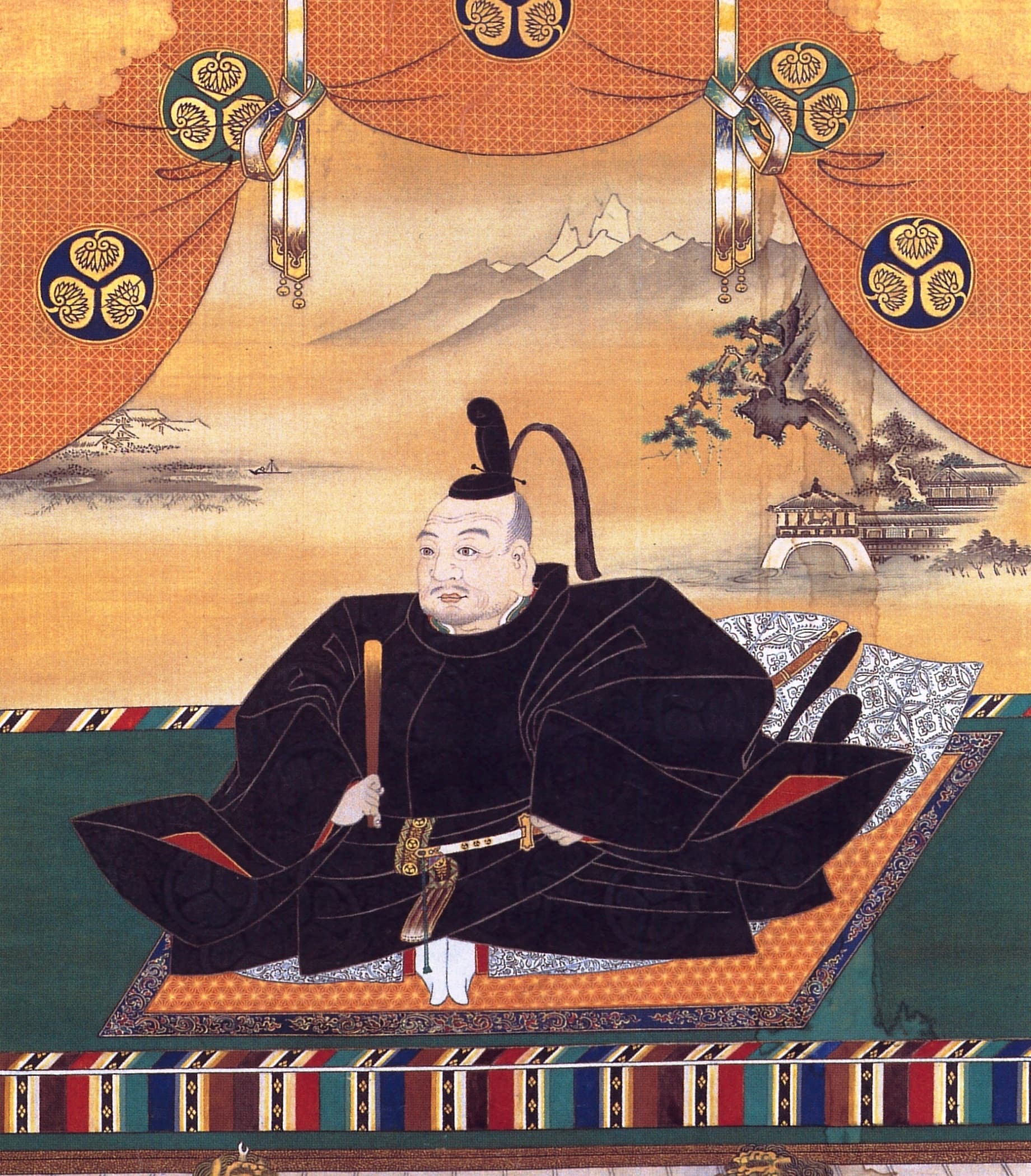
Before he was the master of Japan, the boy who would be Tokugawa Ieyasu was a political pawn, born to teenage step-siblings and sent away to live as a hostage of a powerful neighboring lord.
The standard trajectory of a warlord in sixteenth-century Japan was short, violent, and punctuated by sudden betrayal. For the first two decades of his life, there was little to suggest that Matsudaira Takechiyo—the boy who would eventually rule Japan as Tokugawa Ieyasu—would escape this common fate. Born in 1543 within the drafty timber walls of Okazaki Castle, he was the son of a minor, desperately exposed daimyo named Matsudaira Hirotada. The Matsudaira territory of Mikawa Province was a fragile buffer state, squeezed between two insatiable, larger neighbors: the Oda clan to the west and the Imagawa clan to the east. When Takechiyo was only five years old, his father, facing a devastating invasion by the Oda, turned to the Imagawa for military aid. The price of their protection was the boy himself, demanded as a hostage. But as the young Takechiyo was being escorted east to the Imagawa stronghold of Sunpu, he was abducted by Oda agents and carried off in the opposite direction. His captor, Oda Nobuhide, threatened to execute the child unless Hirotada severed his new alliance with the Imagawa. In a response that defined the cold-eyed survivalism of the age, Hirotada replied that sacrificing his own son would only prove the absolute sincerity of his pact with the Imagawa.
The threatened execution never came, but the boy remained a political pawn, shuttled between damp temples and foreign castles. He spent three years under house arrest in Nagoya, followed by another decade as a hostage of the Imagawa in Sunpu after a hostage exchange. When his father died in 1549—possibly murdered by his own bribed vassals—the young Matsudaira was not even permitted to return home to claim his inheritance. Instead, he was groomed in captivity to become a highly useful, thoroughly domesticated vassal of the Imagawa. He came of age under their supervision, took a bride selected from their extended family, and was eventually sent into the field to fight their battles against his former captors, the Oda. He proved to be a meticulous and brave commander, securing frontier forts and executing precise military maneuvers. Yet he was always fighting for another man’s flag, his ancestral lands in Mikawa effectively occupied by the very patrons who claimed to protect him.
The turning point of Ieyasu’s life—and the pivot upon which Japanese history would turn—occurred on a rain-drenched day in 1560. Imagawa Yoshimoto, Ieyasu’s lord and captor, marched a massive army of twenty-five thousand men into Oda territory, aiming for Kyoto. Ieyasu was sent ahead to reduce the enemy outpost of Marune, a task he completed with characteristic efficiency. While he was resting his men, news reached him of a military impossibility: Oda Nobunaga, the brilliant and erratic heir to the Oda clan, had launched a desperate, lightning-fast surprise assault on the main Imagawa camp during a sudden thunderstorm. Yoshimoto was dead, his throat cut in his own pavilion, and his vast army had dissolved into a panicked rabble.
12 links to entries not yet ingested in the Library.
While other vassals wavered, Ieyasu recognized his moment of liberation. Retreating under the cover of midnight, he bypassed his Imagawa keepers, marched his men back into the long-abandoned Okazaki Castle, and reclaimed his ancestral seat. Within months, he did the unthinkable: he cast off his allegiance to the crumbling Imagawa and forged a secret alliance with Oda Nobunaga, the very man who had slain his former lord. To secure this defection, Ieyasu had to recover his wife and young son, who were still held hostage in Sunpu. He dispatched his shinobi, led by the legendary Hattori Hanzo, to infiltrate and burn Kaminogo Castle, capturing two sons of the castellan. With these high-value prisoners in hand, Ieyasu forced a hostage exchange, reuniting his family and severing his last ties to his former masters. By 1566, through a series of brutal pacification campaigns against rebellious local clans and militant Jodo Shinshu Buddhist monks, Ieyasu had completely unified Mikawa Province under his own hand, marking his independence by adopting the family name Tokugawa.
For the next two decades, Ieyasu operated as the essential, bedrock ally of Oda Nobunaga’s relentless campaign to bring all of Japan under a single sword. It was a partnership of unequal halves, requiring Ieyasu to survive not only the enemies of the Oda, but the volatile, demanding nature of Nobunaga himself. When Nobunaga’s rise was cut short by a vassal's betrayal and forced suicide in 1582, Ieyasu did not rush to claim the vacant capital. Instead, he watched from the eastern provinces as Toyotomi Hideyoshi, Nobunaga’s most brilliant general, seized control of the realm. Ieyasu briefly tested Hideyoshi's strength in a series of skirmishes before demonstrating his greatest talent: the ability to wait, adapt, and yield when the odds were unfavorable. He swore fealty to Hideyoshi, becoming his most powerful and trusted vassal.
Hideyoshi, fully aware of the danger a man of Ieyasu’s caliber posed so close to the old capital, made a calculated move to defang him. In 1590, after the fall of the Hojo clan, Hideyoshi ordered Ieyasu to surrender his five ancestral provinces in central Japan. In exchange, Ieyasu was granted the vast, wild, and undeveloped Kanto region in the far east. It was a gilded banishment, designed to exhaust Ieyasu’s resources in pacifying and developing a rugged frontier. Once again, Ieyasu did not resist. He moved his headquarters to a small, marshy fishing village called Edo. While Hideyoshi spent the final years of his life draining the wealth and manpower of western Japan’s daimyo in a disastrous, failed attempt to conquer Korea, Ieyasu remained in the east. He built roads, drained swamps, organized his new vassal network, and kept his armies intact, healthy, and unbloodied.
When Hideyoshi died in 1598, leaving behind an infant heir, the fragile peace of the realm shattered. The fault lines of Japan’s samurai class collapsed into two massive factions: the Western Army, loyal to the Toyotomi child, and the Eastern Army, gathered around the patient lord of Edo. On October 21, 1600, on a fog-shrouded valley floor at Sekigahara, the two forces met in the defining battle of samurai history. Through a masterclass in pre-battle bribery, secret negotiations, and battlefield timing, Ieyasu shattered the Western coalition in a single morning. The victory left him the undisputed master of Japan. Three years later, in 1603, the Emperor bestowed upon him the title of Shogun.
Though Ieyasu officially retired just two years later in 1605, passing the title of Shogun to his son Hidetada to secure the hereditary succession, he continued to rule the realm from behind the scenes as the retired Shogun, or Ogosho. To ensure that the blood-soaked anarchy of the Warring States period would never return, Ieyasu engineered the bakuhan system, a meticulous political matrix that divided the daimyo into those who had allied with him before Sekigahara and those who had submitted only after defeat. Through precisely graded rewards, geographic isolation of potential enemies, and strict legal codes, he locked the social hierarchy of Japan into a state of permanent equilibrium. When he died on June 1, 1616, he left behind not just a dynasty, but a system of total social control. The small fishing village of Edo, which he had been forced to accept as a swampy exile, grew to become the political heart of a unified Japan, anchoring a peace that would endure undisturbed for more than two and a half centuries under the shadow of the Tokugawa name.