Person · 1750 CE – 1799 CE · Southern Indian Empires
Tipu Sultan
- Also known as
- Fateh Ali Tipu
- Fateh Ali Tipu
- Fateh Ali Tipu
- Fateh Alí Tipú
- Fath ʿAli Tipu Sultan
- Mysoren tiikeri
Long before the industrialized armies of Europe perfected the art of rocket warfare, the skies over southern India burned with iron-cased missiles that shattered British infantry formations.
In September 1780, on a sun-drenched plain near Kanchipuram, a British military disaster unfolded that would haunt the imagination of the East India Company for a generation. Colonel William Baillie, marching to join a larger British force under Sir Hector Munro, found his detachment of nearly four thousand men surrounded at Pollilur. The architect of his cornering was a twenty-nine-year-old prince named Tipu Sultan, who descended upon the British columns with ten thousand men, eighteen guns, and a devastating new weapon: iron-cased rocket artillery. The sky filled with screaming, metal-bound projectiles that tore through ammunition wagons and shattered the disciplined lines of the British sepoys. By the end of the day, Baillie’s force was obliterated, hundreds of Europeans were captured, and Munro was in such a panicked retreat to Madras that he threw his own heavy artillery into a water temple tank to hasten his flight. It was the most crushing defeat the British had yet suffered on the subcontinent, orchestrated by a man who would spend the rest of his life resisting the encroaching tide of Western empire.
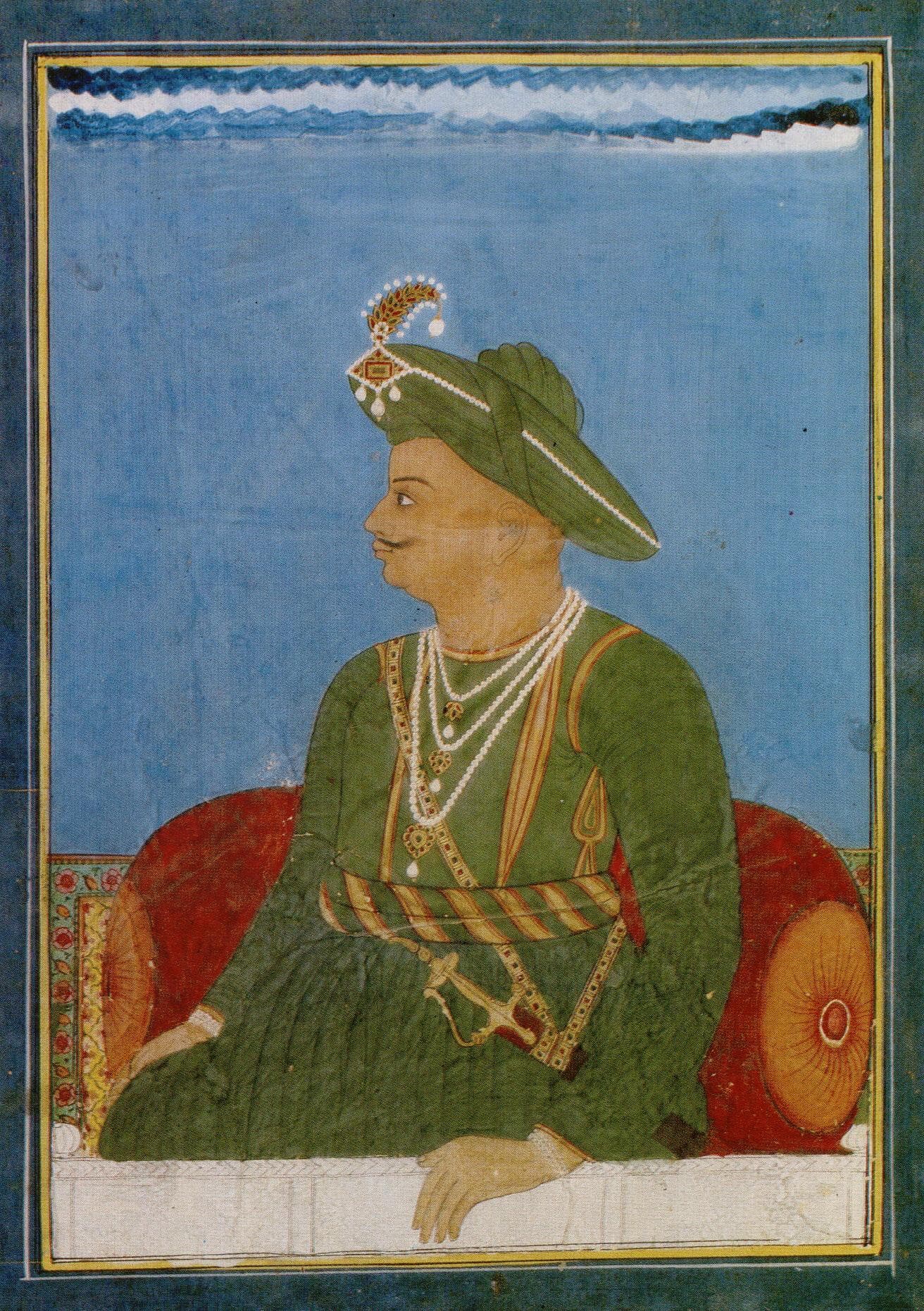
To the British who feared and vilified him, he was the "Tiger of Mysore," a tyrant of unpredictable cruelty and terrifying modern efficiency. To his own subjects, he was the Sovereign, or Badshah, of a state that had reached the absolute zenith of its economic and military power. Born in Devanahalli in 1751, Tipu was named after the Sufi saint Tipu Mastan Aulia of Arcot. His father, Hyder Ali, was an illiterate military adventurer who had risen through the ranks to become the de facto ruler of the Kingdom of Mysore in 1761. Recognizing the changing geopolitical winds, Hyder Ali spared no expense in preparing his eldest son for the throne. Tipu was educated by French officers in military tactics and tutored by scholars in Urdu, Persian, Arabic, Kannada, and Islamic jurisprudence. He was a devout Muslim, performing his five daily prayers and patronizing Sufi shrines, yet he ruled a overwhelmingly Hindu populace with a pragmatic tolerance, patronizing the local Channapatna toy industry, introducing a new land revenue system, and laying the foundations of the Mysore silk industry. Physically, he was not the imposing giant of British propaganda; observers described him as a corpulent man of five feet eight inches, with a short neck, delicate hands and feet, large expressive eyes, and a quiet, dignified countenance.
When Hyder Ali died of cancer in December 1782 during the Second Anglo-Mysore War, Tipu assumed the throne with seamless authority. He did not merely inherit a war; he inherited a worldview. Mysore was positioned at the center of a volatile chessboard, squeezed between the expanding territory of the British East India Company, the formidable Maratha Confederacy to the north, and the Nizam of Hyderabad. Tipu realized that survival required radical modernization. He pioneered administrative innovations, issuing a new coinage system, establishing a state-supervised calendar, and militarizing his economy. His army was not a feudal gathering of levies but a highly disciplined, French-trained force. His reliance on rocket artillery—which utilized iron tubes to contain the gunpowder, allowing for far higher chamber pressures and longer ranges than the paper-wrapped rockets used in Europe—represented a quantum leap in military technology. Through the Treaty of Mangalore in 1784, which ended the Second Anglo-Mysore War on the basis of , Tipu forced the British to negotiate as equals. Yet, his ambitions brought him into immediate conflict with his neighbors. The Maratha-Mysore War of 1785–1787 saw a series of grueling sieges and battles, from Nargund to Savanur, culminating in the Treaty of Gajendragad. To secure peace on his northern border, Tipu returned several captured territories and agreed to pay an annual tribute, but his eyes remained fixed on the ultimate threat: the British.
Connected to
- religionIslam631 CE
+ 12 further connections to entries not yet ingested