Person · 1k BCE – 1k BCE · Vedic and Mauryan
The Buddha
- Also known as
- An Búda
- Bhagwan Buddha
- Boda
- Boda
- Boddhu
- Boeddha
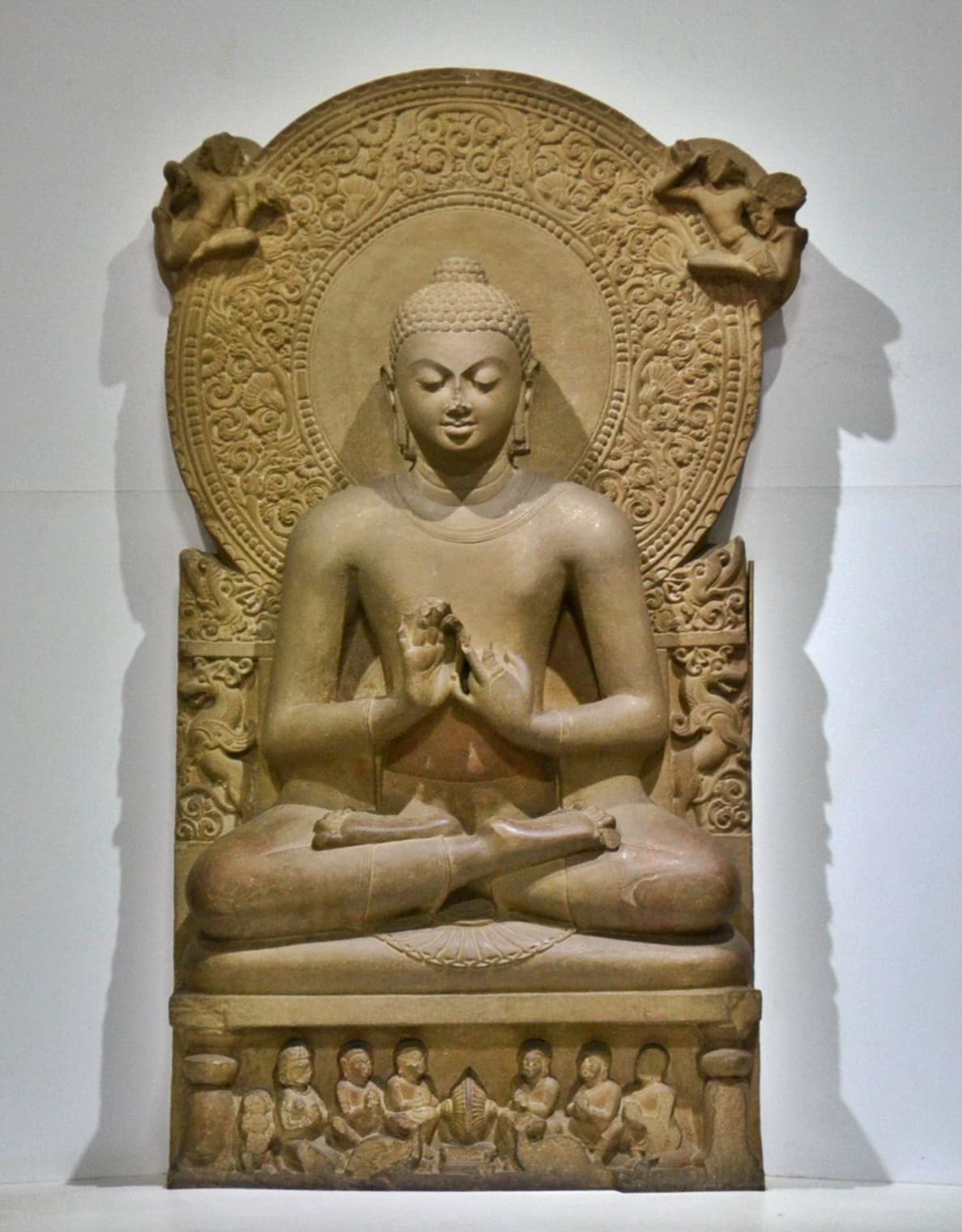
To understand the transformation of Siddhartha Gautama is to trace a path of deliberate renunciation.
Sometime in the sixth or fifth century BCE, in the shadow of the Himalayas along the eastern Indo-Gangetic Plains, a man left his home. According to the stories his followers would later preserve, he was born Siddhartha Gautama in Lumbini—located in the borderlands of modern-day Nepal and India—to royal parents of the Shakya clan. He belonged to the Kshatriya warrior caste, a life of inherited privilege, security, and material comfort. Yet he abandoned this domestic stability, exchanging the robes of a prince for the dust of the road, to live as a wandering ascetic. He was part of a larger, restless generation of seekers, thinkers, and dropouts who populated the lower Indo-Gangetic Plain during the Mahajanapada period, challenging the established social and religious order. He would become known to history as the Buddha: the "Awakened One."
To reconstruct the life of this wandering philosopher is to peer through layers of devotion, poetry, and time. No written records survive from the Buddha’s lifetime or from the immediate centuries following his death. The earliest physical evidence of his existence appears nearly two centuries later, in the mid-third century BCE, carved into the stone pillars and rocks of the Mauryan Emperor Ashoka. One such pillar at Lumbini commemorates the emperor's pilgrimage to the site, naming it as the birthplace of "the Buddha, Sage of the Shakyas." By then, a robust oral tradition had already crystallized into early texts, passed down in Middle Indo-Aryan dialects. The oldest surviving manuscripts we possess—the Gandharan Buddhist texts, written in Gāndhārī and discovered in modern Pakistan and Afghanistan—date only from the first century BCE to the third century CE. The earliest complete biographies, such as the epic poem Buddhacarita by the poet Aśvaghoṣa, were not written until the first century CE, followed by later Mahayana and Theravada works that layer the narrative with cosmic marvels, miraculous births, and celestial interventions.
Because of this, modern historians are cautious, often abandoning the modern impulse to strip away the mythic to find a purely rational, Socratic teacher. To do so risks inventing a modern figure who never existed. Instead, the historical consensus accepts a core narrative: that a man named Gautama lived, taught, and founded a monastic order (the sangha) during the reigns of the Magadhan kings Bimbisara and Ajatashatru, making him a contemporary of the Jain tirthankara Mahavira, and that he died in Kushinagar.
The heart of his journey began with a profound rejection of extremes. After leaving his home, Gautama immersed himself in the severe asceticism popular among the forest-dwelling philosophers of his day, practicing extreme self-mortification and starvational discipline. Finding that this merely withered the body without clarifying the mind, he rejected both the indulgent luxury of his youth and the self-torture of the ascetics. Sitting beneath a Bodhi tree in Bodh Gaya, in modern Bihar, India, he resolved to find a third way. It was here, through intense meditation, that he attained nirvana—the extinguishing of the fires of ignorance, craving, and suffering. He had awakened.
The worldview the Buddha subsequently spent his life preaching was centered on the "Middle Way." At its core are the Four Noble Truths, which diagnose the human condition as fundamentally characterized by dukkha (suffering or unsatisfactoriness), identify the cause of this suffering as craving and attachment, assert that this suffering can be brought to an end, and prescribe the Noble Eightfold Path as the practical means to achieve that liberation. This path is a comprehensive training of the mind, demanding ethical conduct, mental discipline, kindness toward others, and meditative practices such as mindfulness and dhyana.
Distinct from the prevailing theological assumptions of his era, the Buddha’s teachings did not rely on an eternal soul or a permanent creator god. Instead, he proposed the radical concept of dependent origination (pratītyasamutpāda), which posits that all mental states and concrete things—the dharmas—come into being and cease to exist based on a web of interconnected causes. Nothing possesses an inherent, independent existence (svabhava). Humanity, in this view, is not a collection of permanent souls, but a shifting aggregation of five physical and mental components known as the skandhas. To understand this was to dissolve the illusion of the ego, breaking the cycle of rebirth and suffering.
For some forty years, the Buddha wandered the towns and villages of the Ganges basin, instructing kings, merchants, farmers, and outcasts alike. He referred to himself not as a god, but as the Tathāgata—a term of elusive complexity meaning "one who has thus gone" or "one who has thus come," signaling someone who had transcended the transitory coming and going of the material world. He established the sangha, a monastic community governed by the strict rules of the Vinaya Pitaka, which allowed men and women to step outside the rigid caste hierarchies of ancient Indian society to pursue liberation.
When the Buddha died in Kushinagar, reaching parinirvana (the final release from conditioned existence), he left behind no successor, instructing his disciples that the Dharma—his teaching—should be their guide. His discourses, compiled in the Sutra Pitaka, were preserved orally by his monastics before being committed to writing. In the centuries that followed, his followers systematized his philosophy into treatises called the Abhidharma, composed the Jataka tales detailing his previous lives as a bodhisattva, and produced the expansive Mahayana sutras.
Buddhism would eventually evolve into three major traditions: Theravada, Mahayana, and Vajrayana. Although the tradition gradually declined in India after the eighth century CE due to a loss of royal and popular support, it spread dynamically along the trade routes of the Silk Road and the maritime networks of the Indian Ocean. It took deep root in Southeast Asia, Central Asia, and East Asia, transforming the civilizations of China, Korea, Japan, Tibet, and Sri Lanka. The prince who walked away from his palace to sit under a tree ended up reshaping the ethical, philosophical, and psychological landscape of half the human world.
Connected to
- religion · foundedBuddhism
+ 12 further connections to entries not yet ingested