Organization · Early China
Taoism
- Also known as
- Agama Tao
- Ajaran Tao
- dajyjda
- Daoculuk
- Daoegezh
- Daoism
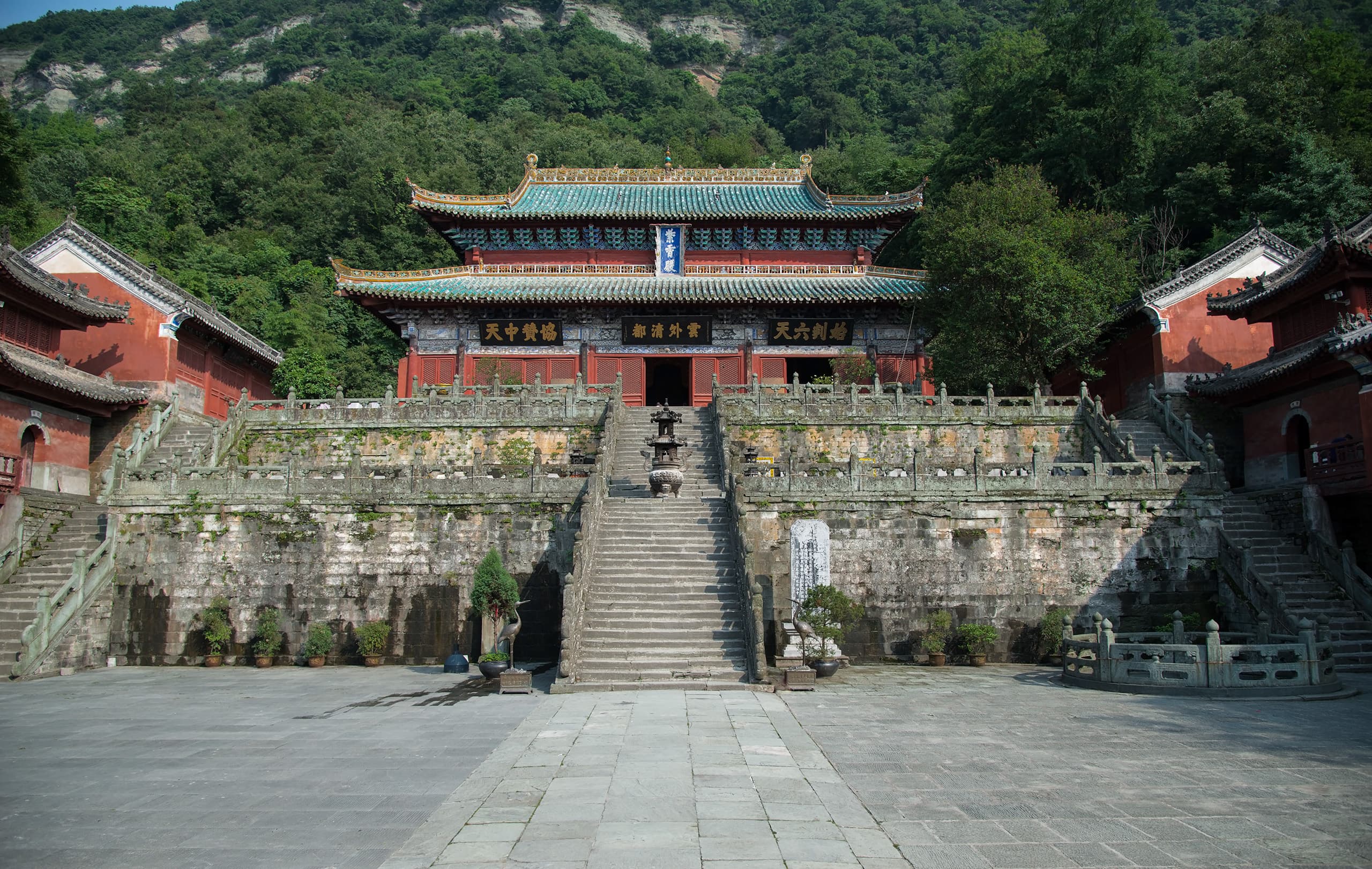
To walk a path that is not quite a road, but rather an enigmatic process of transforming reality itself, is to seek the Tao.
In the year 142 CE, in the secluded, mist-shrouded mountains of Sichuan, a man named Zhang Daoling experienced a vision that would fundamentally reshape the spiritual geography of East Asia. According to tradition, the deified spirit of Laozi—the legendary sage of antiquity—descended to meet Zhang, presenting him with a covenant. The world was in chaos, corrupted by degenerate cults and demonic forces; the old state religions of the Shang and Zhou dynasties, with their bloody animal sacrifices and rigid hierarchies, were no longer sufficient. In their place, Laozi revealed the "Orthodox and One" way, appointing Zhang as his earthly representative. This encounter marked the birth of the Way of the Celestial Masters, the first organized, institutionalized incarnation of what the world would come to call Taoism. Before this moment, there was no singular "Taoist" religion, but rather a fluid, shimmering constellation of master-disciple lineages, longevity technicians, and ecstatic visionaries. With Zhang’s revelation, these disparate currents crystallized into a self-conscious community with its own priesthood, scriptures, and ritual systems, offering a radical alternative to the world: a life lived in perfect, effortless alignment with the cosmos itself.
To understand this transformation, one must look back to the turbulent Warring States period, between the fifth and third centuries BCE, when the intellectual foundations of Chinese civilization were forged in the crucible of civil war. Amid the blood and fragmentation of the collapsing Zhou dynasty, scholars and mystics sought a unifying principle to restore order to both the human soul and the state. What they sought was the Dao—literally "the Way" or "the path"—a term shared by many schools of thought, including Confucianism. But while the Confucians defined the Dao as a moral blueprint of ritual propriety, social duty, and filial piety, the thinkers who would later be classified as the Daojia (the School of the Way) saw it as something far more vast and enigmatic. For them, the Dao was the ultimately underlying reality, an unnamable, pre-cosmic force from which the universe continually unfolds and to which it inevitably returns.
This early philosophical phase is anchored by two incomparable texts: the epigrammatic Tao Te Ching (attributed to the shadowy, perhaps legendary figure of Laozi) and the brilliantly anecdotal, mischievous Zhuangzi. Rather than urging readers to strive for moral perfection or political power, these texts championed wu wei, or "effortless action"—a state of being so perfectly aligned with the natural flow of the universe that one’s actions seem entirely spontaneous and without friction. They urged a return to simplicity, frugality, and humility, illustrating their philosophy not through grand moral theories, but through stories of humble artisans: a butcher whose knife never grows dull because he guides it through the natural spaces between the joints, or a woodcarver who forgets his own body before selecting the perfect tree. Early Taoism was characterized by this deeply aesthetic, contemplative relationship with the natural world, drawing heavily on the School of Naturalists to adopt the concepts of yin and yang—the dark, receptive, feminine force and the bright, active, masculine force—alongside the theory of the five phases of cosmic change.
As these philosophical ideas drifted through the centuries, they began to merge with the practices of the fangshi, or "method masters"—esoteric specialists who roamed the outer fringes of society. These figures did not merely contemplate the Dao; they sought to embody it physically, pursuing longevity and even physical immortality (xian). Through apophatic meditation, breath control, dietary restrictions, and early forms of alchemy, they sought to cultivate the vital energy (qi) within their own bodies. This synthesis of philosophy and physical cultivation meant that Taoism was never a purely abstract intellectual exercise; it was a deeply embodied tradition. By the fifth century CE, as Buddhism established a powerful foothold in China, the need arose to define this indigenous heritage against the foreign import. The scholar Lu Xiujing coined the term Daojiao ("Teachings of the Dao") to denote the organized religion, and he set about compiling the Daozang, the massive, ever-expanding canon of Taoist scriptures that would eventually include thousands of texts on ritual, alchemy, meditation, and cosmology.
This codification did not produce a monolithic church. Instead, Taoism developed as a highly syncretic, adaptive matrix, constantly absorbing and reflecting the changing world around it. It split into two main branches that persist to this day. There is Zhengyi (Orthodox Unity) Taoism, a direct descendant of the Celestial Masters, which focuses on ritual, protective talismans, and communal liturgies. Opposing and complementing it is Quanzhen (Complete Perfection) Taoism, a monastic order founded in the twelfth century that emphasizes celibacy, vegetarianism, and "inner alchemy" (neidan)—the mental and spiritual cultivation of the self through meditation. Through these branches, Taoists recognized a vast pantheon of deities and immortals, many of whom were shared with Chinese folk religion. Yet, within the strict structures of Chinese society, a sharp distinction remained: while the common people engaged in local cults, the ordained daoshi (Taoist masters) served as the professional experts of liturgy and cosmic alignment, acting as the bridge between human communities and the celestial bureaucracy.
This spiritual framework has repeatedly spilled over into the realms of politics and rebellion. Far from being a philosophy of passive withdrawal, Taoist organizations have occasionally shaken the foundations of empires. In the late Han dynasty, the yellow-capped adherents of a Taoist secret society launched the Yellow Turban Rebellion, an apocalyptic uprising that sought to sweep away a corrupt dynasty and establish a utopian, theocratic state of "Great Peace." Though the rebellion was eventually crushed, it demonstrated the revolutionary potential of a philosophy that viewed earthly rulers as subservient to the cosmic laws of the Dao. In the centuries that followed, Taoism, Confucianism, and Buddhism entered into a long-running, creative dialogue. By the sixth century CE, this coexistence solidified into the "Three Teachings" (sanjiao) discourse, a cultural understanding that these three traditions were not mutually exclusive rivals, but complementary paths that could be integrated harmoniously to sustain both the individual and society.
In the modern era, Taoism’s influence extends far beyond the borders of historical China, finding a home across the global Sinosphere, Southeast Asia, and the West. Within China, it stands as one of the five officially recognized religions, its temples and sacred mountains once again humming with the chants of monastics and the smoke of incense. In the West, its texts have been widely translated, though often stripped of their complex ritual and historical contexts to fit modern, individualized spiritualities. Yet, the essence of the tradition remains rooted in its ancient, mountain-born origins. Taoism gave the world a vocabulary for understanding human existence not as a struggle to dominate nature, but as an invitation to participate in its quiet, self-generating mystery. It remains a testament to the belief that true power lies not in asserting one's will, but in yielding—like water, which softly and patiently wears away the hardest stone.
Connected to
- followerEmperor Gaozu of Han256 BCE
- founded by · followerLaozi6th c. BCE
- followerQing dynasty1636 CE
+ 5 further connections to entries not yet ingested