Organization · Caribbean and Circum Caribbean
Taíno people
- Also known as
- Bangsa Taino
- Bangsa Taíno
- Indianie Taino
- Mutanen Taino
- Orang Taino
- Orang Taíno
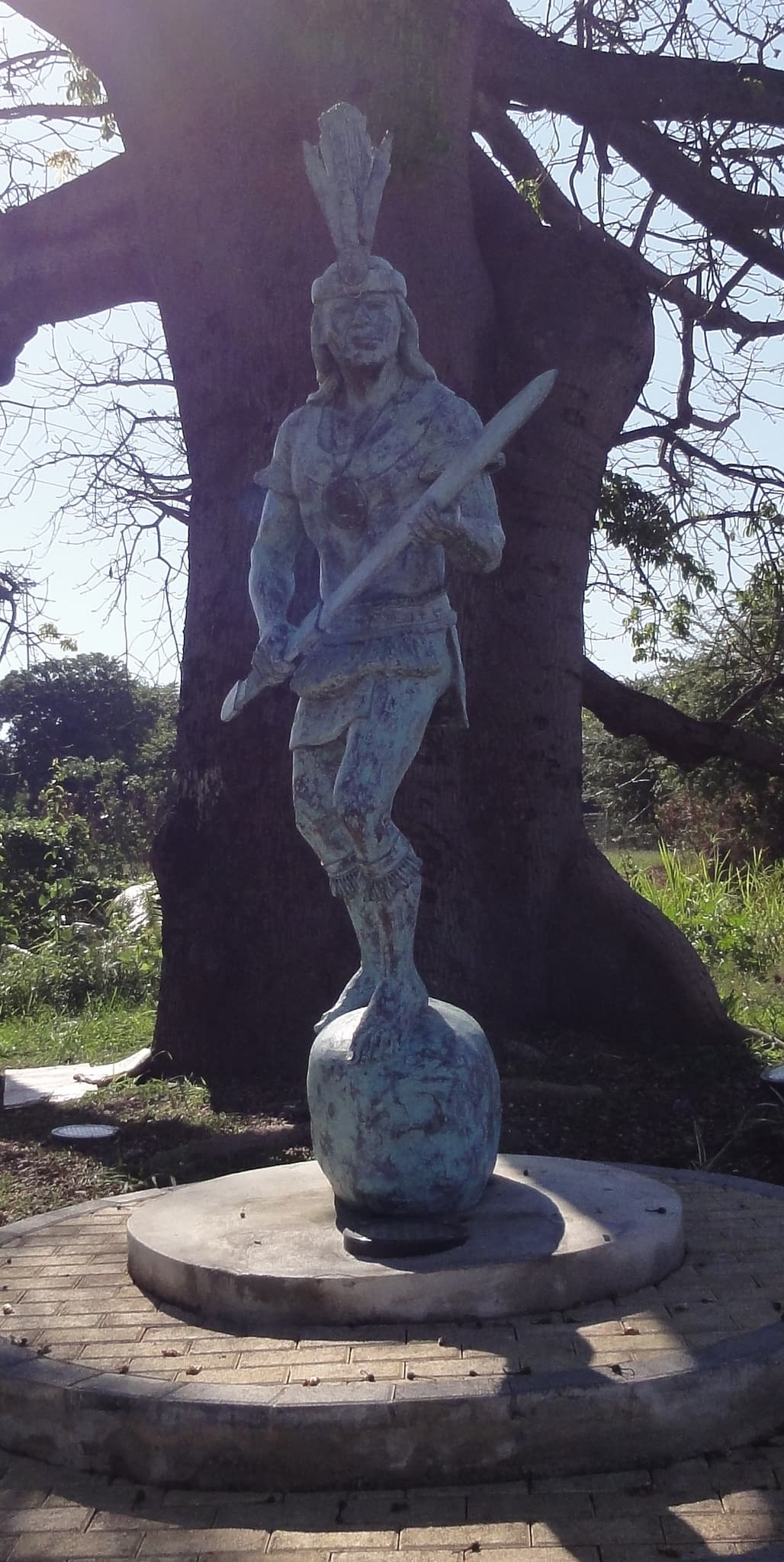
Long before a lost Genoese navigator mistook their islands for the outer edges of Asia, the peoples of the northern Caribbean lived in structured, agricultural societies linked by a shared Arawakan tongue.
In November 1493, during Christopher Columbus’s second voyage to the Caribbean, his physician, Diego Álvarez Chanca, recorded a curious exchange off the coast of Guadeloupe. A group of captives, originally from Puerto Rico, had been held by the local Island Caribs. Upon seeing the Spanish vessels, they fled their captors, boarded the European ships, and repeatedly used the word tayno or taíno to describe themselves. They were not naming their tribe or their island; they were declaring their character. In their Arawakan tongue, the word meant "good" or "prudent." They were signaling to the newcomers that they were "men of the good"—peaceable, orderly, and distinct from the hostile Caribs of the southern windward islands. It was a plea for recognition, but in the ears of the Spanish sailors, it became something else. The Europeans, perhaps understanding only this single word of the local languages, began using it as a broad ethnonym. Three centuries later, in 1836, the eccentric naturalist Constantine Samuel Rafinesque formally "christened" the disparate peoples of the Greater Antilles under this single banner. Thus, a word meant to denote status and moral conduct was transformed into the blanket name for an entire lost world.
The people today called the Taíno did not inhabit a uniform cultural landscape, nor did they belong to a single, centralized nation. Instead, they were a complex network of agricultural societies bound by a shared language family, similar artistic traditions, and a common cosmological worldview, yet divided by geography, dialect, and local identity. At the time of European contact, their domain stretched across the northern Caribbean, encompassing the Lucayan Archipelago of the Bahamas, the massive landmasses of Cuba, Jamaica, and Hispaniola, and extending through Puerto Rico to the northernmost tip of the Lesser Antilles in Guadeloupe. Modern scholars, tracing the archaeological and linguistic remnants of this world, divide them into three broad regional spheres: the Classic Taíno of Puerto Rico and most of Hispaniola, who possessed the most complex hierarchical systems; the Western Taíno of Jamaica, the Bahamas, and Cuba; and the Eastern Taíno of the northern Leeward Islands. Yet even these divisions mask a richer tapestry of human migration and coexistence. On Hispaniola, the Taíno shared their territory with older, distinct populations like the Ciguayos and the Macorix, while western Cuba remained home to the Guanajatabeyes, representatives of a much older Caribbean era.
The origins of these islanders have long been a subject of scholarly debate, captured in two competing narratives. The first, and most widely supported by linguistic and ceramic evidence, points south to the Amazon Basin. This theory suggests that Arawak-speaking ancestors migrated from the heart of South America to the Orinoco Valley, eventually migrating northward through Trinidad and island-hopping up the chain of the Lesser Antilles. The alternative "circum-Caribbean" theory, proposed by anthropologist Julian H. Steward, suggests a different route of diffusion, originating in the Colombian Andes and spreading northward into the Caribbean while parallel migrations moved into Central America and the Guianas. Modern genetic science has added precision to these dusty migration routes. DNA studies indicate that the historical Taíno were primarily descended from a wave of pottery-making farmers known as the Ceramic Age people, who entered the Caribbean from northeastern South America approximately 2,500 years ago. As they pushed northward, they encountered the Archaic Age people, foraging communities who had arrived from Central and South America some 6,000 to 7,000 years earlier. While older academic theories assumed the newcomers simply wiped out or replaced these earlier populations, genetic analysis of modern Caribbean populations suggests a more nuanced story. The two groups did not frequently intermarry, but they did coexist; the Archaic Age people survived in western Cuba until at least 900 CE, and modern Puerto Ricans carry genetic markers from both the Ceramic and Archaic lineages, suggesting a deep, combined heritage that cannot be traced to South America alone.
Connected to
11 links to entries not yet ingested in the Library.