Person · 877 CE – 943 CE · Korean Kingdoms
Taejo of Goryeo
- Also known as
- Baн Гон
- Cao Ly Thái Tổ
- İmparator Taejo Wang Geon
- Ko-lê Thài-chó͘
- Kralj Taejo od Goryeoa
- Raja Taejo dari Goryeo
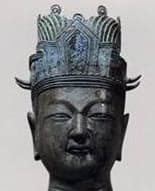
The rise of Wang Kŏn to the throne of Korea began not with royal blood, but with the salt air and mercantile wealth of the peninsula's northwestern coast.
On a summer night in the late eighth century, four top-ranked generals of the kingdom of Taebong met in absolute secrecy. For years, they had served Kung Ye, a charismatic rebel leader who had risen from the chaos of a collapsing Silla dynasty to carve out a new state in the Korean Peninsula’s northwest. But Kung Ye had slipped into a dark, grandiloquent madness. Proclaiming himself the living Maitreya Buddha, he spent his treasury on extravagant, theatrical rituals while executing anyone who questioned his divinity. Monks, ministers, and eventually his own wife and two sons fell to his paranoia. The generals—Hong Yu, Pae Hyon-gyong, Sin Sung-gyom, and Pok Chi-gyom—had decided that the mad king must be replaced. Their chosen instrument was a quiet, highly capable general named Wang Kon.
Wang Kon initially protested the treason, but the generals prevailed. On July 24, 918 CE, a swift coup was launched. Kung Ye was overthrown and killed near the capital of Cheorwon. At sunrise the following morning, the conspirators crowned Wang Kon as their new monarch. He was forty-one years old, a seasoned naval commander and administrator born to a powerful family of maritime merchants from Songak. He immediately changed the name of the kingdom to Goryeo, a deliberate reclamation of the ancient northern empire of Goguryeo from which he claimed descent. By the time of his death twenty-five years later, he would be known to history as Taejo, the Great Progenitor, having forged a unified Korean state that would endure, in name and shape, for centuries.
The world Taejo set out to rule was a fractured, violent landscape known as the Later Three Kingdoms. The old order of Silla, which had dominated the peninsula for over two centuries, had withered under the inept rule of Queen Jinseong, leaving local lords, bandits, and warlords to carve up the provinces. To the southwest, the fierce warrior Kyon Hwon had established Later Baekje. To the north, the vast forests of Manchuria and the northern peninsula were in a state of flux; the ancient state of Balhae was crumbling under the pressure of the Khitan Liao dynasty, leaving its lands empty or preyed upon by nomadic raiders.
Taejo’s rise was built on a distinct strategy of patience, maritime wealth, and radical inclusion. Unlike his predecessor Kung Ye, who ruled through terror, or his great rival Kyon Hwon, who relied on military brutality, Taejo understood that a lasting empire could not be built solely on the edge of a sword. From his youth, when he led successful naval campaigns along the southwestern coastline at Keumsung, he had cultivated a reputation for generosity. When he took the throne, he did not seek to crush the local clans (hojoks) that ruled the valleys and ports; instead, he seduced them into alliances.
This policy of consolidation was tested in the fires of military disaster. In 927 CE, Kyon Hwon of Later Baekje launched a brutal raid on the Silla capital of Gyeongju, executing its king and installing a puppet monarch, King Gyeongsun. Hearing of the outrage, Taejo rode south with five thousand cavalrymen, planning to ambush the returning Baekje forces at Gongsan, near modern Daegu. The resulting battle was a slaughter. Taejo’s army was surrounded and decimated. Legend holds that as the battle turned into a rout, Taejo’s loyal general Sin Sung-gyom—one of the four conspirators who had placed him on the throne—exchanged armor with the king so that Taejo could escape into the forests of Mountain Apsan. Sin and the remaining generals fought to the death, their sacrifices allowing Taejo to spend several days hiding in a mountaintop cave before slipping back to his capital.
Though a devastating military blow, the disaster at Gongsan paradoxically strengthened Taejo’s moral authority. He had shed blood to defend the weak Silla dynasty, a gesture that was not lost on the Silla court. By 935 CE, Silla’s puppet king, Gyeongsun, recognizing that his state was an empty shell, made the unprecedented decision to surrender his entire kingdom to Goryeo. Rather than treating Silla as a conquered province, Taejo welcomed Gyeongsun with immense honor, granting him the title of prince and marrying his own eldest daughter, Princess Nakrang, to the abdicated monarch. To further bind the old Silla aristocracy to the new Goryeo order, Taejo took Gyeongsun’s first cousin as his fifth wife.
This matrimonial diplomacy was the cornerstone of Taejo’s domestic policy. Throughout his reign, he married the daughters of almost every major local leader he encountered, eventually taking six queens and numerous other wives. His palace became a living map of the peninsula’s elite, transforming potential rebels into brothers-in-law and fathers-in-law.
Even his bitterest enemies found themselves absorbed into this expanding coalition. In 935 CE, a palace coup shook Later Baekje when Kyon Hwon’s eldest son, Sin-gom, imprisoned his father in a temple to secure his own succession. The aging warlord Kyon Hwon escaped his confinement and fled to the court of his lifetime rival, Goryeo. Taejo received the old tiger not as a prisoner, but as an honored guest, treating him with the filial reverence due to a father. The following year, with Kyon Hwon riding alongside him, Taejo led a massive army against Sin-gom’s forces. Facing internal division and the overwhelming momentum of Goryeo, Sin-gom surrendered. Taejo spared his life, granted him titles, and unified the peninsula under the Goryeo banner.
Taejo’s vision of Goryeo extended far beyond the borders of the old Silla kingdom. He looked north, toward the wild frontiers of the defunct Goguryeo empire. In his very first year as king, he ordered the repopulation of the ancient capital of Pyongyang, which had long lain in ruins, used only as hunting grounds by northern barbarians. He designated it his "Western Capital" and sent his cousin to fortify it. When the northern state of Balhae fell to the Khitans in 926 CE, Taejo warmly welcomed Balhae’s last crown prince and its noble refugees. He declared Balhae a "Relative Country" due to their shared Goguryeo ancestry, absorbing its ruling class into his own court.
This deep sense of northern identity fueled a fierce animosity toward the Khitans. When the Liao dynasty sent thirty envoys and a gift of fifty camels to Goryeo in 942 CE as a diplomatic gesture, Taejo reacted with astonishing hostility. He banished the envoys to an island and left the camels to starve to death under a bridge, risking war to avenge the destruction of Balhae. In his political testament, the Ten Injunctions, he warned his successors that the Khitans were "no different from beasts" and must always be guarded against, while declaring Buddhism the foundational spiritual pillar of the state.
When Taejo died of disease in 943 CE, he left behind a nation that was fundamentally different from the one he had inherited. The unification of 668 CE under Silla had left the peninsula divided, with the northern half ruled by Balhae. Taejo’s unification in 936 CE was the first truly comprehensive unification of the Korean people under a single sovereign state—a political integrity that would remain unbroken for over a thousand years until the division of 1948. From his family's maritime trading roots on the Ryesong River, he built a capital at Gaegyeong that connected his peninsula to the wider world, leaving a legacy so deep that the modern world still knows his land by the name he gave it: Goryeo, or Korea.
Connected to
- religionBuddhism
- citizen ofGoryeo918 CE
+ 12 further connections to entries not yet ingested