Person · 544 BCE – 496 BCE · Early China
Sun Tzu
- Also known as
- Changqing
- Changqing
- jan Sun Su
- jan Sun U
- jan Sunsu
- jan Sunu
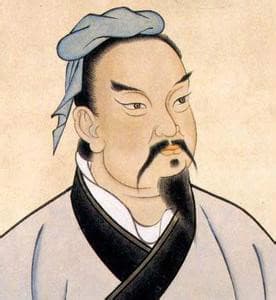
To command an army, one must first be able to command the court.
To command an army, one must first master the art of obedience, even if the lesson requires blood. In the grand hall of King Helü of Wu, toward the end of the sixth century BCE, a strategist named Sun Wu was challenged to prove his theories of discipline. The king, curious but skeptical of the traveler’s treatise on warfare, presented him with an unlikely force: one hundred and eighty palace concubines. Sun Wu divided the women into two companies, placing the king’s two most beloved consorts at their head as commanders. Armed with halberds, the women were given simple orders to face forward, left, right, and backward at the sound of the drum. But when the drum rolled, the ranks broke not into formation, but into fits of laughter. Sun Wu was unperturbed. He noted that if orders are unclear, the general is at fault; but if the orders are perfectly clear and yet disobeyed, the officers must pay the price. He ordered the execution of the two favorite concubines. The king protested, pleading for the lives of his consorts, but the strategist remained resolute: once a general is at the head of an army, certain royal commands can no longer be accepted. The women were beheaded, two new commanders were appointed, and when the drums sounded once more, the remaining concubines moved in flawless, silent precision.
This chilling demonstration, preserved in the first-century BCE Records of the Grand Historian by Sima Qian, is the foundational myth of "Master Sun"—Sun Tzu. Yet, like much of the biography of this legendary figure, the story exists in a realm suspended between history and allegory. According to traditional chronologies, Sun Tzu lived between 544 and 496 BCE, serving as a minister and general to King Helü during the Spring and Autumn period, where he was credited with leading the state of Wu to a miraculous victory against the far larger state of Chu at the Battle of Boju in 506 BCE. But beneath these clean dates lies a deep historiographical mystery. The Zuo Zhuan, a highly detailed chronicle written centuries before Sima Qian’s work, documents the Battle of Boju and the notable figures of the era with meticulous care, yet it never once mentions Sun Wu. His very name, meaning "the fugitive warrior" or "martial knight," reads more like a descriptive title than a historical birth name.
Modern scholarship suggests that "Sun Tzu" may be a composite creation, an idealized military intellectual born from the violent necessity of a later epoch. While the legend of Sun Wu is set in the sixth century BCE, the famous text attributed to him, The Art of War, contains anachronisms—such as references to the crossbow and professional standing armies—that did not exist until the Warring States period, which began in 475 BCE. During this later era, seven rival states—Zhao, Qi, Qin, Chu, Han, Wei, and Yan—engaged in an existential struggle for hegemony over the fertile plains of Eastern China. It was a time when war ceased to be a ritualized sport of aristocrats and became a total, mechanized enterprise of state survival. It was in this crucible of unending conflict that the body of strategic thought we know as The Art of War was compiled, likely over generations.
The historical fog surrounding Master Sun cleared slightly in 1972, when construction workers in Yinque Shan, Shandong province, stumbled upon an ancient tomb sealed in the second century BCE. Within it lay a collection of bamboo slips containing portions of The Art of War alongside a long-lost sister text: Military Methods, written by Sun Bin, a verified historical strategist from the fourth century BCE who was said to be Sun Wu’s descendant. The discovery confirmed that both men had been referred to as "Sun Tzu" in antiquity, confounding early historians. It also revealed a continuous, evolving intellectual lineage. Rather than the work of a single solitary genius in the sixth century BCE, the strategist we call Sun Tzu represents the culmination of a profound school of thought, refined by generations of practical application on the battlefields of ancient China.
At the core of this intellectual tradition is a paradox: the highest realization of the art of war is to avoid fighting altogether. Divided into thirteen chapters, The Art of War is not a celebration of martial glory, but a manual of survival, economy, and deception. The text is deeply infused with Taoist philosophy, viewing conflict through a lens of parsimony and natural flow. Where Western military tradition, tracing back to classical antiquity, often emphasizes direct confrontation, persuasion, and the clash of opposing wills, Sun Tzu’s rhetoric is quiet, passive, and deceptive. "All warfare is based on deception," the text famously asserts. The ideal commander behaves like water, which avoids the high ground and seeks the hollows, adapting its shape to the terrain. Power is built on shi—the strategic alignment of circumstances, momentum, and psychological advantage—so that victory is assured before the first blow is struck. To win a hundred victories in a hundred battles is not the pinnacle of skill; to subdue the enemy without fighting is.
This philosophical pragmatism ensured that The Art of War would outlast the kingdoms that birthed it. In the early third century of the Common Era, the warlord and poet Cao Cao edited the text and composed its earliest surviving commentary, cementing it as the premier military manual of East Asia. In 1080, Emperor Shenzong of the Song dynasty formalized its supremacy by placing it at the head of the Seven Military Classics, an anthology that became mandatory reading for imperial military examinations. From China, its influence spread across the seas. It arrived in Nara Japan in 760 CE, where it was eagerly adopted by the samurai class and later used by the "Great Unifiers"—Oda Nobunaga, Toyotomi Hideyoshi, and Tokugawa Ieyasu—to forge a unified early modern Japanese state. Centuries later, Admiral Tōgō Heihachirō would study its pages before leading the Imperial Japanese Navy to victory in the Russo-Japanese War.
The reach of Master Sun eventually spanned the globe. Translated into French by the Jesuit priest Jean Joseph Marie Amiot in 1772, and later into English by Lionel Giles in 1910, the text entered the vocabulary of global conflict. In the twentieth century, its doctrines of asymmetrical warfare and psychological manipulation found their most formidable practitioner in Mao Zedong, who credited his victory over the Kuomintang in 1949 to Sun Tzu's principles. Mao's adaptations of the text, integrated into his own writings, went on to influence revolutionary insurgencies worldwide. In Vietnam, Ho Chi Minh translated the treatise for his officers, and General Võ Nguyên Giáp applied its lessons of patience, deception, and terrain to defeat both French and American forces.
Today, the figure of Sun Tzu occupies a unique place in the global imagination. Whether he was a flesh-and-blood general who executed the king's concubines in the sixth century BCE, or a literary avatar created by Warring States intellectuals to house their collective wisdom, his legacy is undisputed. He converted the chaotic brutality of human conflict into a structured philosophy, arguing that war is not a matter of divine intervention or brute force, but a rational science of human behavior. By treating conflict as an organic system governed by psychology, deception, and resource management, the text that bears his name remains a mirror for human competition—a reminder that in any struggle, the mind is always the ultimate battlefield.
Connected to
11 links to entries not yet ingested in the Library.