Person · 1486 CE – 1545 CE · Delhi Sultanate and Mughal
Sher Shah Suri
- Also known as
- Farid ibn Hasan Szer Chan
- Farid Khan
- jan Si Sa Suli
- Scher Schah
- Sher Khan
- Sher Khan
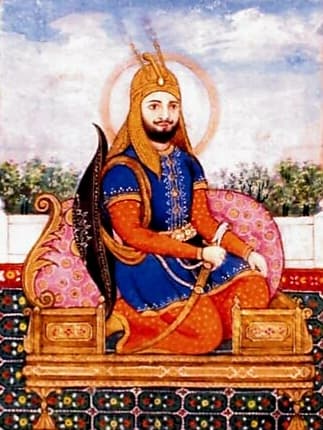
To understand how the great Mughal Empire was temporarily swept from the plains of Northern India, one must look to the brilliant, opportunistic rise of Farid al-Din Khan, later known as Sher Shah Suri.
In the early sixteenth century, the Mughal emperor Babur sat at dinner in Agra, watching a guest of minor Afghan nobility. The man, Farid al-Din Khan, was served a dish he had never encountered before. Undeterred by the courtly etiquette of the capital, he drew his dagger, sliced the food into manageable portions, and ate it with a spoon. It was a small, raw moment of pragmatism that caught the emperor’s eye. Babur turned to his minister, Mir Khalifa, and whispered a warning: "Keep an eye on Sher Khan, he is a clever man and the marks of royalty are visible on his forehead… as soon as I saw this man, it entered into my mind that he ought to be arrested." Babur’s instinct was sharp, but his caution came too late. Within a decade, the man who dissected his dinner with a dagger would dissect the nascent Mughal Empire, driving Babur’s heir into a humiliating exile and forging an imperial legacy that reshaped the administration of the Indian subcontinent.
Born in Sasaram, Bihar, between 1472 and 1486, the boy who would become Sher Shah Suri was of Pashtun origin, belonging to the Sur clan. His grandfather, Ibrahim Khan Sur, had arrived in India from the Afghan region of Roh during the Lodi dynasty, trading horses before securing a foothold as a landlord in Haryana. His father, Hasan Khan, later acquired jagirs—land grants—in Sasaram, Hajipur, and Khwaspur. Yet Farid’s early life was defined not by privilege, but by the bitter politics of a polygamous household. Plagued by the cruelty of a stepmother and his father's passive submission to her, Farid fled his home. He sought refuge in the scholarly city of Jaunpur, dedicating himself to the study of history and religion. When relatives later convinced his father of the young man’s extraordinary promise, Farid was invited back in 1497 to manage his father’s estates. For twenty-one years, he ruled these provincial lands, earning a reputation for eliminating corruption, standardizing land revenue assessments, and protecting the peasantry from rapacious tax collectors. But domestic intrigue eventually forced him out again, driving him briefly into banditry before he pivoted toward the grander stage of the Delhi Sultanate.
When the Lodi dynasty fell to Babur’s invading Mughal forces in 1526, the geopolitical landscape of northern India fractured. Farid, now operating under the name Sher Khan—a title earned after he killed a tiger that leapt upon Behar Khan Lohani, the governor of Bihar—navigated this chaos with supreme opportunism. He briefly entered Mughal service under Babur to secure his ancestral lands, using the time to study the invaders' military structures. Sensing suspicion among the Mughal elite after the dinner table incident, he quietly slipped back to Bihar. When the governor of Bihar died in 1528, Sher Khan became the regent for the young heir, Jalal Khan. Local Lohani nobles, resentful of his swift rise, allied with the Sultan of Bengal to oust him, but their flight only left Sher Khan as the sole, de facto ruler of Bihar. He styled himself , the "August Presence," and began a calculated expansion. Through a secret marriage to Lad Malika, the wealthy widow of the assassinated governor of Chunar, he acquired the formidable fortress of Chunar and its vast treasury. When the second Mughal Emperor, Humayun, tried to dislodge him from Chunar in 1532, Sher Khan negotiated a strategic peace, yielding temporary loyalty and his son as a hostage while retaining his stronghold.
Connected to
- religionIslam631 CE
+ 11 further connections to entries not yet ingested