Person · 1592 CE – 1666 CE · Delhi Sultanate and Mughal
Shah Jahan
- Also known as
- Cahan
- Dżahan
- Džahan-šah
- Džahanšachas
- I Шаһ Жаһан
- Jahan
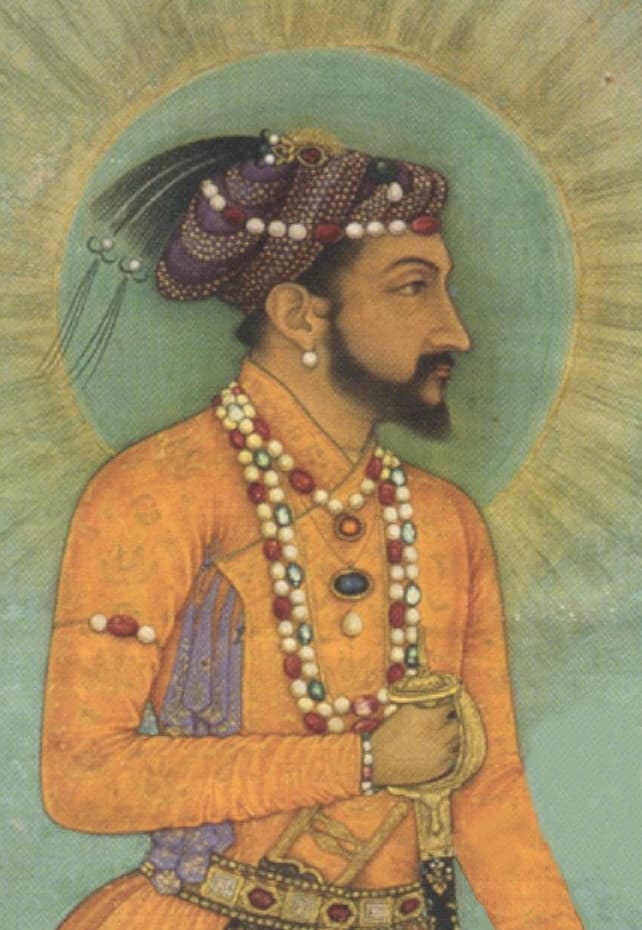
The Mughal Empire reached the absolute peak of its architectural and cultural opulence under a ruler who began his life as Prince Khurram, a child so cherished by his grandfather Akbar that he was raised in the imperial household as Akbar’s own.
In the winter of 1605, as the great Mughal Emperor Akbar lay dying in his chamber, his thirteen-year-old grandson Prince Khurram refused to leave his bedside. The palace was thick with political intrigue, and the imminent transition of power threatened to erupt into violence. Despite the physical danger from rivals of his father, Salim, the young prince stood his ground, ignoring the desperate pleas of his mother and the senior women of the imperial harem who begged him to seek safety in his own quarters. This stubborn, fearless devotion was characteristic of the boy Akbar had named "the joyous one" and had raised as his own. When Salim finally ascended the throne as Jahangir, he inherited an empire of unparalleled wealth, but he also inherited a son of remarkable administrative focus and relentless ambition. It was this prince, Khurram, who would eventually take the title Shah Jahan—the King of the World—and preside over an era of architectural grandeur that became the defining visual signature of Islamic India, only to end his days gazing at his own creations through the barred windows of a riverside prison.
The path to the throne was neither straight nor peaceful. For years, Khurram navigated the shifting currents of a court dominated by his stepmother, Nur Jahan. As Jahangir retreated into the haze of wine and opium, the formidable empress consolidated her power, forming a ruling clique that initially favored Khurram but later shifted its allegiance to his younger brother, Shahryar, who had married Nur Jahan’s daughter. Recognizing the systematic dismantling of his prospects, Khurram rose in open rebellion against his father in 1622. The rebellion failed, plunging the prince into years of exile and disgrace, during which he was forced to send his own sons as hostages to the imperial court. But when Jahangir died in 1627, the vacuum of power ignited a swift and bloody war of succession. Supported by his father-in-law, the politically brilliant Chief Minister Asaf Khan, Khurram outmaneuvered Nur Jahan, defeated Shahryar, and secured the throne in 1628. To ensure his security, the newly crowned Shah Jahan ordered the execution of most of his rival male relatives, an act of preemptive ruthlessness that cleared his path but set a grim precedent for the generation to come.
Yet, the defining partnership of Shah Jahan’s life was not one of geopolitical rivalry, but of profound romantic and intellectual alignment. In 1612, he had married Arjumand Banu Begum, later known as Mumtaz Mahal, the daughter of Asaf Khan. Though he took other wives for political alliance, court chroniclers noted that his devotion to Mumtaz Mahal was absolute. She was more than a consort; she was a vital counselor who accompanied him on military campaigns, sat with him in the imperial council, and held the royal seal, which gave her the final authority to review state documents. When she died in June 1631 in the Deccan town of Burhanpur, hemorrhaging after the painful, thirty-hour labor of their fourteenth child, the emperor’s grief transfigured him. He wept uncontrollably, went into deep mourning, and emerged weeks later with his hair turned white. Her death inspired the construction of the Taj Mahal in Agra, a monumental tomb of pure white marble that took decades to complete. It was a physical manifestation of grief and paradise, designed as a terrestrial reflection of the divine throne, where Mumtaz Mahal was laid to rest, and where Shah Jahan would eventually join her.
Connected to
- child · father ofAurangzeb1618 CE
- religionIslam631 CE
- father · child ofJahangir I1569 CE
+ 12 further connections to entries not yet ingested