Person · 1470 CE – 1520 CE · Ottoman Empire
Selim I
- Also known as
- I Sultan Səlim
- I Səlim
- I Селим
- I Сәлим
- I. Selim
- I. Selim
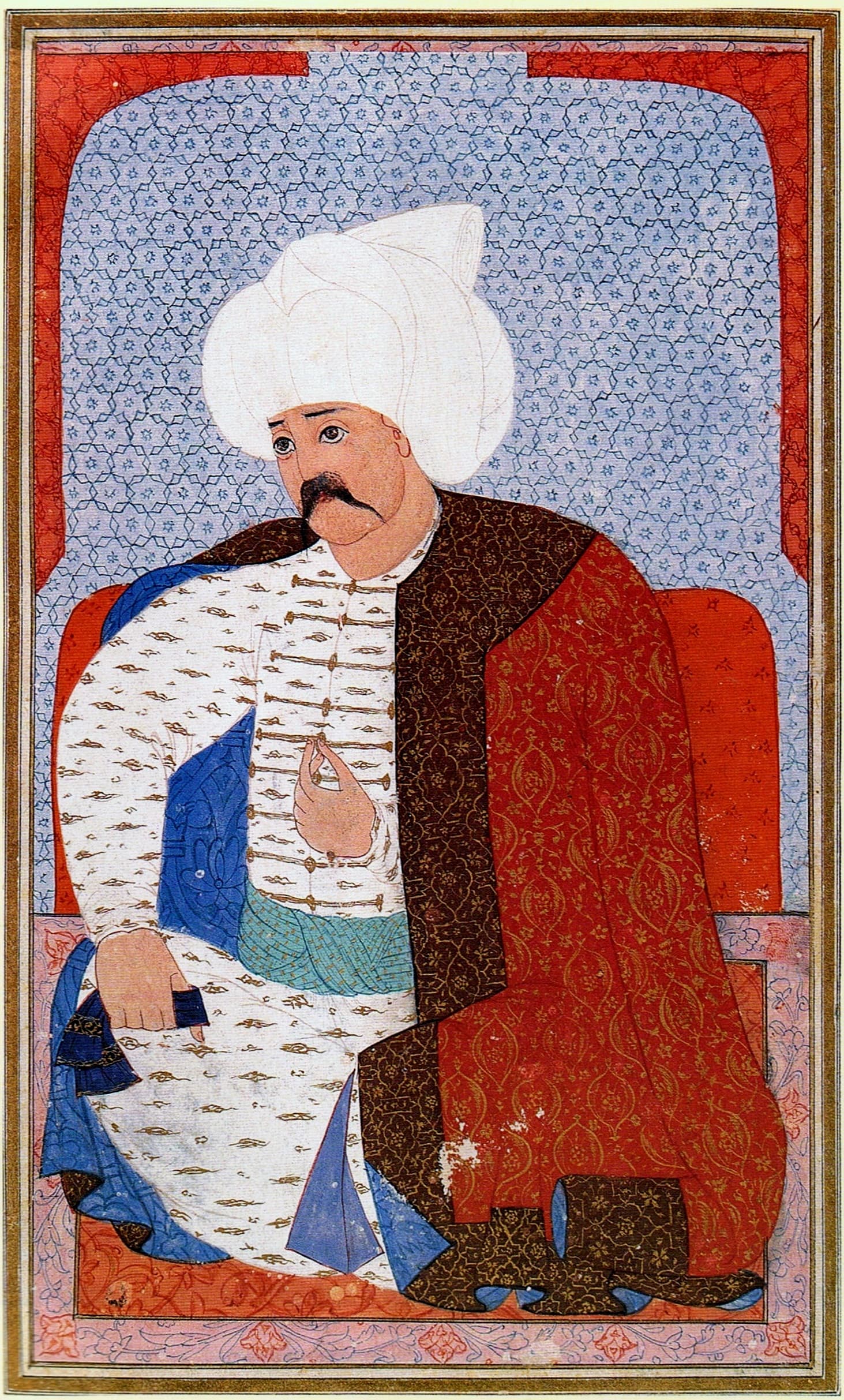
By the time Selim I died in September 1520, the geographical and cultural center of gravity of the Ottoman Empire had shifted irrevocably away from the Balkans and toward the Middle East.
On a stifling August morning in 1516, on the dusty plain of Marj Dabiq north of Aleppo, two Islamic empires collided in a clash that would permanently tilt the axis of the geopolitical world. On one side stood the Mamluk Sultanate of Egypt, governed by an elite caste of slave-soldiers who had ruled the Levant and Egypt for centuries, their ranks glittering with veteran cavalrymen who fought with traditional, chivalric steel. On the other side stood the Ottoman Sultan, Selim I, a man whose absolute intolerance for dissent and relentless pursuit of administrative and military efficiency had earned him the moniker Yavuz—variously translated as the Grim, the Resolute, or the Inflexible. As the Mamluk cavalry charged, initially scattering the Ottoman flanks and capturing pieces of artillery, Selim watched the dust rise in suffocating clouds. For a brief moment, the Sultan contemplated retreat. But the Ottoman army possessed a devastating advantage that the Mamluks had proudly disdained: a modern infantry equipped with black powder, muskets, and highly organized artillery. When the smoke cleared, the Mamluk Sultan, Al-Ashraf Qansuh al-Ghawri, lay dead on the field, paralyzed by a sudden stroke amidst the panic of his retreating army. Selim did not merely win a battle that day; he inherited the Middle East.
Selim’s path to the throne of Constantinople had been forged through sheer, calculated violence. Born in Amasya in 1470 to the future Sultan Bayezid II and a Pontic Greek concubine named Gülbahar Hatun, Selim was raised in an era of intense factionalism. Sent to govern the frontier province of Trabzon in 1487, he spent decades watching his father’s cautious, diplomatic administration with growing impatience. To the east, the Safavid Empire was rising under the charismatic Shah Ismail, who had unified Persia, adopted Twelver Shia Islam as the state religion, and begun actively instigating rebellions among the Shia and Alevi populations of Ottoman Anatolia. While Bayezid II favored his scholarly son Ahmed as his successor and maintained a passive posture toward Safavid provocations, Selim took matters into his own hands. Acting from his governorship in Trabzon, Selim repeatedly launched unauthorized military campaigns. In 1505, he repelled a Safavid force led by the Shah’s brother, chasing them to Erzincan. In 1507, after Shah Ismail violated Ottoman sovereignty by marching through eastern Anatolia to attack the Dulkadirids, Selim retaliated by crushing a ten-thousand-man Safavid force. A year later, he turned his sights north, invading western Georgia, bringing the regions of Imereti and Guria under Ottoman influence, and enslaving thousands of captives.
By 1511, Selim’s aggressive defense of the eastern frontier had won him the fierce loyalty of the Janissaries—the empire's elite standing infantry—who grew tired of Bayezid’s passive foreign policy. When Bayezid officially designated Ahmed as his successor, Selim did what no Ottoman prince had ever dared: he openly rebelled against his father with an army of his own. Though he lost his initial clash at Tekirdag in 1510, fleeing with only a fraction of his men, Selim's political momentum proved unstoppable. In 1512, backed by the Janissaries, he successfully dethroned his father, exiling the aging Bayezid to Dimetoka, where he died almost immediately. Selim’s accession was followed by a ruthless purge designed to eliminate any possibility of civil war. He hunted down and executed his brothers, Ahmed and Korkut, along with his nephews, to secure his hold on the house of Osman. One nephew, Murad, fled to the Safavid court, providing Shah Ismail with a dangerous political pawn and guaranteeing that the simmering rivalry between the Sunni Ottomans and the Shia Safavids would soon erupt into total war.
Before Selim could march against the Shah, he turned inward to secure his rear, initiating a campaign of domestic terror against those he deemed internal traitors. Viewing the Alevi and Shia populations of Anatolia as a Safavid fifth column, Selim ordered a comprehensive census of all Shiites between the ages of seven and seventy in several central Anatolian cities, including Tokat, Sivas, and Amasya. In the march that followed, his forces rounded up and executed tens of thousands of Alevis and Shiites, most of them beheaded in what was the largest domestic massacre in Ottoman history until the twilight of the empire. With Anatolia purged, Selim exchanged a series of belligerent, insulting letters with Shah Ismail before marching his army across the harsh terrain of eastern Anatolia.
The two armies met on August 23, 1514, at the Battle of Chaldiran. Ismail’s highly mobile, fanatical Qizilbash cavalrymen were superb horsemen, but they were utterly unprepared for the disciplined fire of Ottoman musketeers and the devastating deployment of wheeled artillery. Ismail himself was wounded and narrowly escaped capture. Selim entered the Safavid capital of Tabriz in triumph on September 5, allowing his name to be read in the Friday prayers, but he could not sustain the occupation. The Janissaries, exhausted by the grueling campaign and hostile terrain, grew discontented, forcing Selim to withdraw. Nevertheless, the victory at Chaldiran was a watershed moment: it permanently checked the westward expansion of Safavid Shia Islam, secured Ottoman control over Eastern Anatolia and Upper Mesopotamia, and demonstrated the absolute supremacy of modern gunpowder warfare over traditional nomadic cavalry.
The collapse of Safavid power in Mesopotamia shifted the geopolitical balance, bringing the Ottomans into direct conflict with the Mamluk Sultanate, which had watched Selim’s expansion with mounting alarm. Following his triumph at Marj Dabiq in 1516, Selim was welcomed into Aleppo not as a foreign conqueror, but as a deliverer from the heavy-handed excesses of Mamluk rule. While he treated the captive Abbasid caliph with warmth, Selim reserve his fury for the local Islamic judges and jurists, upbraiding them for their failure to stop Mamluk corruption and misgovernance. Over the next year, Selim’s forces swept through the rest of the Levant, Hejaz, and Egypt itself, completely dismantling the Mamluk Sultanate.
In a reign that lasted just eight years, Selim expanded the Ottoman territory by seventy percent, leaving behind an empire of 3.4 million square kilometers upon his death on September 22, 1520. By conquering the historic heartlands of the Islamic world, including the holy cities of Mecca and Medina, Selim fundamentally shifted the Ottoman Empire's geographical and cultural gravity away from its original Balkan-European focus and toward the Middle East. Though the romanticized stories of a formal transfer of the caliphate from the Abbasid dynasty to the house of Osman were largely eighteenth-century inventions, Selim’s conquest undeniably established the Ottoman Sultan as the undisputed, pre-eminent protector of the Islamic world. He left his son, Suleiman the Magnificent, an unmatched military apparatus, treasury, and geopolitical hegemony—an empire that was no longer merely a regional power, but a global colossus straddling three continents.
Connected to
- religionIslam631 CE
- child · father ofSuleiman the Magnificent1494 CE
+ 12 further connections to entries not yet ingested