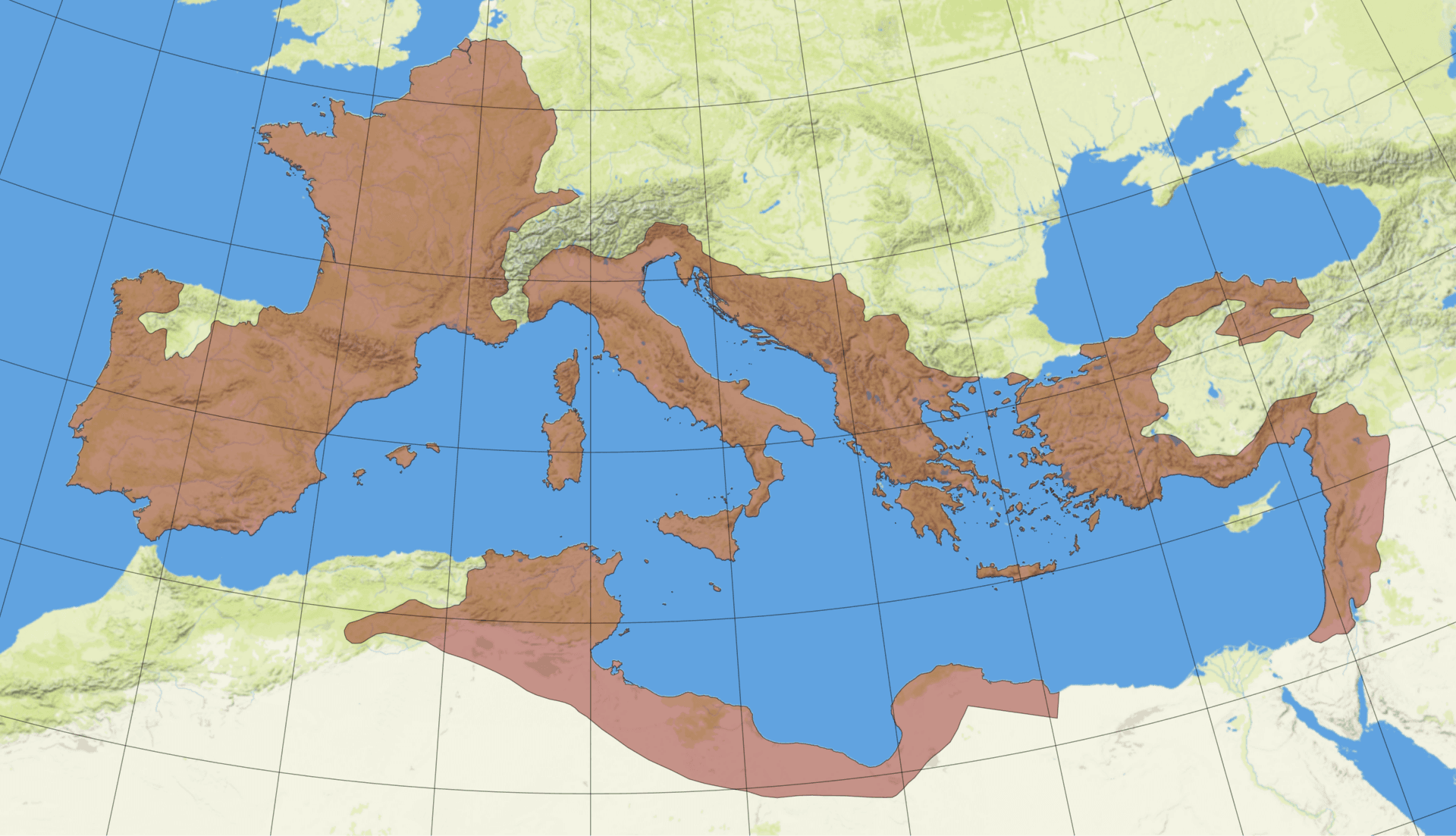
To understand the Roman Republic is to look upon a society in a state of near-perpetual warfare, a state that forged itself through relentless expansion.
Before it became an empire of marble and administrative precision, Rome was a raw, nervous, and blood-soaked republic that spent its infancy in a state of near-perpetual war. Its birth, traditionally dated to 509 BCE, was marked not by a quiet legislative consensus but by an aristocratic coup. For centuries, the city on the Tiber had been ruled by kings, elected for life by a senate of elders. But when Sextus Tarquinius, the son of Rome’s last monarch, Tarquin the Proud, raped the noblewoman Lucretia, the Roman aristocracy reached its limit. Under the leadership of the semi-mythical Lucius Junius Brutus, the monarchy was abolished, and the king’s supreme executive authority was transferred to two consuls. To prevent the rise of another autocrat, these consuls were elected for just a single year, each armed with the power to veto the actions of his colleague. While traditional histories cast this transition as a popular revolution of liberty-loving citizens, modern historical consensus suggests a less romantic reality: an internal coup within the ruling Etruscan-Latin elite, replacing a single king with a closed, hereditary oligarchy.
This infant Republic was defined by a profound, agonizing internal division. Roman society was split into two distinct, unequal camps: the patricians and the plebeians. The patricians, a tiny, closed caste of about fifty prominent clans—including the Cornelii, Aemilii, Claudii, Fabii, and Valerii—monopolized the state’s priesthoods, its senior military commands, and its magistracies. Their power was anchored in vast landholdings and maintained through networks of dependent clients. Below them lay the plebeians, the vast majority of the Roman citizenry, who functioned as the state’s economic and military engine. They were the farmers, artisans, and merchants, and, crucially, the soldiers who filled the ranks of the Roman army.
Frustrated by debt, land scarcity, and their total exclusion from government, the plebeians weaponized their indispensable role in the military through a series of strikes known as the secessio plebis. The first of these occurred in 494 BCE, when, during a severe famine, plebeian debtors walked out of the city en masse, refusing to fight for a state that offered them no rights. Confronted with a sudden shortage of soldiers, the patrician Senate was forced to capitulate. This strike initiated the "Conflict of the Orders," a centuries-long, largely peaceful struggle that gradually reshaped the Roman state. Through successive concessions, the plebeians secured their own sacrosanct representatives, the tribunes, who possessed the revolutionary power of veto and immunity from arbitrary arrest. Over time, the plebeians forced the publication of written laws, gained access to the state priesthoods, and eventually won the right to hold the consulship itself, beginning with the election of Lucius Sextius Lateranus in 366 BCE. By the end of the fourth century BCE, laws like the and those passed by the plebeian dictator Quintus Publilius Philo had created a new, integrated patrician-plebeian nobility and transformed the Senate into a permanent, life-appointed council of three hundred elder statesmen, solidifying its place as the central organ of Roman governance.
+ 12 further connections to entries not yet ingested
While Rome negotiated this internal balance of power, it fought desperately for survival against its neighbors. In the fifth century BCE, the Republic was merely one city-state among many in the complex, culturally mixed landscape of central Italy, surrounded by Latins, Etruscans, Sabines, and hill tribes. Rome fought relentless campaigns to secure its immediate surroundings, defeating rival Latin cities at Lake Regillus in 496 BCE and Mount Algidus in 458 BCE. Its most bitter early rivalry was with the wealthy Etruscan city of Veii. After suffering a catastrophic defeat at the Cremera in 477 BCE, the Romans finally besieged and destroyed Veii in 396 BCE, establishing dominance over southern Etruria. This hard-won security, however, was shattered around 390 to 387 BCE, when a migrating host of Gallic Senones swept down from the north. The Roman army was routed at the Battle of the Allia River, and the Gauls entered and sacked Rome itself. Though the physical destruction of the city was superficial, the psychological trauma of the Gallic sack left a permanent scar on the Roman psyche, fueling an existential dread of northern invasion and a relentless drive for military supremacy.
Rome’s response to the Gallic trauma was a century of aggressive, expansive warfare that consolidated its control over the Italian peninsula. Between 343 and 290 BCE, the Republic fought three brutal, exhausting wars against the Samnites, a tough confederation of mountain tribes in the Apennines. Despite setbacks, including a rebellion of its former Latin allies in the Latin War, Rome systematically dismantled its rivals. By the time the third Samnite War ended in 290 BCE, and the final vestiges of Etruscan independence were crushed at the Battle of Populonia in 282 BCE, Rome had secured total hegemony over central Italy, binding conquered territories to itself through a sophisticated network of military colonies and alliances.
This Italian hegemony brought Rome into direct contact with the wider Mediterranean, transforming local rivalries into a grand struggle for regional dominance. Its primary obstacle was Carthage, the maritime empire of North Africa. The two powers clashed in three epic Punic Wars. The climax of this existential struggle came in 202 BCE at the Battle of Zama, where the Roman general Scipio Africanus defeated the Carthaginian commander Hannibal, effectively breaking Carthage's empire. In the decades that followed, the Roman legions became the arbiters of the Mediterranean world. They marched east and west, crushing Philip V and Perseus of Macedon, defeating Antiochus III of the Seleucid Empire, hunting down the Lusitanian leader Viriathus in Iberia, and conquering the Numidian king Jugurtha.
Yet, the very conquests that enriched Rome also poisoned its domestic politics. The influx of massive wealth and millions of enslaved captives transformed the Italian economy, replacing free smallholders with vast, slave-worked estates owned by the wealthy elite. The displacement of free Roman farmers, who were also the traditional backbone of the citizen-soldier army, sparked acute social distress. From 133 BCE onward, the Republic entered a century of protracted domestic strife. Reform-minded politicians, often labeled populares, clashed with conservative defenders of the traditional aristocratic order, the optimates. These tensions boiled over into unprecedented political violence, fueled by three massive slave revolts, known as the Servile Wars, and the devastating Social War (91–87 BCE), in which Rome’s Italian allies took up arms to demand full Roman citizenship. Though the Italians were ultimately granted citizenship, the conflict shattered the delicate consensus that had held the Republic together.
The final act of the Republic was dominated by powerful, wealthy, and semi-autonomous generals who commanded legions loyal to them rather than to the state. The first of these military dynasts to clash were Marius and Sulla, whose rivalry introduced the horror of civil war and state-sanctioned proscriptions to the streets of Rome. A generation later, this cycle of violence repeated on a grander scale. In 49 BCE, Julius Caesar, fresh from his conquest of Gaul, crossed the Rubicon, plunging the Roman world into a civil war against his former ally, Pompey the Great. Caesar emerged victorious and was appointed dictator for life, only to be assassinated in 44 BCE by a conspiracy of senators led by Marcus Junius Brutus, who claimed to be saving the Republic from tyranny.
The assassination of Caesar did not restore the old order; instead, it unleashed a final wave of violence. Caesar’s grandnephew and adopted heir, Octavian, joined forces with Mark Antony to hunt down and defeat the conspirators at Philippi in 42 BCE. The victors then divided the Roman world between them, but their alliance was short-lived. In 31 BCE, Octavian’s forces crushed the combined fleets of Antony and his lover, the Egyptian queen Cleopatra, at the naval Battle of Actium. With the death of Antony and Cleopatra, Egypt was annexed, and Octavian stood alone as the undisputed master of the Roman world. In 27 BCE, the Senate granted Octavian the title of Augustus. While he claimed to restore the Republic, he actually established a disguised autocracy, marking the end of the Roman Republic and the birth of the Roman Empire.
The legacy of the Roman Republic was not simply one of military conquest, but of political experimentation. Its institutions, born out of a desire to prevent the return of kingship, created a complex machinery of checks and balances, annual magistracies, and collective assemblies that would fascinate political theorists for millennia. Yet, the Republic also demonstrated the limits of such institutions when confronted with the temptations of global empire. The systems designed to govern a small city-state on the Tiber ultimately fractured under the weight of vast wealth, massive inequality, and the ambitions of generals who found that the loyalty of their legions was far more valuable than the laws of the Senate.