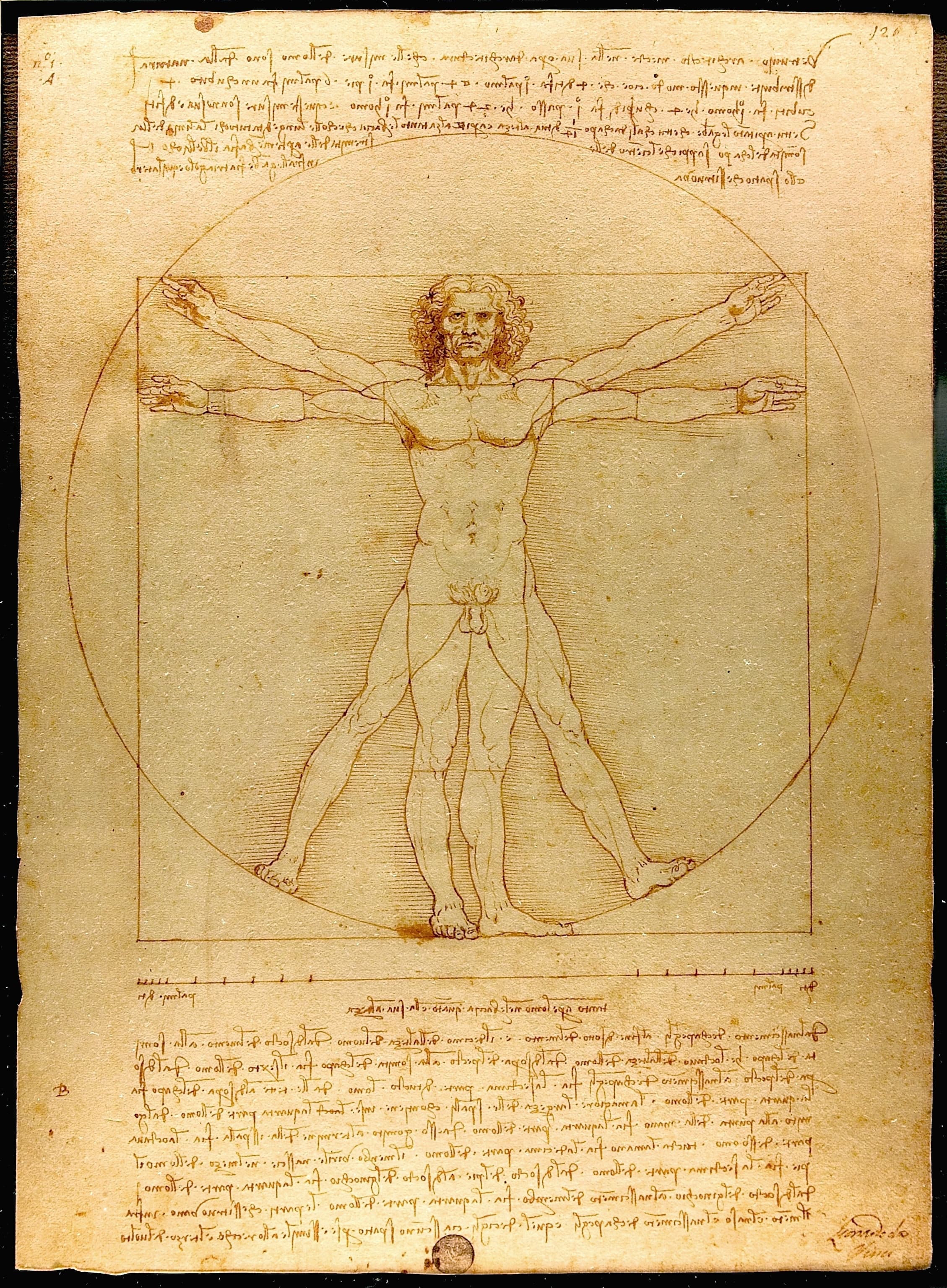
A sudden, intense obsession with the ghost of antiquity quieted the crises of the late medieval world.
In 1401, a committee of merchants and guild masters in Florence announced a competition. The task was to design a new set of bronze doors for the Baptistery of the Cathedral, a civic crown jewel of the city. Among the contenders were two young, fiercely competitive Florentines: Lorenzo Ghiberti and Filippo Brunelleschi. Ghiberti won the commission, but the intense rivalry between these two men, and the subsequent rush of commissions that pitted the city's artists, sculptors, and architects against one another, ignited a creative firestorm. This competitive friction—unfolding in a self-governing city-republic wealthy from trade—marked one of the precise moments where the cultural movement we call the Renaissance began to crystallize. Within decades, this local striving to surpass both contemporaries and the ancients would transform the intellectual, artistic, and political contours of the Western world.
The term "Renaissance," or Rinascimento, suggests a clean, dramatic rebirth—the sudden awakening of Europe from a long, dark medieval slumber. Yet this etymological metaphor is deceptive. Rather than an abrupt rupture with the medieval past, the Renaissance from 1400 to 1600 CE is better understood as a transitional fusion, a gradual evolution that was "linked by a thousand ties" to the Middle Ages. Long before the fifteen-century flowering in Florence, the foundations of this transformation were laid. The independent Italian city-republics had pioneered responsive governments and a commercial revolution on a scale never before seen. While the great European states of France and Spain remained absolute monarchies, and other territories lay under direct papal control, Italian merchant-states like Florence, Venice, and Genoa took the early principles of capitalism—originally developed on medieval monastic estates—and built a modern financial system. The introduction of double-entry bookkeeping, sophisticated accounting, and international banking generated the immense wealth required to bankroll a revolution in culture. It was this liquid capital, concentrated in the hands of ambitious civic leaders and powerful patron dynasties like the Medici, that allowed art and intellect to become the currency of political prestige.
At the core of this transformation was humanism, an intellectual program derived from the Roman concept of humanitas and the Greek philosophical assertion that "man is the measure of all things." Renaissance humanism was defined by a specific bias: it was an endeavor by thinkers to reconstitute the human being as a free agent, utilizing litterae humaniores—letters leaning toward the side of human experience rather than pure divinity. This was not a rejection of Christianity; the Catholic Church remained the grandest patron of the era, and humanists dedicated many of their finest works to theological subjects. Instead, it was a subtle, profound shift in perspective. To understand this shift, one must look to the libraries. While twelfth-century medieval scholars had focused their energies on Greek and Arabic treatises concerning natural science, mathematics, and philosophy, fifteenth-century humanists were consumed by a desire to recover the literary, historical, and oratorical voices of classical antiquity.
12 links to entries not yet ingested in the Library.
This recovery occurred in two distinct, overlapping phases. The first was a Latin phase, initiated in the fourteenth century by figures like Petrarch, who expressed a deep nostalgia for the classical past, and carried forward by scholars such as Coluccio Salutati, Niccolò de' Niccoli, and Poggio Bracciolini. These men scoured the neglected monastic libraries of Europe, unearthing dust-covered manuscripts of Cicero, Lucretius, Livy, and Seneca. By the early fifteenth century, when the bulk of surviving Latin literature had been recovered, a Greek phase began. For centuries, the study of ancient Greek literature, drama, and history had been practically non-existent in Western Europe, preserved only by Byzantine scholars. The fall of Constantinople to the Ottoman Empire in 1453 forced a wave of Greek émigrés to flee westward, carrying precious ancient manuscripts with them. Suddenly, Western scholars were reading Homer, Thucydides, and the Greek dramatists in their original tongue.
This retrieval of ancient texts had radical consequences for European self-esteem and religious scholarship. By returning to original Greek Christian texts, including the Greek New Testament, humanists like Lorenzo Valla and Erasmus of Rotterdam began to critically evaluate the historical foundations of Western theology, inadvertently paving the path toward the Protestant Reformation of 1517. Intellectuals looked for new foundations, seeking to improve the worldly and secular through a dual lens: what Niccolò Machiavelli called "a long experience with modern life and a continuous learning from antiquity." In 1486, Giovanni Pico della Mirandola published his Oration on the Dignity of Man, a brilliant defense of human potential, natural thought, and faith, argued entirely on the grounds of human reason. Meanwhile, Machiavelli himself revolutionized political philosophy by stripping away medieval theological idealism, choosing instead to analyze political power and statecraft as they actually existed in the real world.
This drive to capture reality as it truly was reshaped the visual world. Florentine painters, building upon the early, naturalistic breakthroughs of Giotto and led by the innovations of Masaccio, strove to depict the human form with anatomical accuracy and emotional depth. They mastered linear perspective and the naturalistic behavior of light, transforming the flat, symbolic surfaces of medieval iconography into deep, three-dimensional spaces that mirrored the physical world. This was the era of the polymath—exemplified by Leonardo da Vinci and Michelangelo—whose mastery across painting, sculpture, engineering, and anatomy inspired the concept of the "Renaissance man."
As the fifteenth century progressed, these Italian innovations began to spill across the Alps. The spread of the Renaissance was uneven, taking on different characteristics in northern Europe and Spain, but its dissemination was vastly accelerated by a technological revolution: the invention of metal movable type. Printing, alongside the widespread use of paper, allowed humanist ideas, vernacular literature, and translated classical texts to bypass the exclusive scriptoriums of the Church. The intellectual and artistic monopoly of feudalism and scholasticism began to crumble. At the same time, innovations in navigation and the mariner's compass pushed European ships across the oceans, expanding the physical boundaries of the known world just as the shift from a Ptolemaic to a Copernican astronomical system was rewriting the heavens.
Yet the movement was not without its darker currents. While humanism celebrated the universal potential of mankind, some scholars utilized ancient ethnic origin myths to foster a newborn, competitive chauvinism among emerging European nation-states. It was a period marked by deep political instability, warfare, and, occasionally, profound cultural pessimism. The Italian Renaissance, which had flourished in the delicate balance of competing city-states, met a violent symbolic end in 1527, when the unpaid imperial troops of Holy Roman Emperor Charles V sacked Rome during the War of the League of Cognac. Though the Renaissance spirit endured for decades in the canvases of late sixteenth-century Venetian masters like Tintoretto, Sofonisba Anguissola, and Paolo Veronese, the onset of the Protestant Reformation and the rigid theological battles of the Counter-Reformation after 1545 gradually brought the humanist era of open-ended, critical inquiry to a close, giving way to the dramatic, theatrical certainties of the Baroque.
Ultimately, the Renaissance was a grand transition. It stood as the final stage of the Middle Ages, emerging from feudal structures and utilizing the recovered light of classical antiquity to forge the tools of the modern era. By restoring humanity's confidence in its own intellectual and creative faculties, the Renaissance shattered the rigid mental barriers of medieval orthodoxy. It left behind a world that had reconstituted its relationship with history, validated the observation of nature, and established the secular and worldly as domains worthy of rigorous human devotion.