Organization · Austronesian Expansion
Rapa Nui people
- Also known as
- ljudstvo Rapa Nui
- Người Rapa Nui
- orang Rapa Nui
- orang Rapa Nui
- Pascuans
- Pasxa Oroli
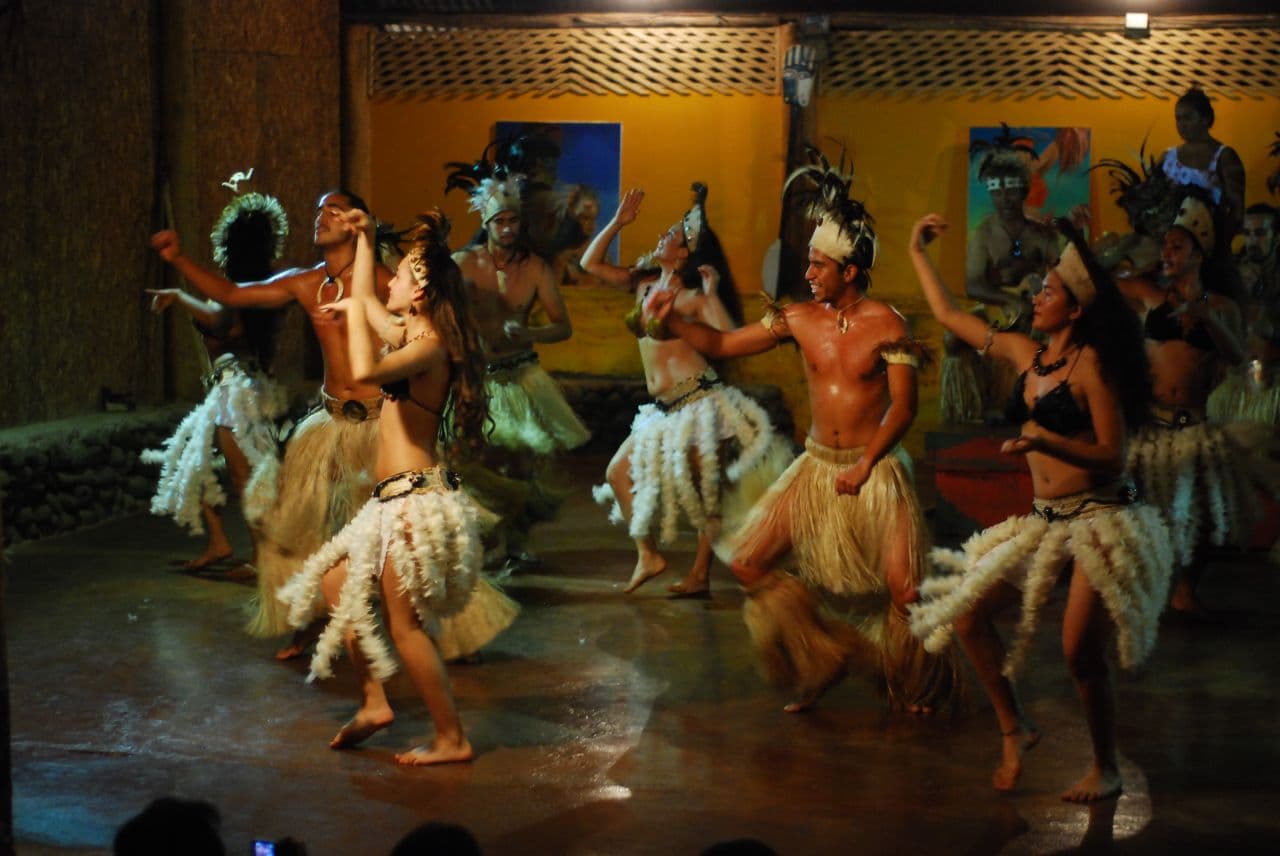
On the remote volcanic outpost of Easter Island, the easternmost edge of the Polynesian diaspora, the Rapa Nui people carved a civilization defined by monumental stone sculptures called moai and a unique glyphic script known as rongorongo, which today remains undeciphered.
To look upon the stone giants of Rapa Nui—the moai—is to confront one of the most enduring paradoxes of human geography. Spread across a speck of volcanic rock in the vast, empty expanse of the southeastern Pacific, these eight hundred and eighty-seven monoliths stand as the easternmost outposts of Polynesian civilization. Carved from the island’s compressed volcanic ash between 1250 and 1500 CE, the figures, believed to represent the living faces of deified ancestors, once stared inland, keeping watch over the communities that labored to raise them. With eyes of white shell and dark volcanic glass, some crowned with heavy cylinders of red scoria known as pukao, they were more than monuments; they were vessels of mana, the spiritual force that bound the living to the dead. Yet, by 1868, every single one of these silent sentinels had been toppled, leaving behind an archaeological mystery that has sparked a century of fierce debate over the fate of the people who carved them.
For decades, the prevailing narrative of the Rapa Nui was one of self-inflicted ruin. It was a compelling, cautionary tale of "ecocide": an isolated society that, in an obsessive quest to carve and transport ever-larger stone ancestors, stripped its island of its ancient forests. Proponents of this theory argued that the loss of the giant Rapa Nui palm—once the largest palm species in the world—triggered a catastrophic chain reaction. Without timber, the islanders could no longer build deep-sea fishing canoes or the wooden sledges used to move the moai. Soil erosion crippled crop yields on an island already marginalized by a cool climate, sparse rainfall, and fierce ocean winds. In this telling, resource exhaustion descended into a brutal civil war between rival groups, characterized by the legendary battle between the Hanau Epe and the Hanau Momoko, reducing a thriving population of several thousand to a desperate remnant.
But modern science and indigenous memory have begun to tell a far different, more resilient story. Genetic analyses of pre-historic skeletons and modern islanders have revealed no evidence of a pre-contact population collapse. Instead, researchers have uncovered an astonishingly sophisticated agricultural civilization that adapted to its harsh environment rather than destroying it. To combat the drying winds and nutrient-poor soils, the Rapa Nui developed "lithic mulching"—a technique of arranging volcanic rocks across their fields to trap moisture, reduce soil erosion, and regulate ground temperature. They dug composting pits, engineered irrigation systems, and built stone windbreaks to shelter crops of sweet potatoes, taro, yams, bananas, and sugarcane. The stone structures long assumed to be chicken coops were, in fact, sacred tombs, where domestic chickens were kept and nourished by the calcium-rich bone meal of the ancestors. The decline in the island's pollen record, once read as a sudden, frantic deforestation, is now understood to have been a gradual, complex transition influenced by climatic droughts and the introduction of Polynesian rats, occurring alongside a stable and persistent human presence.
Rather than a self-inflicted collapse, the true demographic tragedy of the Rapa Nui began only when their isolation was shattered by the outside world. On Easter Sunday, April 5, 1722, the Dutch explorer Jacob Roggeveen became the first European to record contact with the island. His visit lasted only a week, but it opened the floodgates. Spanish, British, and French expeditions followed over the next several decades. In 1770, Felipe González de Ahedo claimed the island for Spain, obtaining the signatures of Rapa Nui chiefs on a treaty written in rongorongo—the island’s unique, undeciphered script of glyphs that remains one of the world's great linguistic puzzles. With these European ships came invisible killers: smallpox and other foreign pathogens to which the isolated islanders had no immunity. It was these introduced diseases, rather than internal warfare, that decimated the population, turning a stable society into a vulnerable landscape of loss, where the ancestral moai were gradually cast down from their stone platforms, or ahu.
Despite these waves of devastation, the core of Rapa Nui culture endured, adapting and absorbing foreign influences while fiercely guarding its Polynesian roots. The ancient religion of the ancestor-cult gave way to the Tangata manu, or Birdman sect, centered on the creator god Makemake. Each year, competitors would leap from the cliffs of Orongo, braving shark-infested waters to retrieve the first egg of the sooty tern from a nearby islet; the sponsor of the winning swimmer was declared the sacred Birdman for the next five months. Today, this rich cosmology is preserved in a vibrant oral tradition, alongside a physical culture that has refused to fade. Traditional tattooing, once a sacred marker of social hierarchy and divine mana applied with bone needles called uhi, is experiencing a profound renaissance among Rapa Nui youth who wear ancestral motifs as badges of modern identity. The island’s cuisine—Pascuense—still revolves around the umu, an earth oven where seafood, sweet potatoes, and plantains are wrapped in banana leaves and roasted over hot stones, alongside po'e, a sweet banana and pumpkin pudding.
The modern Rapa Nui find themselves living in a complex, dual world. Today, they number some 7,750 inhabitants, almost all residing in the coastal village of Hanga Roa. Though they are citizens of Chile, which annexed the island in 1888, they are culturally and linguistically distinct. While Spanish has become the dominant language of education and daily life, the Rapa Nui language—a member of the Eastern Polynesian family—is still spoken, even as its sentence structures gradually shift under the influence of Spanish. The economy is almost entirely dependent on the global fascination with the moai, drawing hundreds of thousands of tourists to the Rapa Nui National Park, a protected World Heritage site. Yet this influx of tourism and external governance has sparked a modern struggle. Over the past decade, Rapa Nui activists have engaged in intense protests, occasionally clashing with Chilean authorities, as they demand greater self-determination, sovereignty over their ancestral lands, and control over the fragile marine ecosystems that surround their home. No longer viewed as the passive victims of an ecological fable, the Rapa Nui stand today as a testament to indigenous survival, actively navigating the pressures of the twenty-first century while remaining the caretakers of an open-air museum that belongs to the entire world.
Connected to
3 links to entries not yet ingested in the Library.