Place · Indus Valley Civilization
Rakhigarhi
- Also known as
- Rakhi Garhi
- Rakhi Garhi
- Rakhi Garhi
- Ракхигархи
- Ракхігархі
- Ракхігархі
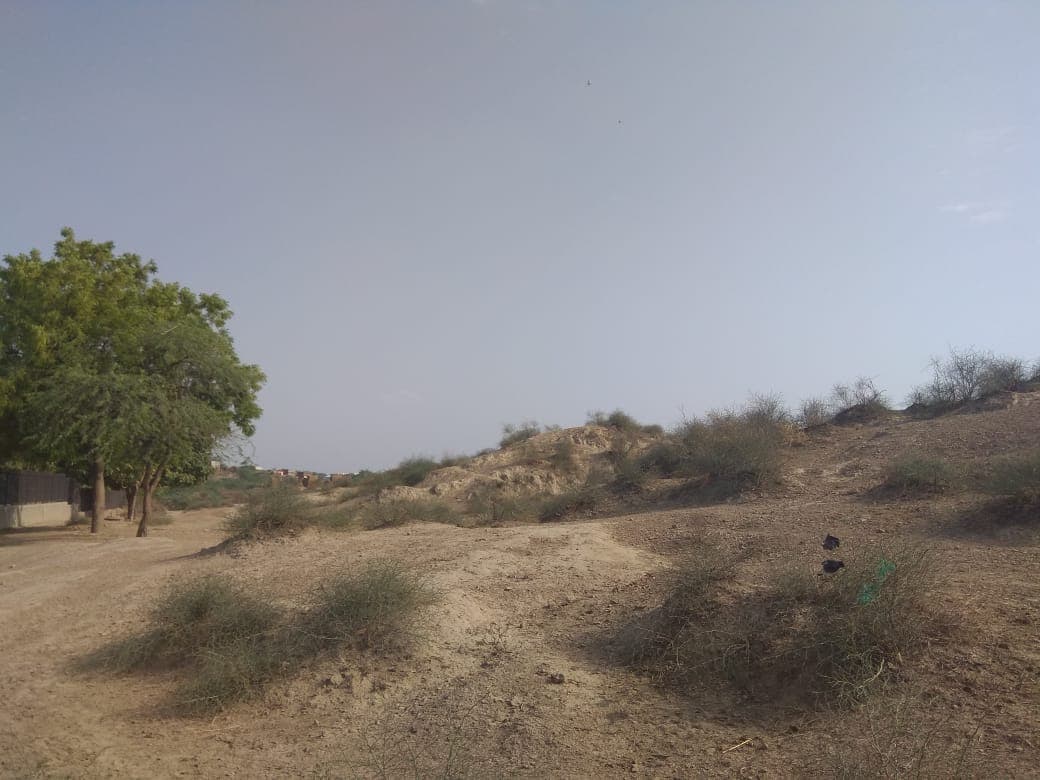
Beneath the soil of a quiet village in the northern Indian state of Haryana lies a vast, fragmented puzzle of the ancient world.
Deep in the alluvial plains of the Ghaggar River basin, in the northwestern Indian state of Haryana, lies a vast network of dust-covered mounds that has quietly rewritten the geography of the ancient world. For decades, the story of the Indus Valley Civilisation was anchored to the iconic ruins of Harappa and Mohenjo-daro, both situated in modern-day Pakistan. Yet, some 150 kilometres northwest of Delhi, the village of Rakhigarhi sat atop an archaeological colossus of comparable, if not superior, scale. Underneath the modern brick houses, agricultural fields, and grazing tracts of the Hisar District lies a sprawling prehistoric metropolis that spanned the entire arc of the Indus enterprise—from its enigmatic, pre-formative dawn to its highly organized, mature urban zenith, and ultimately to its silent, centuries-long unraveling.
The sheer physical footprint of Rakhigarhi has provoked an intense, ongoing recalculation among archaeologists. Throughout the late twentieth century, consensus held that the site occupied a respectable but secondary tier of around 80 to 100 hectares, distributed across five closely integrated mounds. But the earth here is deceptive. In 2014, excavations revealed additional mounds, designated RGR-8 and RGR-9, which had been partially obscured and flattened by generations of local farming. With these discoveries, the Archaeological Survey of India asserted that the total zone of archaeological remains stretched across 300 to 350 hectares, potentially making Rakhigarhi the largest known urban settlement of the entire Indus Valley Civilisation. While some scholars caution that these outlying mounds may not have been fully integrated into a single, cohesive metropolis at any one point in time, the scale of the site remains undeniable. It was not merely a frontier outpost; it was a titanic regional capital, a commercial and administrative engine humming with life long before the rise of imperial Rome or the unification of Egypt.
To walk through the excavated sectors of Rakhigarhi is to encounter a society obsessed with order, sanitation, and exquisite craftsmanship. The inhabitants of the mature Harappan phase, which flourished between 2600 and 1900 BCE, possessed an urban planning sensibility that feels startlingly modern. Streets measuring nearly two meters in width cut through residential quarters, flanked by brick-lined drains designed to carry sewage away from households. The houses themselves were built from standardized terracotta bricks, served by sophisticated rainwater harvesting systems and large storage facilities. Among the most imposing structures unearthed is a massive public granary dating to the mature phase. Constructed from mud-bricks with a floor of rammed earth and plaster, this structure contains seven rectangular and square chambers. Along the lower portions of its walls, archaeologists detected traces of lime and decomposed grass—a brilliant ancient preservation technique where lime served as a natural insecticide and grass acted as a barrier against dampness and rot.
Beneath this civic order lay a vibrant, highly specialized industrial economy. Rakhigarhi was a city of makers. Excavators have uncovered a massive gold foundry, complete with a furnace and a staggering cache of approximately 3,000 unpolished semi-precious stones. Alongside these raw materials were the specialized stone-polishing tools of the lapidary artists who turned carnelian, jasper, and lapis lazuli into beads coveted across the ancient Near East. The material culture recovered from the soil speaks of a people who balanced utilitarian survival with a rich aesthetic life. Bronze vessels decorated with silver and gold, copper fish hooks, needles, and finely carved terracotta seals coexisted with more playful pursuits. A flourishing "toy culture" is preserved in the earth: miniature wheels, tiny clay lids, sling balls, and stylized animal figurines, suggesting a domestic life where children played while artisans worked metal and merchants weighed goods using highly standardized stone weights.
Yet, for all its material sophistication, the ultimate human reality of Rakhigarhi is found in its quietest corner: Mound RGR-7. This was the city’s cemetery, a mature-phase burial ground that has yielded crucial insights into the intimate lives and biological realities of the Harappan people. The dead were buried with meticulous care, laid out on their backs with their heads oriented toward the north. In death, as in life, they were surrounded by the tools and ornaments of their daily existence. Utensils for food and drink were placed near their heads, presumably to sustain them in the afterlife. The graves of three women revealed delicate shell bangles still clasped around their left wrists; near one lay a precious gold armlet, while scattered semi-precious stones near the skull of another pointed to an elaborate necklace that had long since decayed.
It was from this silent population that modern science extracted perhaps the most historic and debated piece of evidence in contemporary South Asian archaeology. In 2019, a team of geneticists and archaeologists successfully sequenced the ancient DNA of a single female skeleton excavated from the Rakhigarhi cemetery. The results of the analysis revealed a striking biological truth: the individual possessed no genetic ancestry from the Western Eurasian steppe herdsmen who are associated with the spread of Indo-Aryan languages into the Indian subcontinent. Because the Rakhigarhi genome dates to a period before the disintegration of the Indus Valley Civilisation, the study offered powerful biological evidence supporting the theory that the Indo-Aryans migrated into Upper India only after the great Harappan urban centers had already entered their terminal decline.
The story of Rakhigarhi is also a story of fragmented exploration and the delicate politics of preservation. Though the first exploratory digs occurred in the 1960s, followed by more systematic campaigns in the late 1990s and the 2010s, only about five percent of this colossal site has been systematically excavated. The modern village of Rakhishahpur sits directly atop RGR-5, one of the primary mounds of the ancient city, making comprehensive excavation virtually impossible without displacing the living descendants of this ancient landscape. Nearby related sister sites, such as Mitathal and Lohari Ragho, remain mostly unexcavated, sleeping beneath the Haryanvi soil. For now, Rakhigarhi stands as a monument of immense, unexhausted historical potential—a place where the deep past and the urgent present exist in immediate, physical friction, waiting for the remainder of its secrets to be coaxed from the earth.
Connected to
4 links to entries not yet ingested in the Library.