Puebloan peoples
- Also known as
- Anasazi
- Anasazi-kulttuuri
- Anasazikulttuuri
- Anasazin kulttuuri
- Indianed Pueblo
- Indiani Pueblo
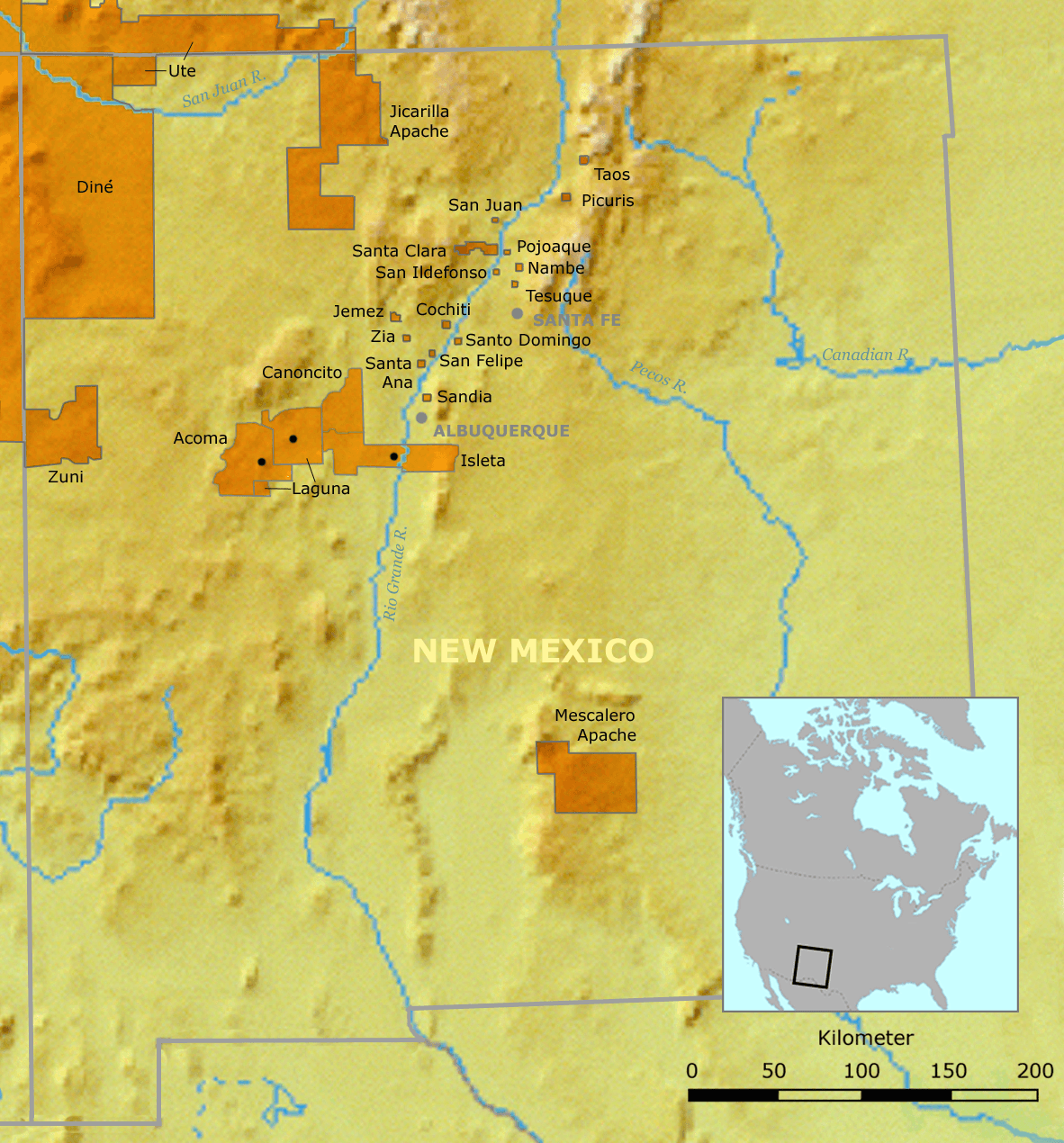
To build a civilization that survives for millennia in the arid expanses of the American Southwest requires an extraordinary relationship with the land.
To look upon the sheer, sun-blinded cliffs of the American Southwest is to confront an architecture of disappearance. In the deep folds of canyon walls, preserved inside monuments like Mesa Verde, Canyon de Chelly, and Chaco Canyon, the sandstone cities of the Ancestral Puebloans hang like stone honeycombs between earth and sky. Built of hand-dressed masonry and golden adobe mud, these multistory apartment-complexes once hummed with the life of thousands of people. By 1050 CE, at the height of this architectural blossoming, the great city-state of Pueblo Bonito in New Mexico’s Chaco Canyon rose five stories high, its seven hundred rooms curving in a massive, planned crescent around wide public plazas. Yet, by the time Spanish explorers rode into the region in the sixteenth century, many of these breathtaking mountain citadels stood empty, their windswept plazas silent, leaving behind one of the most enduring mysteries of the continent.
The story of the Puebloan peoples is not one of sudden extinction, but of brilliant adaptation and relentless migration. Long before they built their cities in the cliffs, the peoples of this arid landscape—inheritors of the ancient Mogollon, Hohokam, and Ancestral Pueblo cultures—lived in small, scattered hamlets of semi-subterranean pit-houses. Around 700 CE, a profound shift occurred. The subterranean life was pulled upward. Pueblo communities began constructing connected, rectangular rooms above ground, using local stone and adobe. Between 900 and 1350 CE, this architecture evolved into defensive masterworks. Fearing raids from northern nomadic groups like the Comanche and Navajo, the Puebloans retreated to the ledges of massive rocks, flat-topped mesas, and steep canyon walls, building villages accessible only by rope or grueling rock climbs. These were not merely fortresses; they were the hubs of vast, interconnected regional networks, linked by engineered roadways that stretched for hundreds of miles into the surrounding deserts.
Life in these stone cities was dictated by the fragile chemistry of water and soil. To survive in a land of scarce rain, the Puebloans split into two distinct agricultural traditions. To the west, in the desert regions of the Hopi and Zuni, communities mastered dry-farming, coaxing varieties of hardy corn, squash, and beans from parched earth using techniques designed to conserve every drop of moisture. To the east, along the rivers, the Eastern Pueblos engineered sophisticated canal irrigation systems—techniques perfected centuries prior by the Hohokam—to redirect the waters of the Rio Grande and its tributaries. Agriculture was not merely a means of survival; it was the spiritual scaffolding of their world. Corn was, and remains, the sacred center of Puebloan life, its cultivation tied directly to complex cosmological cycles.
This division of survival strategies mirrored deep social and linguistic fractures. The term "Pueblo" is a Spanish word meaning simply "village" or "people," a flat European label that masks an astonishingly diverse tapestry. The Pueblo peoples spoke, and still speak, languages belonging to four entirely distinct, mutually unintelligible language families: Keresan, Tanoan (comprising Tewa, Towa, and Tiwa), Uto-Aztecan (Hopi), and Zuni, a language isolate with no known relatives on Earth. Their social structures were equally varied. The Western Pueblos, alongside the Keres and Jemez, organized their societies around matrilineal clans, where children belonged to their mother’s lineage, and spiritual life focused on multiple underground ceremonial chambers called kivas. They looked to the north as the origin of their sacred cosmology, believed humanity emerged from the deep earth, and revered the numbers four and seven. Conversely, the Tanoan-speaking Eastern Pueblos practiced a patrilineal system, relied on a philosophy of dualism, possessed only two kivas, and believed their ancestors emerged from beneath the water, orienting their rituals around the west and multiples of three.
Yet, for all their differences, what bound the Puebloans together was a shared worldview anchored in the cacique—a theocratic leader who held authority over both spiritual and material realms—and an extraordinary talent for communal cohesion. This cohesion was tested to its limits in the late thirteenth and fourteenth centuries. A combination of changing climates, resource depletion, and conflict forced a mass migration away from the cliff-dwellings of the Four Corners. The Puebloans abandoned their high stone balconies, moving southward and eastward to settle in more sustainable basins along the Rio Grande and the high mesas of Arizona. They did not vanish; they simply reconstituted their world, building new, vibrant communities like Taos, Acoma, and San Ildefonso.
When the Spanish conquistador Juan de Oñate arrived at the end of the sixteenth century with soldiers and Franciscan friars, he encountered not a primitive wilderness, but a network of wealthy, self-governing, multistoried city-states. The Spanish mission was absolute: the total subjugation of the Puebloans and the systematic eradication of their ancient religion in favor of Catholicism. The Spanish sought to dismantle the authority of the caciques, outlawing traditional ceremonies and punishing spiritual leaders. But the Puebloans, who had survived centuries of drought and migration, met this spiritual warfare with a quiet, fierce resilience. They folded their ancient beliefs into the rituals of the colonizers, creating a highly sophisticated, syncretic Pueblo Christianity that allowed them to preserve their sacred cosmology under the very noses of the Spanish clergy. When pushed too far, however, their resistance turned explosive, culminating in the historic Pueblo Revolt of 1680, which successfully expelled the Spanish empire from their lands for over a decade.
Today, the descendants of these ancient architects still inhabit the sandstone mesas and river valleys of New Mexico and Arizona. The ancient cliff-dwellings, preserved in stone, are not monuments to a dead culture, but the ancestral homes of a living people. In the twenty-first century, some 75,000 Puebloans continue to cultivate their ancestral corn, speak their ancient languages, and dance in the plazas of villages that have been continuously occupied for up to a thousand years. The stone ruins of Chaco and Mesa Verde are not graves of a lost civilization, but the deep, indelible footprints of a people who mastered the art of enduring.
Connected to
- religionChristianity33 CE
+ 8 further connections to entries not yet ingested