Organization · 1400 BCE · Mesoamerican Civilizations
Olmecs
- Also known as
- Civilisation olmèque
- civilització olmeca
- Civilizacion Olmeca
- Civilizacion olmèca
- Civilización cacameca
- Civilização olmeca
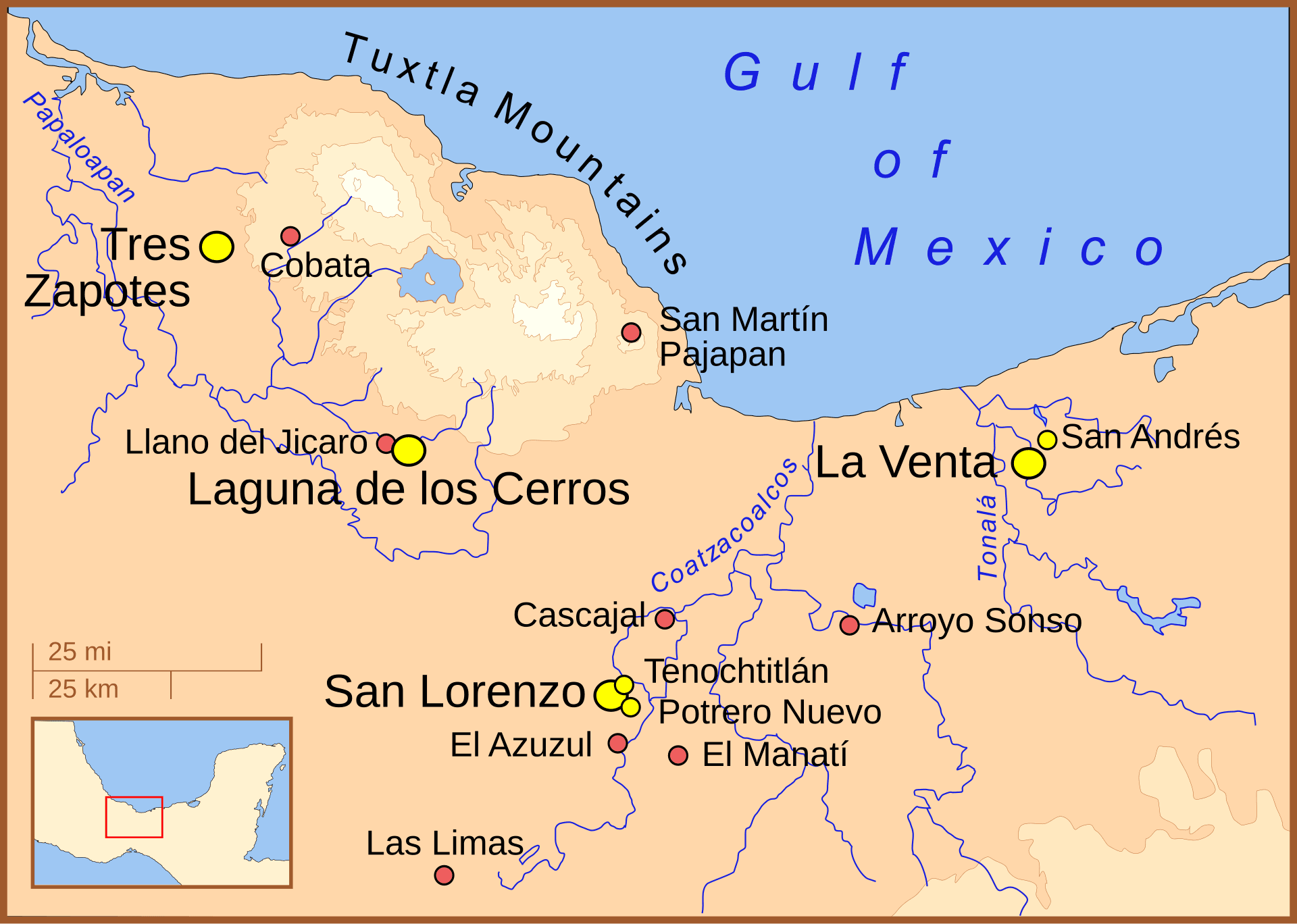
Deep in the swampy lowlands of modern-day Veracruz and Tabasco, a people emerged around 1200 BCE whose true name has been lost to time. We call them the Olmecs—a Nahuatl word meaning "rubber people"—due to a twentieth-century archaeological mistake that conflated them with the later neighbors of the Aztecs. Yet long before this misnaming, these ancient peoples were indeed harvesting latex from the Castilla elastica tree, mixing it with the juice of morning glory vines, and fashioning the bouncing spheres used in the Mesoamerican ballgame.
From their early center at San Lorenzo Tenochtitlán to the later ridge-top city of La Venta, the Olmecs sculpted a distinct visual world. They are most famous for carving colossal stone heads, alongside striking artworks that collectors first pulled from the pre-Columbian art market in the late nineteenth century. Beyond their monumental art, they established cultural patterns that would echo across the region for millennia, pioneering ritual bloodletting and the ceremonial ballgame.
By 400 BCE, the great Olmec centers lay abandoned, and the population of their eastern heartland plummeted, leaving only intermittent traces of human occupation. Although their cities fell silent and their self-given name faded from memory, the artistic styles and sacred rituals of the Olmecs became the foundational vocabulary for the civilizations that followed them in the Mesoamerican world.
Connected to
4 links to entries not yet ingested in the Library.