Person · 1534 CE – 1582 CE · Imperial Japan
Oda Nobunaga
- Also known as
- Nobunaga
- Nobunaga
- Nobunaga
- Nobunaga
- Nobunaga Oda
- Nobunaga Oda
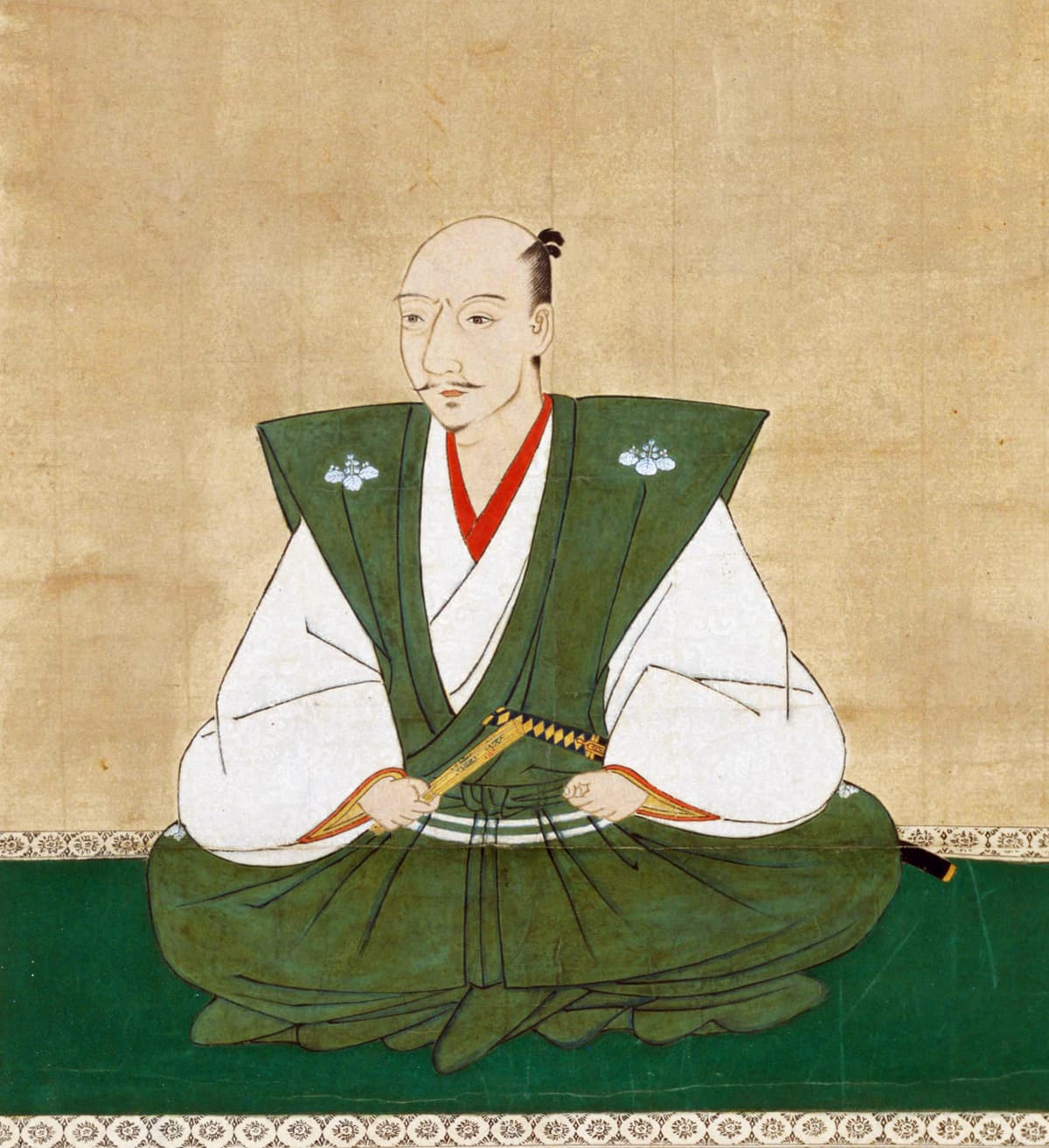
In his youth, Oda Nobunaga was known as a bizarre eccentric who ran through Nagoya in sleeveless bathrobes, rode horses backward while eating melons, and danced in female clothing at local taverns.
In the mid-sixteenth century, the young heir of the Oda clan was known across Owari Province not for his dignity, but for his deliberate, theatrical outrages. To the exasperation of his family’s chief retainers, Oda Nobunaga spent his youth roaming the countryside in sleeveless bathrobes and short trousers tied with rough hemp rope. He swam, wrestled, and frequented taverns and brothels; he rode his horse backward while eating melons, and on occasion, danced in women’s clothing. His elders called him the "Fool of Owari." When his father, Nobuhide, died unexpectedly in 1551, the seventeen-year-old heir arrived at the funeral and shocked the assembled mourners by throwing ceremonial incense directly at the altar. Yet beneath this performative madness lay a calculated disregard for the rigid conventions of his age—a quality that would transform him from a provincial eccentric into the first "Great Unifier" of a fractured Japan.
Nobunaga’s early life was defined by the chaos of the Sengoku period, an era of endless civil war where authority was measured solely by the reach of a warlord’s sword. Born in June 1534, most likely in Shobata Castle, Nobunaga was the first legitimate son of Oda Nobuhide, a deputy military governor of Owari. Though designated as the heir and given Nagoya Castle at the age of eight, his succession was anything but secure. The incense-throwing incident at his father’s funeral triggered an immediate civil war within the clan. Key retainers, disgusted by Nobunaga’s behavior and smelling opportunity, rallied around his younger brother, Nobuyuki, who was regarded as far more traditional and manageable. For nearly a decade, Nobunaga had to fight simply to survive within his own borders.
He secured his position through a mixture of tactical pragmatism and cold violence. When his close advisor and mentor, Hirate Masahide, committed ritual suicide in 1553—ostensibly to admonish the young lord for his behavior—Nobunaga did not reform; instead, he intensified his campaigns against his rivals. He besieged and executed his uncle, Oda Nobutomo, who had assassinated the provincial governor. When his brother Nobuyuki rebelled with the backing of prominent generals, Nobunaga defeated them in battle but initially pardoned his sibling at their mother’s urging. When Nobuyuki plotted a second rebellion shortly thereafter, Nobunaga’s patience expired. Feigning a mortal illness, he lured his brother to visit his sickbed and had him promptly assassinated. By 1559, through the systematic elimination of his cousins, uncles, and brother, Nobunaga had destroyed all internal opposition. The "Fool of Owari" was now the absolute master of his province, but a far larger threat was already marching toward his borders.
In the spring of 1560, Imagawa Yoshimoto, one of the most powerful daimyō in Japan, mobilized an army of twenty-five thousand men and began a march toward the capital of Kyoto. Owari Province lay directly in his path. As the Imagawa forces easily overran the border fortresses of Washizu and Marune, Nobunaga’s advisors urged him to retreat behind the walls of Kiyosu Castle and brace for a siege. The Oda clan could muster no more than three thousand men; a conventional defense meant certain death. Nobunaga refused. Arguing that only a decisive offensive could offset such lopsided numbers, he led his small force out to meet the invaders.
The opportunity came in June. Nobunaga’s scouts reported that the Imagawa vanguard was resting in the narrow, heavily wooded gorge of Dengaku-Kazama, celebrating their early victories. While the enemy drank and relaxed, a sudden, violent thunderstorm rolled over the hills, masking the sound of Nobunaga’s approach. Leaving a decoy force at a nearby fort to keep the enemy’s attention fixed forward, Nobunaga led his main force around the ridge, positioning them directly above the resting Imagawa camp. As the storm cleared, the Oda samurai swept down the slopes in a ferocious surprise assault. In the ensuing panic, Imagawa Yoshimoto was cut down by two of Nobunaga's samurai before he realized he was under attack. The Battle of Okehazama was a stunning military upset that instantly shattered the power of the Imagawa clan and catapulted Nobunaga into national prominence.
The victory at Okehazama reshaped the geopolitical landscape of central Japan. Recognizing the shift in power, the Matsudaira clan—vassals of the defunct Imagawa—broke away and sought peace. In 1561, Nobunaga forged a crucial alliance with their young leader, Matsudaira Motoyasu, who would later take the name Tokugawa Ieyasu. This alliance secured Nobunaga's eastern flank, allowing him to turn his attention northward to Mino Province, ruled by the Saitō clan. Mino’s late lord, Saitō Dōsan, had been Nobunaga's father-in-law and ally, but Dōsan had been overthrown and killed by his own son, Yoshitatsu. Nobunaga used the pretext of avenging his father-in-law to wage a relentless campaign against the province, a war that accelerated when the capable Yoshitatsu died of illness, leaving his young and incompetent son, Tatsuoki, in command.
In this northern campaign, Nobunaga relied as much on subversion as on direct force. He made extensive use of a low-ranking but highly capable retainer named Kinoshita Tōkichirō—the man who would eventually rise to global fame as Toyotomi Hideyoshi. Kinoshita was dispatched to systematically bribe and win over key Saitō vassals, stripping the young Tatsuoki of his military support from within. With his alliances secured, his internal rivals dead, and his strategic eye turned toward the capital, Nobunaga stood poised on the threshold of hegemony. He had proved that he was no fool, but rather a leader of terrifying focus, willing to discard centuries of samurai tradition in favor of raw efficiency, lethal surprise, and political opportunism.
Connected to
12 links to entries not yet ingested in the Library.