Event · 626 BCE – 539 BCE · Mesopotamian Civilizations
Neo-Babylonian Empire
- Also known as
- Bigarren Babiloniar Inperioa
- Chaldean Empire
- Det nybabylonske rike
- Dinasti Chaldea
- Drugo babilonsko kraljestvo
- Dynastia Chaldejska
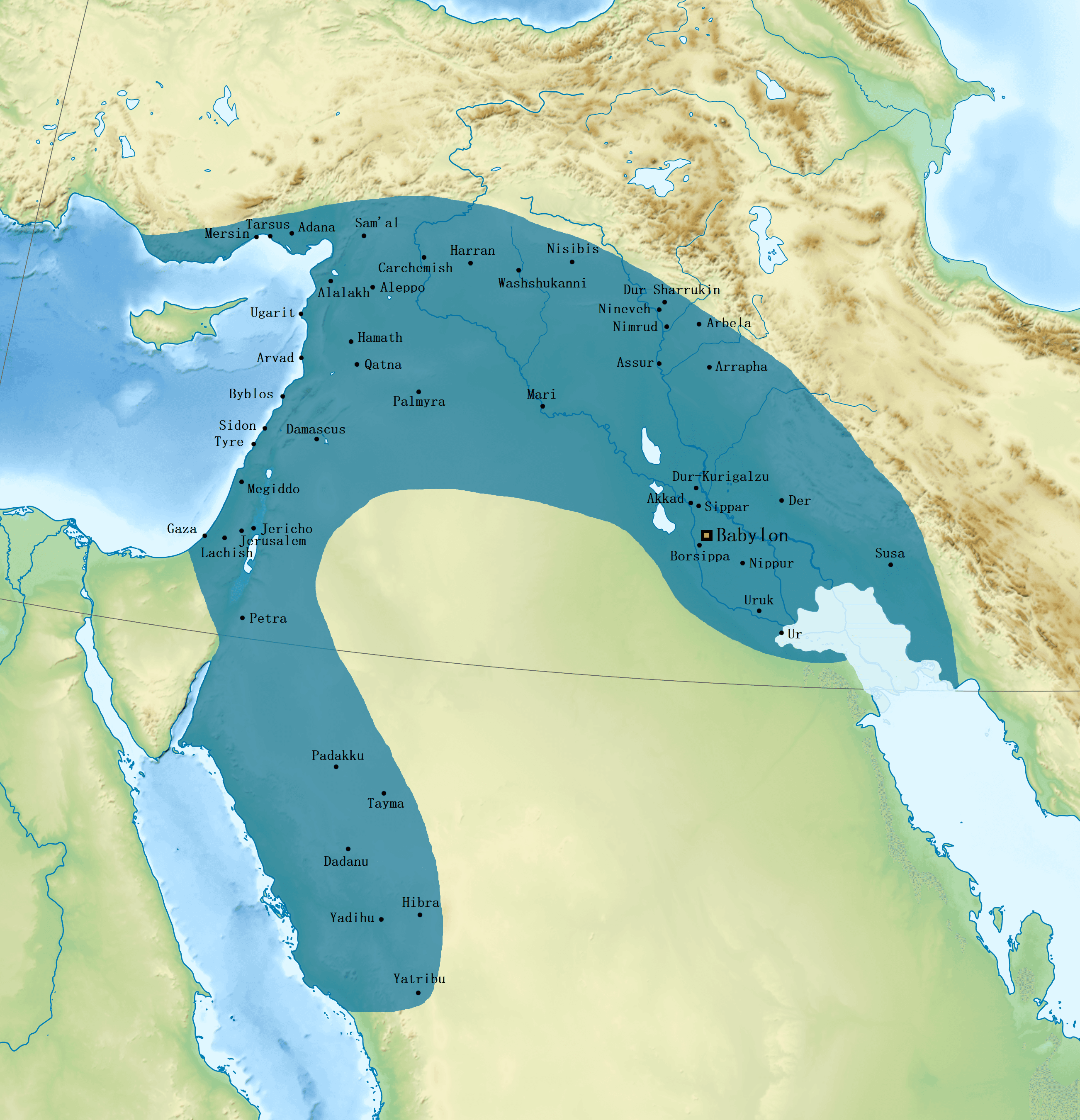
When Nabopolassar claimed the throne of Babylon in 626 BCE, he initiated a spectacular, century-long resurrection.
In the final months of the year 626 BCE, inside the ancient, high-walled city of Uruk, a rebellion was hanging by a thread. For more than a century, the cities of southern Mesopotamia had lived under the heavy, often brutal hand of the Neo-Assyrian Empire. Whenever the south had tried to breathe, the kings of Nineveh had marched down to crush them. But now, Assyria was eating itself from within, fractured by civil war. Sensing an opening, a southern official named Nabopolassar had seized Babylon and Nippur, only to find himself instantly besieged by a massive Assyrian counter-offensive. Hemmed in at Uruk, his forces looked set to become another historical footnote of failed Mesopotamian rebellions. Yet, Nabopolassar held. He repulsed the Assyrians from the city gates, and by November of 626 BCE, he rode into Babylon to be crowned its king. It was a moment of profound restoration. For the first time in nearly a thousand years—not since the legendary reign of Hammurabi—a native dynasty had seized control of the southern floodplains. This was the birth of the Neo-Babylonian, or Chaldean, Empire, a dazzling, eighty-seven-year Indian summer of Mesopotamian civilization that would cultivate some of the ancient world's greatest wonders before its spectacular, sudden collapse.
What followed Nabopolassar’s coronation was a war of absolute survival that quickly turned into a war of total annihilation. The Assyrians, though wounded, fought with the ferocity of a cornered predator. For nearly a decade, the borderlands between north and south fluctuated wildly, but by 620 BCE, Nabopolassar had consolidated his grip on the entirety of Babylonia. To destroy his tormentors completely, he looked eastward, forging a crucial alliance with King Cyaxares of the Medes. Together, this coalition of ancient enemies systematically dismantled the Assyrian state. In 614 BCE, the Medes sacked Assur, the religious heart of Assyria; Nabopolassar arrived just as the smoke was clearing to sign a formal anti-Assyrian pact over the ruins. Two years later, in 612 BCE, the joint Medo-Babylonian armies breached the massive walls of Nineveh, the imperial capital, subjecting it to a brutal, epoch-ending sack. By 605 BCE, when Nabopolassar’s brilliant crown prince, Nebuchadnezzar II, shattered the remnants of the Assyrian army and their Egyptian allies at the Battle of Carchemish, the old geopolitical order was dead. The Assyrian Empire was erased from the map, and Babylon stood as the undisputed master of the Near East.
Nebuchadnezzar II ascended the throne in 605 BCE, inheriting an empire of unparalleled wealth and immediately securing his eastern flank by marrying the Median princess Amytis. His forty-three-year reign would become the golden age of Neo-Babylonian power, a period of immense economic prosperity, population growth, and a deliberate cultural renaissance. Nebuchadnezzar did not merely wish to rule; he wished to construct a physical testament to Babylon's role as the literal and figurative center of the universe. He initiated a massive building campaign that revived the artistic, linguistic, and architectural traditions of the ancient Sumero-Akkadian culture, looking back two millennia for inspiration. He completely renovated at least thirteen cities across his realm, but he poured the bulk of his empire’s tribute into Babylon itself. He widened and paved the grand Processional Street, decorating its walls with vibrant glazed bricks, and rebuilt the legendary Ishtar Gate. Every year, these monuments served as the stage for the New Year’s Festival honoring Marduk, the patron deity of the city, an event designed to project absolute divine favor and imperial majesty. To appease his Median queen, who pined for the forested hills of her homeland, legend says he constructed the Hanging Gardens—a mountain of tiered, irrigated greenery that became one of the Seven Wonders of the Ancient World, though its physical reality remains a subject of intense debate among historians.
Connected to
- followed byAchaemenid Empire550 BCE
- containsBabylon3k BCE
- had as citizenNebuchadnezzar II642 BCE
- followsNeo-Assyrian Empire911 BCE
+ 2 further connections to entries not yet ingested