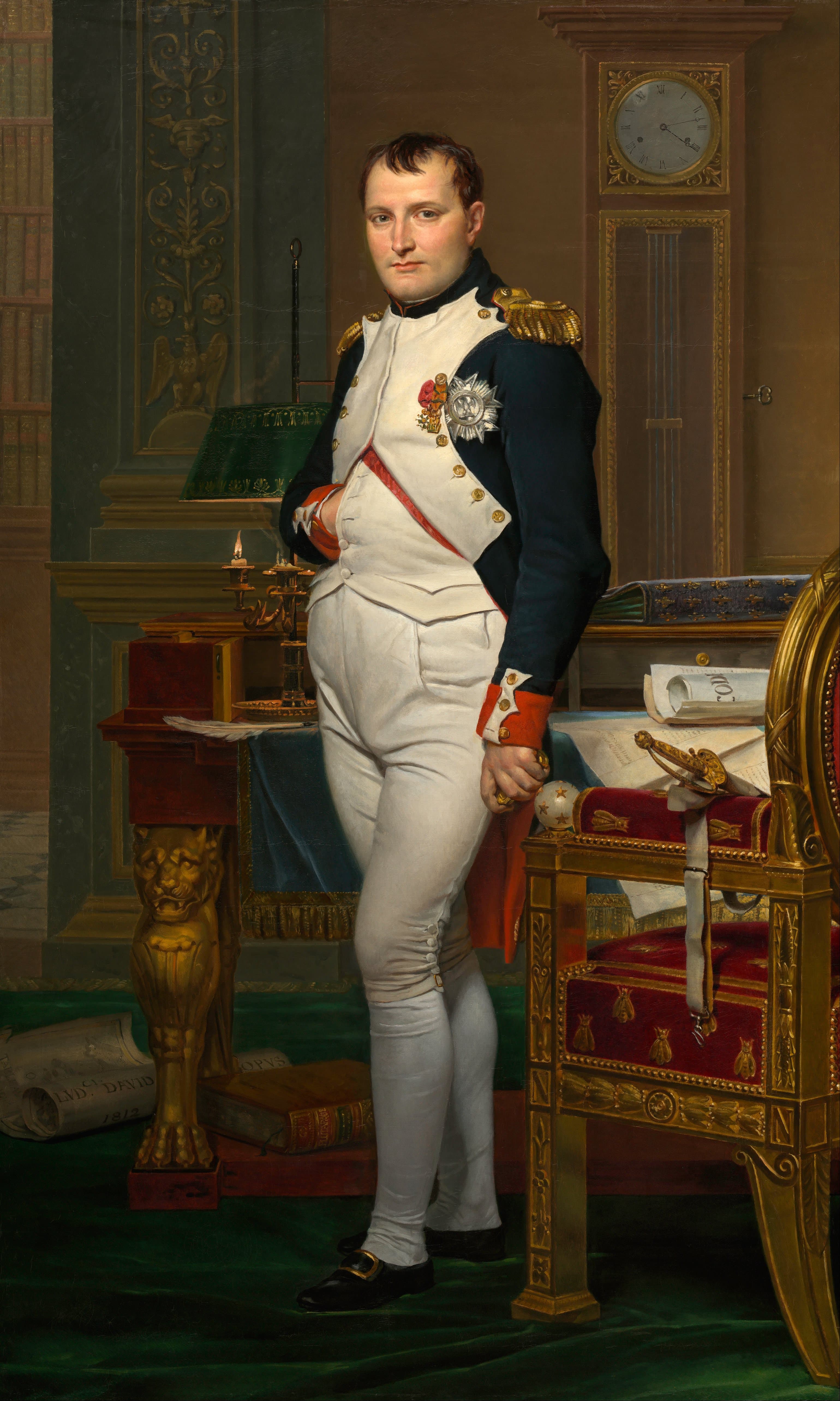
The trajectory of modern European history was fundamentally reshaped by a native of Corsica who began life as Napoleone di Buonaparte.
In the winter of 1783, on the frozen grounds of the military academy at Brienne-le-Château, a fourteen-year-old Corsican boy organized his classmates into opposing armies. Armed only with packed snow and a fierce, tactical precision, he directed the junior students to a resounding victory over their seniors. Or so the story went, told decades later when the boy’s name had become synonymous with the redrawing of European borders. At the time of the snow fight, however, Napoleone di Buonaparte was merely a sullen, impoverished outsider. He was routinely bullied for his thick Italian accent, his short stature, and his family’s complex loyalties on an island that had only become French a year before his birth. He withdrew into mathematics, history, and geography, his examiners noting that the quiet, melancholic boy would make an excellent sailor. Instead, he chose the artillery, a branch of the military where advancement depended on calculation rather than pedigree, unwittingly placing himself at the pivot point of modern history.
He was born in Ajaccio in August 1769, the second surviving child of Carlo Maria Buonaparte and Maria Letizia Ramolino, both descended from minor Italian nobility who had migrated to Corsica centuries earlier. His father had initially fought for Corsican independence under the patriot Pasquale Paoli against the French. But after the devastating Corsican defeat at Ponte Novu, the elder Buonaparte reconciled with the island's new French governor, securing a royal scholarship that sent his young son across the Ligurian Sea to learn the language of his conquerors. Napoleon’s true sovereign in those early years remained his mother, whose severe discipline he later credited with shaping his character. When he graduated from the École Militaire in Paris in 1785—completing a two-year course in just one after his father's death gutted the family finances—he was commissioned as a second lieutenant. He spent the early years of his career divided in mind and body, taking long leaves of absence to return to Corsica, where he threw himself into a chaotic, three-sided political struggle between royalists, French revolutionaries, and Paoli's returning nationalists.
Napoleon’s early political instinct was to align with the Jacobins, the most radical faction of the French Revolution, viewing them as the vehicle to liberate Corsica from its old feudal structures. This choice fractured his relationship with Paoli, who saw the young officer’s family as turncoats. By 1793, after a disastrous French expedition to Sardinia and a failed attempt by Napoleon to seize the citadel of Ajaccio from Corsican volunteers, Paoli’s faction outlawed the Buonapartes. The family fled to the French mainland with little more than the clothes on their backs. It was a ruinous exile that forced Napoleon to abandon his Corsican nationalism and reinvent himself entirely as a Frenchman. Now serving as an artillery captain in Nice, he wrote a political pamphlet, , which caught the attention of powerful Jacobins, including Maximilien Robespierre’s younger brother, Augustin.
Connected to
12 links to entries not yet ingested in the Library.
His breakthrough came in September 1793 at the siege of Toulon. The vital southern port had been surrendered by royalists to an Anglo-Spanish fleet. Appointed artillery commander through Jacobin patronage, Napoleon surveyed the heights and recognized that capturing a single hill fort, which dominated the harbor, would render the enemy fleet’s position untenable. The assault succeeded, the allies evacuated, and the twenty-four-year-old was promoted to brigadier general. Though the subsequent fall of Robespierre in July 1794 briefly saw Napoleon arrested and suspected of treason, his cold-eyed utility saved him. In October 1795, when a royalist uprising threatened the National Convention in Paris, he was tasked with its defense. Ordering his men to fire grapeshot directly into the advancing crowds on 13 Vendémiaire, he cleared the streets with what he termed "a whiff of grapeshot," cementing his indispensability to the new Directory.
By 1796, Napoleon was given command of the Army of Italy, transforming a ragged, demoralized force into a lightning-fast instrument of conquest that shattered the Austrians and their Italian allies. He returned to Paris a national hero, but his soaring ambition made the Directory uneasy. To remove him from the capital, they sanctioned his 1798 expedition to Egypt and Syria, an effort to disrupt British trade routes to India. While the military results in the Middle East were mixed, the campaign served its political purpose. Returning to France in late 1799 amid government paralysis, Napoleon engineered the Coup of 18 Brumaire. He overthrew the Directory and established himself as First Consul of the Republic. The subsequent victory against the Austrians at Marengo in 1800 secured his domestic authority, allowing him to consolidate power, sell the vast Louisiana territory to the United States in 1803 to fund his state-building, and finally, in December 1804, crown himself Emperor of the French.
For the next decade, Europe was defined by the Grand Empire Napoleon forged with his Grande Armée. He shattered coalition after coalition of European monarchs. At Austerlitz in 1805, he achieved his masterpiece, destroying a combined Russo-Austrian army and bringing about the formal dissolution of the thousand-year-old Holy Roman Empire. In 1806, he crushed the legendary Prussian army at Jena–Auerstedt, and in 1807, he defeated the Russians at Friedland, forcing Tsar Alexander I to sign a peace treaty. To enforce a trade embargo against Great Britain, his most persistent foe, Napoleon invaded the Iberian Peninsula in 1808, putting his brother Joseph on the Spanish throne. The move triggered the brutal, draining Peninsular War. Yet, when Austria rose again in 1809, Napoleon secured his hegemony over the continent once more at the Battle of Wagram.
Wherever French armies marched, the old world was dismantled. Napoleon enacted the Napoleonic Code, which established the principle of equality before the law for the middle class, abolished the remnants of feudalism, centralized state power away from religious authorities, and dismantled the Spanish Inquisition. He established a system of public education and emancipated Jews and other religious minorities. But this modernizing impulse coexisted with authoritarian control and racial regression. Napoleon abolished the free press, ended directly elected representative government, and exiled or imprisoned his critics. In the French colonies, he reinstated slavery, banned Black people and mulattos from entering mainland France, severely curtailed the legal rights of women and children, and built a new hereditary nobility to surround his imperial throne.
The turning point came in the summer of 1812, when Napoleon led more than half a million men into Russia. The Russians retreated steadily, burning their own countryside to deny the French supplies. Even after the bloody standoff at Borodino and Napoleon’s subsequent entry into Moscow, the Tsar refused to negotiate. Finding the city ablaze and winter approaching, Napoleon was forced into a catastrophic retreat. The Russian winter and relentless partisan attacks destroyed the Grande Armée. Sensing his vulnerability, Prussia, Austria, and Russia united in the War of the Sixth Coalition, defeating him decisively at the Battle of Leipzig in 1813. By April 1814, allied armies had captured Paris. Napoleon abdicated and was exiled to the Mediterranean island of Elba, while the Bourbon monarchy was restored.
Yet the drama of his life had one final, improbable act. In February 1815, Napoleon escaped Elba with a thousand men, landed in southern France, and marched toward Paris. The troops sent to arrest him defected to his side at the mere sight of his grey overcoat. He reclaimed the imperial throne for a period known as the Hundred Days, but the European powers immediately declared him an outlaw and assembled the Seventh Coalition. On June 18, 1815, on the muddy fields near Waterloo, his forces were definitively defeated by British and Prussian armies.
This time, his captors took no chances. They exiled the forty-six-year-old former master of Europe to Saint Helena, a barren volcanic rock in the middle of the South Atlantic, thousands of miles from the continent he had ruled. There, under the watchful eyes of British guards, he spent his remaining years dictating his memoirs, crafting the myth of a defender of liberty and nationalities who had only ever fought defensive wars. He died on May 5, 1821, of stomach cancer, at the age of fifty-one.
Napoleon’s legacy was so profound that it leaked even into the domestic leisure of the nineteenth century. A popular, fast-paced card game of the era was named "Napoleon" in his honor, where players bid on how many tricks they could win against all others, with the boldest bid termed "going Nap." If a player wished to raise the stakes even higher, they could declare a "Wellington" or a "Blucher," named after the generals who finally brought the Emperor down at Waterloo. It was a fitting tribute to a man who had treated the map of Europe as a high-stakes card table, gambling with kingdoms, laws, and millions of lives, leaving behind a modernized European state system built upon the wreckage of the ancient regimes he had destroyed.