Person · 571 CE – 632 CE · Islamic Caliphates
Muhammad
- Also known as
- Abu al-Qasim
- Abu al-Qasim
- Abu al-Qasim ibn 'Abd Allah ibn 'Abd al-Muttalib ibn Hashim
- Abu al-Qasim ibn 'Abd Allah ibn 'Abd al-Muttalib ibn Hashim
- Abu al-Qasim ibn Abd Allah ibn Abd al-Muttalib ibn Hashim
- Abu al-Qasim ibn Abd Allah ibn Abd al-Muttalib ibn Hashim
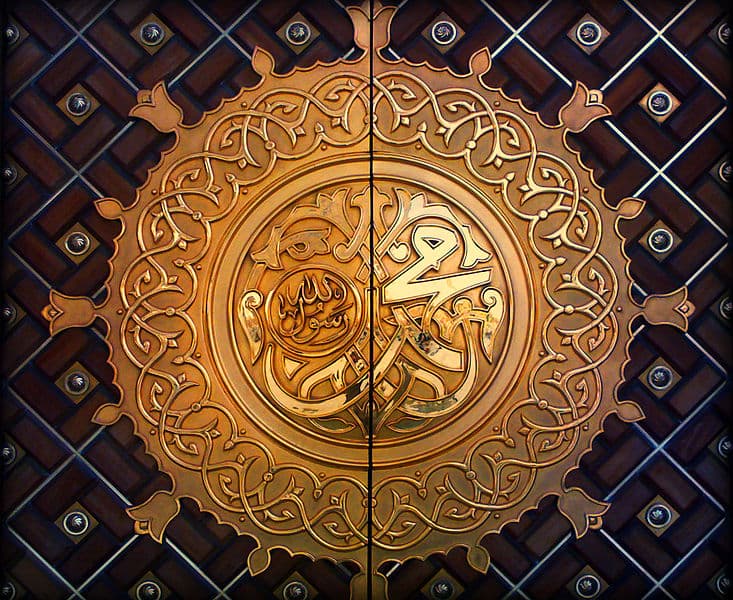
In the early seventh century CE, a forty-year-old orphan from the aristocratic Banu Hashim clan of the Quraysh retreated to the isolation of Mount Hira, a cavernous sanctuary where he spent nights in deep contemplation.
In the early seventh century, the town of Mecca was a place of fragile stone walls, seasonal torrents, and the sharp, mercantile calculations of the Quraysh tribe. Nestled in a barren valley of western Arabia, it was a sanctuary of trade and polytheistic worship, anchored by the Kaaba—a simple, roofless rectangular shrine of dry-stone masonry. In 605 CE, when the Quraysh resolved to rebuild the aging structure to support a new roof, the demolition of the old walls was met with paralysis. The townspeople feared divine retribution for disturbing the sanctuary, until a single citizen stepped forward with a pickaxe, crying out to the deities that their intentions were honorable. Only when he survived the night unharmed did the rest of the tribe join the labor. Among those observing the reconstruction was a young man of the Banu Hashim clan named Muhammad ibn Abdullah. Born around 570 CE, he was a man of modest means but growing repute, known to some as al-Amin—the Assured or Trustworthy. Within a decade, this quiet merchant would begin to deliver a message that would dismantle the very pantheon the Meccans were so desperate to appease, replacing it with an uncompromising monotheism that would reshape the geography of the ancient world.
The early life of the man who would found Islam was defined by early bereavement and the precariousness of tribal life. His father, Abdullah, died before his birth; his mother, Amina, succumbed to illness when he was six, leaving him an orphan in a society where security was entirely contingent on family protection. Raised first by his grandfather, Abd al-Muttalib, and then by his uncle, Abu Talib, the young Muhammad grew up in the shadow of the Banu Hashim’s aristocratic lineage, yet he lacked personal wealth. His early years were spent learning the martial arts of the desert—archery and swordsmanship taught by his uncle Hamza—and the practicalities of the caravan trade under his uncle Abbas. His fortunes shifted dramatically at the age of twenty-five when his business acumen attracted Khadija, a wealthy and independent businesswoman forty years of age. Impressed by his management of her northern caravan to Syria, she proposed marriage. Muhammad accepted, entering into a monogamous partnership that provided him with financial stability and an intellectual confidante until her death.
This newfound stability allowed Muhammad to pursue a practice of spiritual retreat. He began spending nights in seclusion within a mountain cave named Hira, located in the arid peaks overlooking Mecca. It was there, in approximately 610 CE, at the age of forty, that Muhammad reported a shattering experience: an encounter with the archangel Gabriel, who commanded him to recite the first revelations of what would become the Quran. For three years, these experiences remained private, shared only with a small circle of intimates, including Khadija. When he finally began to preach publicly in 613 CE, his message was simple but revolutionary: "God is One," complete submission () to this singular deity () was the only true path, and the social hierarchies and pagan cults of Mecca were spiritually bankrupt. To the ruling elites of the Quraysh, whose prestige and wealth were deeply tied to the pagan pilgrimage trade of the Kaaba, Muhammad’s message was not merely a theological eccentric; it was an existential threat to the social and economic order of western Arabia.
Connected to
- religion · foundedIslam631 CE
- born inMecca
- died inMedina9th c. BCE
+ 12 further connections to entries not yet ingested