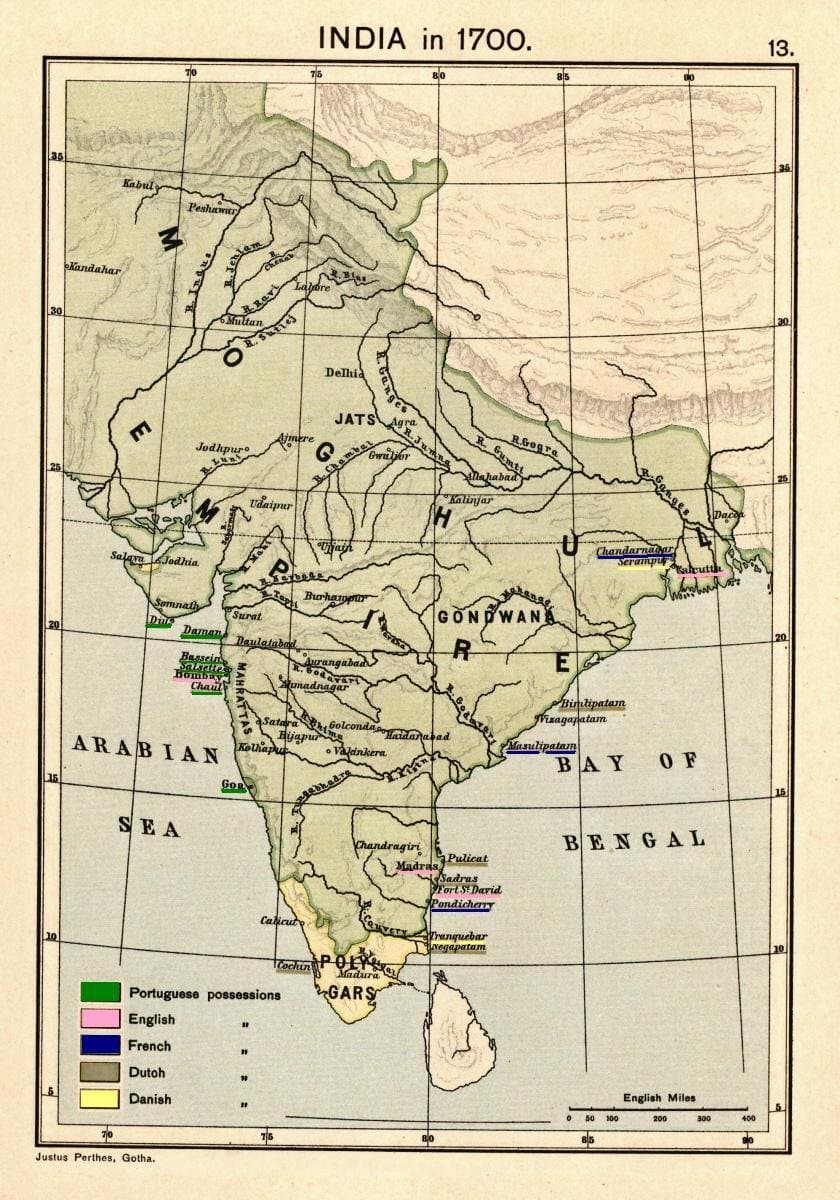
In 1526, a ruler named Babur swept down from the region of modern Uzbekistan, aided by the Safavid and Ottoman empires, to defeat the sultan of Delhi at the First Battle of Panipat.
In the early spring of 1526, on the dusty, blood-slicked plains of Panipat, a displaced prince from the fertile valleys of modern-day Uzbekistan looked out over an army that was not his own. Babur, a descendant of both the Turco-Mongol conqueror Timur and the legendary Genghis Khan, was a man without a kingdom. Driven from his ancestral home in Central Asia, he had retreated southward to Kabul, nursing ambitions that stretched across the Khyber Pass into the vast, wealthy plains of northern India. At Panipat, his relatively small force confronted the massive host of Ibrahim Lodi, the Sultan of Delhi. Babur lacked numbers, but he possessed something new to the battlefields of the subcontinent: the terrifying, thunderous roar of Ottoman and Safavid-supplied firearms and cannons. As the smoke cleared, Lodi’s armies lay shattered, and the traditional Rajput cavalry tactics that soon opposed Babur at Khanwa proved equally powerless against this new age of gunpowder. The center of northern Indian power shifted decisively to Agra. The dynasty Babur established would call itself Gurkani—referencing their Timurid lineage—but to the world they ruled, and eventually to the European merchants arriving on their shores, they would be known by the Persian word for Mongol: the Mughals.
Yet, the foundations of this new empire were desperately fragile. Babur’s sudden death in 1530 left a half-conquered realm to his son, Humayun, whose reign quickly dissolved into misfortune. Ousted from India by the Afghan rebel Sher Shah Suri, Humayun spent fifteen humiliating years in exile at the Safavid court of Persia. This period of displacement, however, forged a profound cultural bridge. When Humayun finally marched back across the Indus in 1555 with Safavid military backing, he brought with him not just soldiers, but a deep reverence for Persian art, literature, and administrative sophistication. Though Humayun died the very next year—tripping down his library stairs—the Persianized, cosmopolitan character of his court survived, ready to be forged into a true imperial system by his thirteen-year-old son, Akbar.
It was Akbar, ruling from 1556 to 1605, who transformed a precarious military occupation into an enduring civilization. Guided initially by his regent Bairam Khan, Akbar pushed the borders of the empire in every direction until his authority dominated almost the entire subcontinent north of the Godavari River. But Akbar understood that swords could only conquer; they could not govern. To stabilize his sprawling dominions, he bypassed the old, fractious elites to construct a highly centralized bureaucracy. He instituted a revolutionary agricultural tax system that demanded well over half of a peasant’s crop, but structured the payments strictly in a stable, well-regulated silver currency. This forced monetization drew even remote rural artisans and farmers into larger, dynamic commercial networks. Rather than suppressing the diverse faiths of his millions of subjects, Akbar equalized and co-opted them. He welcomed Jesuit priests, Hindu scholars, and Muslim theologians to debate in his presence, eventually attempting to synthesize these traditions into , a syncretic religion centered on a cult of loyalty to the emperor.
+ 12 further connections to entries not yet ingested
By the seventeenth century, this pragmatic tolerance had paved the way for an unprecedented era of economic expansion. Under Akbar’s son, Jahangir, and his grandson, Shah Jahan, the empire—known officially in its administrative records as Hindustan—became an economic titan. The arrival of European trading companies in the Indian Ocean, eager for Indian raw silk, cotton textiles, and spices, pumped vast quantities of global silver into the imperial treasury. The Mughal court indulged in conspicuous consumption on a scale that stunned foreign visitors. This accumulated wealth financed a golden age of artistic patronage. Under Shah Jahan, the empire's architectural language reached its zenith. Utilizing white marble, red sandstone, and intricate jewel inlay, his architects raised monuments that served as physical manifestations of imperial order: the Agra Fort, the Red Fort of Delhi, the Shalamar Gardens, and, ultimately, the Taj Mahal, built as a mausoleum for his beloved wife Mumtaz Mahal.
Yet, this aesthetic perfection masked deep, fracturing fault lines. The immense cost of maintaining the imperial court, its sprawling armies, and its monument-building campaigns began to outpace the agricultural revenues of the provinces. In 1658, when Shah Jahan fell ill, a brutal war of succession broke out among his sons. The eldest, Dara Shikoh, was a philosophical liberal who championed a syncretic Hindu-Muslim culture in the mold of Akbar. His younger brother, Aurangzeb, allied himself with conservative Islamic orthodoxy. Aurangzeb emerged victorious, executed Dara Shikoh, and kept his ailing father imprisoned in Agra Fort until his death. Ruling for nearly half a century, Aurangzeb brought the empire to its absolute zenith of territorial expansion, marching deep into the Deccan Plateau to annex the remaining southern sultanates.
Aurangzeb’s long reign, however, marked a sharp break from the pluralistic policies of his predecessors. Seeking to integrate local elites through a shared network of Islamic identity, he reinstated the jizya tax on non-Muslims, compiled the massive Islamic legal code known as the Fatawa 'Alamgiri, and ordered the execution of the Sikh guru Tegh Bahadur—a move that permanently militarized the Sikh community in opposition to the state. Historians still debate his legacy; while some view his religious conservatism as the poison that dissolved the empire’s social cohesion, others point out that he employed more Hindu bureaucrats than any previous Mughal ruler and frequently patronized non-Muslim temples. What is certain is that his relentless, decades-long military campaigns in the Deccan drained the imperial treasury, exhausted his armies, and left the northern administration in a state of severe neglect.
When Aurangzeb died in 1707, the Mughal machine began to rapidly unravel. His son, Bahadur Shah I, attempted to repeal the most polarizing religious policies, but his death in 1712 plunged the dynasty into a chaotic cycle of violent feuds and short-lived puppet rulers. In 1719 alone, four different emperors sat on the throne, elevated and discarded by the powerful Sayyid Brothers. By the mid-eighteenth century, the central authority of Delhi had effectively evaporated. Large swathes of central India fell to the rising Maratha Empire, while regional governors in the Deccan and Bengal broke away to form de facto independent kingdoms, though they still paid nominal, ceremonial lip service to the Mughal emperor’s ultimate sovereignty.
The definitive death blow to Mughal military prestige arrived in 1739. Nader Shah, the ruler of Iran, swept across the Indus, routed the imperial forces, and systematically sacked Delhi. His forces stripped the city of its wealth, carrying off the accumulated treasures of two centuries—including the famed Peacock Throne—leaving the Mughals permanently unable to finance the standing armies required to enforce their will. Though subsequent emperors like Shah Alam II made desperate, futile attempts to reverse the decline, they were reduced to pawns in a larger geopolitical chess match.
By the turn of the nineteenth century, the Mughal Emperor was little more than a pensioner of the British East India Company, his domain shrunk to the walls of the Red Fort in Delhi. The final curtain fell in 1857. Following the Indian Rebellion, when mutinous soldiers rallied around the last titular emperor, Bahadur Shah Zafar, as a symbol of pre-colonial legitimacy, the victorious British Raj formally dissolved the empire. Zafar was exiled to Burma, and the line of Babur was extinguished. What remained was a transformed subcontinent, whose administrative geography, artistic soul, and complex religious tapestry had been permanently rewritten by three centuries of Mughal rule.