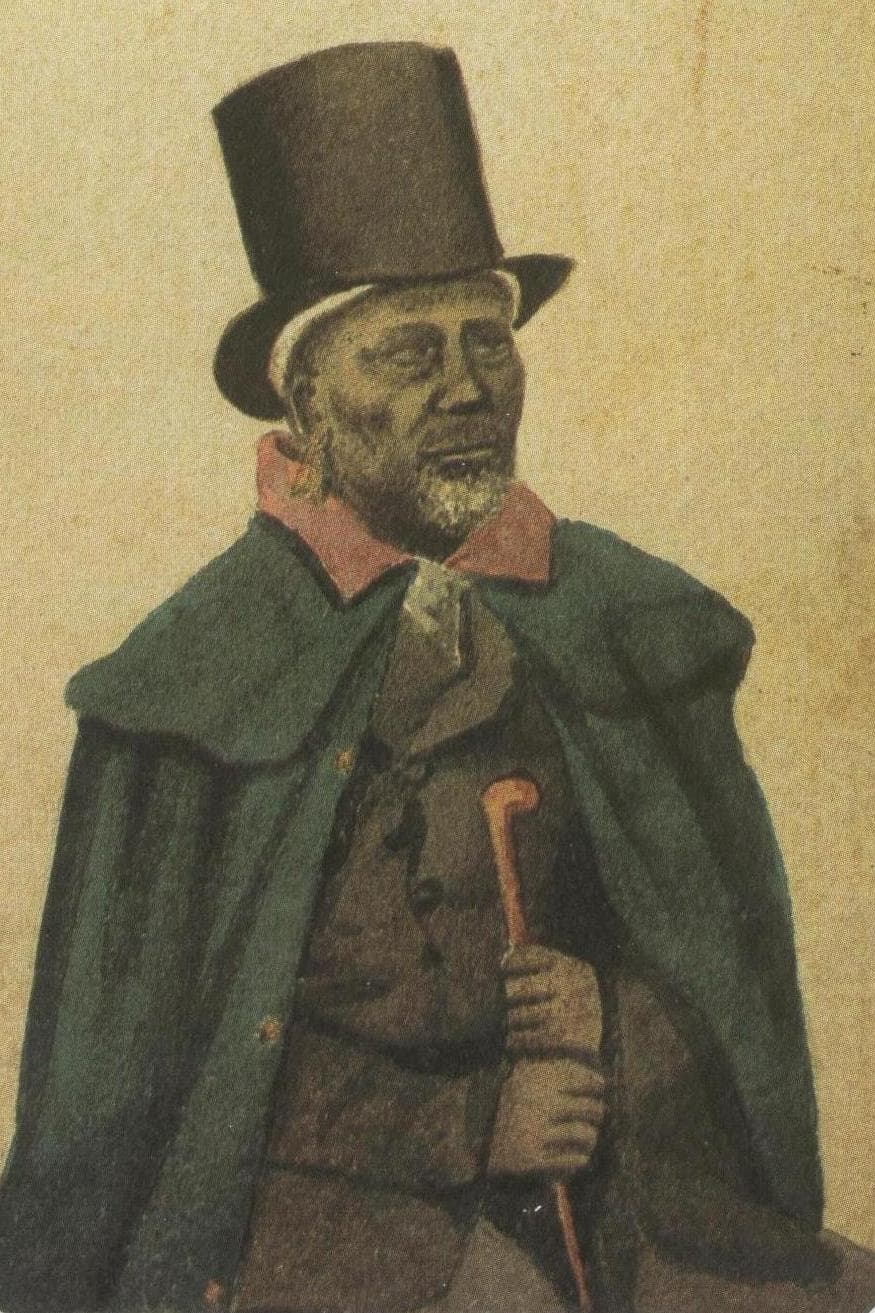
In 1804, a young Basotho man named Letlama led a daring cattle raid against a neighboring village, afterward composing a praise poem that likened his stealth to a razor shaving away the chief’s beard.
In the early nineteenth century, the high veld of southern Africa was consumed by a violence so profound it came to be known as the Difaqane—the scattering, or the time of troubles. From the eastern coastal plains, the aggressive expansion of the Zulu state under Shaka sent shockwaves across the Drakensberg Mountains. Smaller chiefdoms were shattered, their people forced to flee, turn predator, or starve. Into this landscape of desperate migrations and predatory raids came a young chief named Lepoqo, the son of a minor headman of the Bamokoteli, a sub-clan of the Bakoena (the crocodile people). He had already renamed himself Moshoeshoe, "the Shaver," after a successful cattle raid where he boasted he had shaved his rival’s beard like a close razor. But the brash youth who once killed a follower for milking a cow without permission was about to undergo a remarkable transformation. Faced with the disintegration of his world, Moshoeshoe did not attempt to build a empire of conquest; instead, he built a sanctuary.
By 1824, realizing that his family’s ancestral home at Butha-Buthe was indefensible against the waves of displaced invaders, Moshoeshoe made a decision that would define the geography of modern southern Africa. He led his people to a flat-topped sandstone fortress rising precipitously out of the Caledon River valley: a plateau called Qiloane, which he renamed Thaba Bosiu, the "Mountain at Night." Local lore whispered that the mountain grew taller in the dark, stretching its sheer cliffs toward the sky to protect those who slept atop it. In a literal sense, it was nearly impregnable. Its summit was spacious enough to graze herds and cultivate crops, watered by natural springs, while its steep, narrow passes could be defended by a handful of men rolling boulders down on attackers. From this natural citadel, Moshoeshoe did something rare in an age of ruthless militarism: he offered amnesty. To the refugees, the broken clans, and even the desperate bands of cannibals reduced to eating human flesh by the famine of the Difaqane, Moshoeshoe offered grain, land, and protection. He lent them cattle under the traditional mafisa system, binding them to him through gratitude and mutual survival rather than subjugation. From this desperate mosaic of survivors, he began to forge a new nation: the Basotho.
As the immediate threat of the Nguni invasions subsided, a new and more complex challenge appeared on the horizon. From the south came the Koranna, mounted raiders armed with guns, and soon after, the Boers—Dutch-descended pastoralists trekking away from British colonial rule in the Cape. Moshoeshoe quickly recognized that the traditional spears and shields of his warriors were obsolete. While other African leaders resisted the introduction of European technology or fell victim to it, Moshoeshoe systematically acquired it. By 1843, through trade and strategic diplomacy, he had accumulated more horses and guns than any other chieftain in southern Africa. Though many of these firearms were outdated flintlocks, they transformed the Basotho into a formidable, mobile guerrilla force, capable of fighting on horseback across the rugged, broken terrain of their homeland.
7 links to entries not yet ingested in the Library.
Yet Moshoeshoe understood that weapons alone would not save his people; he needed intellectual and diplomatic allies. In 1833, he invited Eugène Casalis and Thomas Arbousset of the Paris Evangelical Missionary Society to establish outposts in his territory. It was a calculated risk. The French missionaries brought Western literacy, trade connections, and diplomatic literacy, acting as Moshoeshoe’s scribes and foreign secretaries. But they also brought an ideology that threatened the very foundations of Sotho society. The missionaries viewed the traditional customs that bound the people to their chiefs—communal labor, polygamy, and the central role of cattle—as moral evils, promoting instead private property and European commerce. Moshoeshoe walked a delicate tightrope. He maintained his traditional household, which grew to include 140 wives by 1865, cementing alliances with regional chiefs and utilizing their labor to feed his growing nation, yet he deeply valued the strategic counsel of Casalis. He remained a patron of the mission without ever fully converting, utilizing the language of Christian morality and international law to defend Sotho sovereignty in his correspondence with European powers.
This diplomatic sophistication was put to the test as British imperial administration crept northward. In 1843, Moshoeshoe signed the Napier Treaty with the Governor of the Cape Colony, establishing an alliance that recognized Sotho authority over a vast region in exchange for helping to contain Boer expansion. But British policy in the interior was a shifting quicksand of shifting boundaries and broken promises. When the British established the Orange River Sovereignty, their local resident, Major Henry Warden, drew borders that stripped the Basotho of valuable agricultural land in the north-east, favoring rival clans and Boer settlers. When Moshoeshoe’s subjects retaliated with cattle raids, Warden assembled a British and Boer force to punish them, only to be decisively beaten by the Basotho and their Taung allies at the Battle of Viervoet in 1851.
The British response was swift but cautious. General Sir George Cathcart marched a disciplined expeditionary force into Basotho territory in late 1852, intent on teaching the "natives" a lesson. At the Battle of Berea, Cathcart’s troops ran into a disciplined, mounted Basotho force that fought them to a standstill, forcing a British retreat. Here, Moshoeshoe’s genius shone brightest not in victory, but in his restraint. Knowing that a humiliated British Empire would return with overwhelming force to crush him, Moshoeshoe sent a letter to Cathcart that very night. Written with the assistance of his missionaries, the letter was a masterpiece of diplomatic face-saving: "I entreat peace from you," Moshoeshoe wrote, "you have shown your power, you have chastised... let me no longer be considered an enemy to the Queen." Cathcart, relieved to find an honorable way out of a costly and embarrassing campaign, eagerly accepted the terms.
The reprieve, however, was temporary. In 1854, the British withdrew from the sovereignty, leaving behind the newly independent Boer state of the Orange Free State. What followed was a decades-long struggle for the fertile arable lands of the Caledon River valley. The first war in 1858 ended in a Sotho victory, but as the years wore on, the superior marksmanship and modern weaponry of the Boers began to turn the tide. By the mid-1860s, the Orange Free State had adopted a brutal scorched-earth policy. Boer commandos systematically burned Sotho crops, seized their livestock, and drove the population into the mountains, bringing the Basotho to the brink of starvation. In 1866, cornered and desperate, Moshoeshoe was forced to sign the humiliating Treaty of Thaba Bosiu, ceding most of his kingdom’s arable land.
With his people starving and his life’s work on the verge of annihilation, the aging king played his final, most desperate card. He bypassed the hostile local settlers and appealed directly to the British Crown for protection, leveraging the imperial government’s fear of Boer expansion to the coast and the economic disruption of the wars. Sir Philip Wodehouse, the British High Commissioner, disregarded his instructions to hand the territory over to the Natal colony, which Moshoeshoe distrusted. Instead, recognizing the strategic necessity of keeping the Boers landlocked, Wodehouse cut off the supply of gunpowder to the Free State and, on March 12, 1868, declared Basutoland a royal protectorate under the British Crown.
Moshoeshoe I died two years later, on March 11, 1870, and was buried atop the windy heights of Thaba Bosiu. He left behind a land drastically reduced in size, its borders permanently scarred by the loss of its most fertile valleys to what would become South Africa. Yet, while almost every other independent African polity in the region was conquered, dismantled, and absorbed into the white-ruled colonies, the Basotho survived. By choosing British protection over Boer conquest, Moshoeshoe preserved the core of Sotho identity, culture, and political autonomy. When the tides of decolonization swept the continent a century later, this mountainous enclave emerged not as a province of South Africa, but as the sovereign kingdom of Lesotho—a living monument to the chief who preferred the slow, patient work of preservation to the swift fire of conquest.