Organization · Mesoamerican Civilizations
Mixtec people
- Also known as
- antiguos mixtecos
- Civilisation mixtèque
- civilización mixteca
- Cultura mixteca
- Cultura mixteca
- Mikstekler
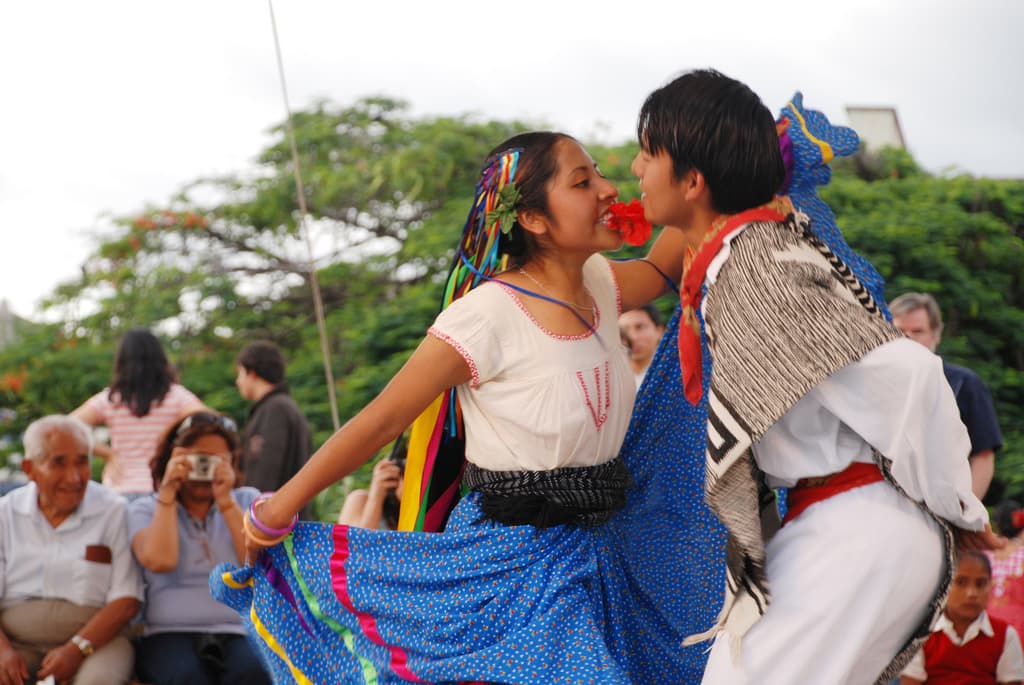
To the Aztec-speaking peoples of ancient Mesoamerica, they were the Mixtecah, the cloud people, though in their own tongues they named themselves after the rain, calling their homeland the land of Dzahui.
To the Aztec empire, whose armies marched across the mountains into the Valley of Oaxaca in the 1450s, they were the Mixtecah—the "cloud people." To themselves, they were the ñuudzahui, the people of the rain, and their mountainous, fractured homeland in southern Mexico was Ñuu Savi, the land of the rain. It was a landscape of stark contrasts, divided into three distinct worlds: the high, dry, and cold pine forests of the Mixteca Alta; the hot, arid valleys of the Mixteca Baja; and the humid, tropical lowlands of the Mixteca Costa, where the mountains fell away to meet the Pacific Ocean. Each subregion developed its own character and dialects of the Oto-Manguean language family, yet they were bound together by a shared cosmology, a sophisticated system of pictorial writing, and an unrivaled mastery of the physical world. Where other Mesoamerican civilizations built their empires with raw administrative bulk and massive standing armies, the Mixtecs built theirs through intricate webs of marriage alliances, deep-seated ancestral lineages, and a material culture of such exquisite beauty that their neighbors regarded them not merely as rivals, but as the supreme arbiters of sacred art.
The story of the Mixtecs is recorded not only in the ruins of their stone cities but in the brilliant, folded pages of their codices. Painted on long strips of deer hide covered in a white lime gesso, these screenfold books are masterpieces of phonetic and pictorial storytelling. Through them, the Mixtecs preserved their genealogies, their ritual calendars, and their history, creating a continuous record of dynasties that stretched back centuries. It is through these deer-hide manuscripts, such as the Codex Zouche-Nuttall and the Codex Bodley, that we know the epic of the great Mixtec cultural hero, Eight Deer Jaguar Claw. Born in the highland capital of Tilantongo on the calendar day that gave him his name, Eight Deer was a warlord of brilliant ambition. In the eleventh century CE, he launched a series of sweeping military campaigns that united the fractious, competing kingdoms of the Mixteca Alta and pushed down through the mountains to conquer the coastal lowlands—a tropical region previously dominated by the Chatino people. By establishing his new capital at Tututepec in the Lower Río Verde valley, Eight Deer forged a unified coastal empire, bringing the disparate ecological zones of the Mixtec world under a single, formidable authority.
Behind this political drama lay an unmatched tradition of craftsmanship that defined the luxury of the ancient Mesoamerican world. The Mixtecs were the foremost goldsmiths of the region, mastering the intricate, delicate process of lost-wax casting. They blended gold with copper and silver to create bells, pectorals, and rings of astonishing detail, which seemed to capture the very essence of the sun. Their artisans worked with equal genius in stone, wood, shell, and bone, but it was their turquoise mosaic work that held the deepest religious and political power. Mixtec craftsmen pieced together thousands of tiny, brilliant blue tiles of turquoise to construct sacred masks. These masks were not mere ornaments; they were vital instruments of statecraft and cosmology. Worn during religious ceremonies, they allowed priests and kings to physically impersonate the gods. Given as diplomatic gifts, they sealed fragile political alliances between rival city-states. When a ruler died, a turquoise mask was fastened to the funerary bundle, transforming the deceased ancestor into an oracle who could continue to guide and protect the living dynasty.
This artistic prestige did not, however, shield the Mixtecs from the shifting balances of power in central Mexico. The Valley of Oaxaca, a fertile expanse situated between the Mixtecs and their eastern neighbors, the Zapotecs, was a perpetual theater of conflict and cooperation. While the Mixtecs occasionally dominated the valley, even occupying and building upon the monumental Zapotec city of Monte Albán, they faced a devastating threat in the mid-fifteenth century. The Aztec Empire, hungry for tribute and territory, pushed southward. In 1458, the Aztec armies triumphed over Mixtec forces, and by 1486, the Aztecs had established a permanent military outpost on the hill of Huaxyácac to enforce the collection of tribute. Each year, heavy shipments of Mixtec goldsmithing, turquoise mosaics, and agricultural wealth flowed out of the mountains and into the Aztec capital of Tenochtitlan. Yet, the conquest was never total. Several Mixtec kingdoms fiercely resisted Aztec hegemony, maintaining their independence in the rugged folds of the mountains until a new, more destructive force arrived from across the sea.
When the Spanish conquistador Pedro de Alvarado and his forces invaded the region in the early 1521, they encountered a Mixtec world still reeling from Aztec pressure but fiercely protective of its sovereignty. While some Mixtec factions put up spirited resistance, the arrival of Francisco de Orozco in the Valley of Oaxaca in late November 1521 signaled a turning point. Confronted by the fall of the Aztec Empire and the overwhelming military realities of the Spanish-Tlaxcalan alliance, many Mixtec lords chose a path of peaceful submission, hoping to preserve their ancestral lands and local authority under the new colonial administration. Though isolated rebellions flared briefly in places like Antequera before the end of 1521, the ancient independence of the ñuudzahui was formally brought to a close.
Under Spanish rule, the Mixtec world underwent a profound transformation, yet it did not disintegrate. Because the Spanish administrative system relied heavily on existing Indigenous hierarchies to collect tribute and organize labor, the Mixtec caciques—the traditional noble rulers—initially retained significant influence. A rich corpus of colonial-era documents written in the Mixtec language using the Latin alphabet reveals a complex society adapting to European law, land tenure, and economics. For decades, Mixtec merchants continued to operate long-distance trade routes, dealing in both Spanish and Indigenous commodities. By the eighteenth century, however, Spanish merchants, priests, and landowners had systematically monopolized regional commerce. The traditional caciques lost their hereditary authority, gradually transitioning into wealthy investors in Spanish-style enterprises, sometimes marrying non-Indians and leasing ancestral lands to Spanish estate owners. Many Mixtec peasants were drawn into wage labor, while others were recruited from their highland villages to toil in the textile workshops of Puebla.
Despite centuries of colonization, displacement, and economic marginalization, the people of the rain survived. Today, approximately 800,000 Mixtecs live in Mexico, still concentrated in their historic homeland of La Mixteca across Oaxaca, Puebla, and Guerrero, where they continue to speak their native languages, including closely related variants like Cuicatec and Triqui. In recent decades, however, the boundaries of the Mixtec world have expanded far beyond the mountains of southern Mexico. Driven by economic necessity, a vast diaspora has emerged, with hundreds of thousands of Mixtecs migrating to the northern border cities of Tijuana, San Diego, and Tucson, as well as major agricultural and urban centers like California and New York City. Operating across international borders, these modern Mixtec communities have built resilient, transnational networks, proving that the identity of the ñuudzahui—forged in the high clouds of the Sierra Madre centuries ago—is not bound by geography, but carried in the language, memory, and enduring artistry of its people.
Connected to
3 links to entries not yet ingested in the Library.