Person · 1432 CE – 1481 CE · Ottoman Empire
Mehmed II
- Also known as
- 2. Mehmet
- Avni
- Fateh II Mehmet
- Fateh Sultan Mehmet
- Fateh Sultan Məhəmməd
- Fatih Sultan Mehmed
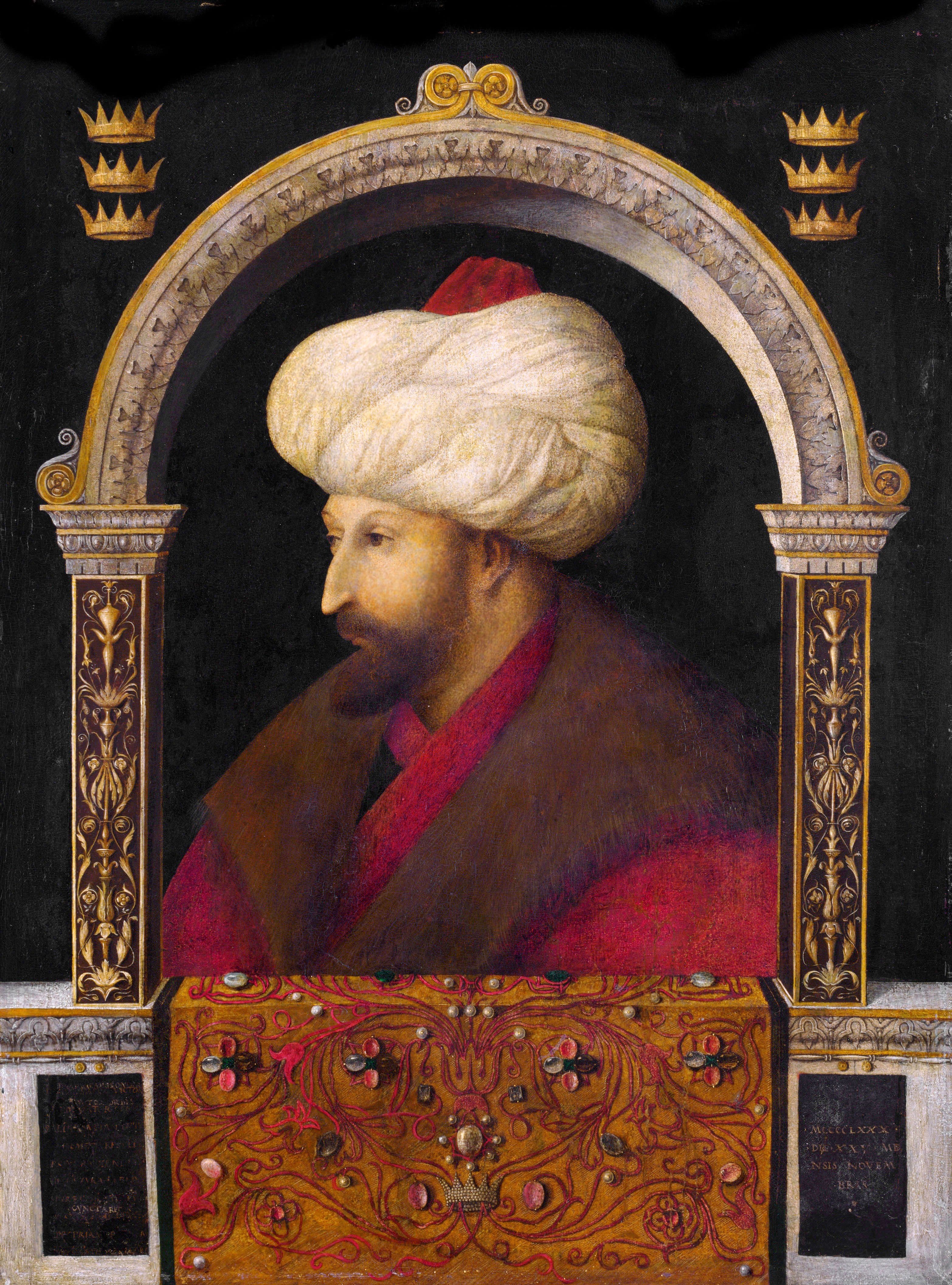
The young sovereign who took the Ottoman throne for a brief first reign in 1444 was only twelve years old, yet he quickly found himself commanding armies to turn back a European crusade led by John Hunyadi.
In the high summer of 1444, a twelve-year-old boy named Mehmed was handed the sovereign seal of the Ottoman Empire. His father, Sultan Murad II, exhausted by the relentless demands of statecraft and the grief of losing his eldest sons, had voluntarily abdicated to seek the quietude of a mystic’s retirement. The transition was precarious. Across the Danube, Christian Europe sensed an opening; Hungarian forces, spurred by the papal legate Cardinal Julian Cesarini, tore up the recently signed peace treaties of Edirne and Szeged, crossing the frontier in a grand crusade. Faced with a looming military catastrophe, the young Mehmed appealed to his father to return. When Murad hesitated, the boy-sultan sent a letter that would linger in Ottoman lore for centuries: "If you are the sultan, come and lead your armies. If I am the sultan, I hereby order you to come and lead my armies." Murad returned, crushed the crusaders at Varna, and quietly reassumed the throne, leaving Mehmed to spend the rest of his adolescence in the provincial capital of Manisa, harboring the memory of a crown briefly held and then abruptly taken away.
When Murad II died in 1451, Mehmed, now nineteen, ascended the throne for the second time, carrying with him the acute pressure of a compromised first reign and the heavy expectations of his court. He was a product of a rigorous, highly specialized education, shaped by the tutor Molla Gürâni and the influential Sufi mystic Akshamsaddin. These mentors instilled in him a worldview that merged classical Islamic scholarship with a powerful, almost apocalyptic sense of imperial destiny. For Mehmed, the ultimate validation of his rule—and his faith—lay in a single, ancient obsession: the conquest of Constantinople. The legendary capital of the Eastern Roman Empire, though reduced to a depopulated shadow of its former glory, remained a strategic dagger pointed at the heart of the Ottoman domains. It sat squarely between the empire’s European lands in Rumelia and its Anatolian heartland, a perpetual staging ground for Christian crusades and dynastic pretenders. To rule the East, Mehmed knew he had to take the city that Constantine the Great had consecrated over eleven centuries before.
Mehmed’s preparations were methodical, cold, and devastatingly modern. To strangle the city’s maritime lifelines, he constructed the fortress of Rumelihisarı on the European shore of the Bosphorus, directly opposite the older Anadoluhisarı built by his great-grandfather. This gave the Ottomans absolute control over the narrow strait. When a Venetian merchant ship ignored the newly installed Ottoman batteries, a single cannonball tore through its hull; the surviving crew was executed, and the captain was impaled on the shore—a gruesome, silent warning to any who dared challenge the Sultan's blockade. By the spring of 1453, Mehmed had assembled an army numbering between 80,000 and 200,000 men, supported by a massive fleet of 320 vessels and an unprecedented artillery train. Among his weapons was a monstrous bronze bombard designed by the Hungarian founder Orban, capable of throwing stone balls weighing hundreds of pounds against the legendary Theodosian walls.
Connected to
- religionIslam631 CE
- foundedTopkapı Palace1460 CE
+ 12 further connections to entries not yet ingested