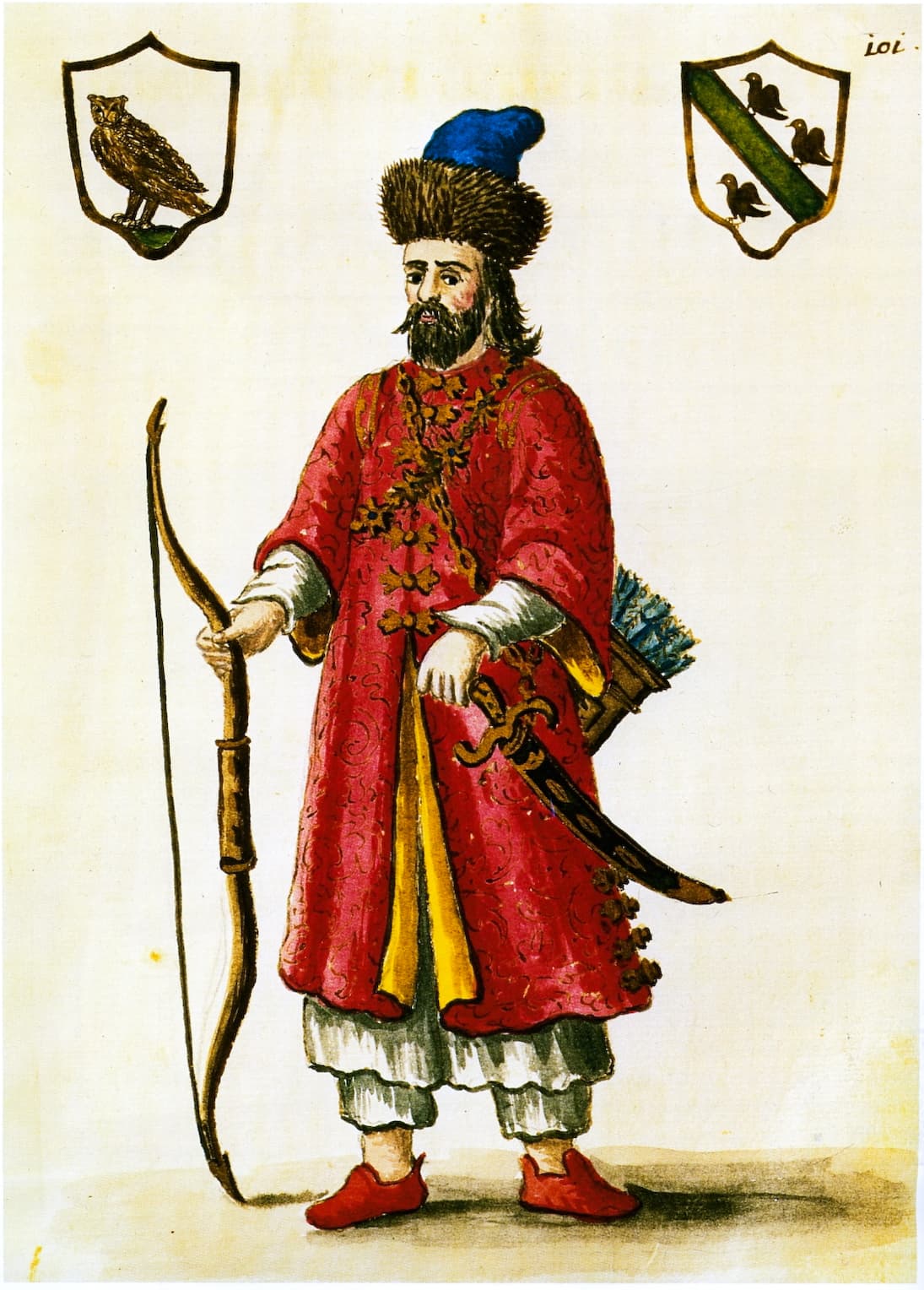
The world that the young Venetian merchant entered in 1271 was one of vast, unmapped distances, but by the time Marco Polo returned to his native lagoon twenty-four years later, he had shrunk those distances forever.
In the early winter of 1295, three men appeared on the quays of Venice, dressed in the coarse, stained robes of Tatars and speaking their native Italian with a heavy, hesitant clumsiness. They had been gone twenty-four years, long enough for the city to have buried their wives, forgotten their faces, and reassigned their estates. When they ripped open the seams of their greasy garments, however, a cascade of rubies, emeralds, and sapphires spilled onto the table, securing an instant, bewildered audience. Among them was Marco Polo, a man destined to translate the vast, incomprehensible interior of Asia for a medieval Europe that had previously known the East only through myth and biblical allegory. His return was not merely a homecoming; it was the arrival of a living bridge between two worlds that had existed in mutual isolation, unaware of the scale, sophistication, and sheer wealth of one another.
To understand the world Marco Polo entered as a seventeen-year-old in 1271 is to understand a moment of unprecedented, temporary global openness. The Mongol conquests, brutal in their execution, had established a singular political authority stretching from the Danube to the Pacific. Under the Pax Mongolica, the Silk Road was transformed from a perilous gauntlet of warring fiefdoms into a highly administered superhighway. Marco’s father, Niccolò, and his uncle, Maffeo, had already exploited this stability on an earlier trading venture that carried them all the way to the court of Kublai Khan. When they set out a second time, they brought young Marco with them, carrying papal letters from the newly elected Pope Gregory X—whom they had personally encountered as an archdeacon in Acre—intended for the Mongol emperor.
Their overland journey was an agonizingly slow traverse of geography that would remain closed to Westerners for centuries after their deaths. Leaving the Mediterranean, they abandoned plans to sail from the Persian Gulf port of Hormuz, distrusting the fragile, unnailed vessels of the local shipwrights, and turned north. They climbed through the high, pine-scented valleys of Badakshan—where young Marco spent months recovering from a debilitating fever, breathing the sharp mountain air—and ascended the upper Oxus to the barren, wind-scorched plateau of the Pamirs. They crossed the shifting, howling sands of the Gobi Desert, a waste so vast and silent that travelers reported hearing illusory voices calling them by name to lure them to their deaths. When they finally reached the summer palace of Kublai Khan at Shangdu in 1275, they had traveled nearly fifteen thousand miles.
What Marco found in Cathay was not a land of primitive nomads, but an empire of staggering bureaucratic efficiency and urban density that dwarfed any kingdom in Europe. Kublai Khan, a ruler of immense intellect and political pragmatism, recognized in the young Venetian a rare talent for observation. Marco lacked a formal Latin education, but he possessed a sharp mercantile mind, trained in Venice to assess currencies, cargoes, and local customs. While typical envoys bored the Khan with dry official reports, Marco returned from his administrative assignments with vivid accounts of the local populations, their eccentric traditions, and the flora and fauna of the provinces. For seventeen years, Marco served as a trusted imperial commissioner, traversing the deep river valleys of Yunnan, the borderlands of Tibet, the kingdoms of Southeast Asia, and the prosperous coastal cities of China, including a three-year tenure governing the great city of Yangchow.
12 links to entries not yet ingested in the Library.
In this vast administrative landscape, Marco witnessed technologies and systems that sounded like sorcery to Western ears. He saw paper money, manufactured from the bark of mulberry trees, circulating as legal tender with the absolute authority of the state behind it—a concept entirely foreign to Europeans accustomed to the intrinsic value of gold and silver. He observed the widespread burning of black stones dug from the earth, which ignited more easily and burned longer than wood. He encountered porcelain, the complex mechanics of the imperial postal system, and exotic beasts like the Sumatran rhinoceros, which he described with characteristic pragmatism, noting its single horn and thick, muddy hide, debunking the romantic Western myths of the elegant unicorn.
The Polos’ ticket home arrived in 1291, when they were entrusted with their final imperial duty: escorting the Mongol princess Kököchin by sea to Persia, where she was to marry the ruler Arghun Khan. By the time they completed the perilous voyage and reached their destination, the Khan had died, and the princess was wedded to his son instead. Continuing overland via Constantinople, the Polos arrived in Venice in 1295, wealthy but utterly transformed.
The peace they left behind in Asia did not exist in the Mediterranean. Venice was locked in a bitter naval conflict with its maritime rival, Genoa. Ever the dutiful citizen, Marco financed and armed a galley equipped with a military trebuchet to join the war effort. In 1296, during a skirmish off the Anatolian coast, he was captured by Genoese forces and thrown into prison. It was in this damp confinement that the history of cartography and exploration was rewritten. Sharing a cell with Rustichello da Pisa, a writer of Arthurian romances, Marco began dictating the memoirs of his twenty-four years in the East. Rustichello wove Marco's dry, precise observations into a grand narrative tapestry, blending the merchant's factual assessments of trade routes and resources with the dramatic flair of medieval epic poetry.
The resulting manuscript, The Travels of Marco Polo—originally penned in a Franco-Italian hybrid and known in Italy as Il Milione—spread rapidly across Europe. It was met with profound skepticism. To a continent where a town of ten thousand people was considered a major metropolis, Marco’s descriptions of Chinese cities housing millions, of fleets numbering in the thousands, and of an emperor whose wealth was beyond calculation seemed like the delusions of a fabulist. He was nicknamed "Messer Marco Milioni," a double-edged title reflecting both the vast wealth of the Great Khan he described and the perceived exaggeration of his claims. Yet, despite the disbelief, his descriptions of Asian geography, trade ports, and spice-producing islands became the foundational texts for a new generation of European cartographers. His writings directly influenced the landmark Catalan Atlas and the great Fra Mauro map, and two centuries later, a heavily annotated copy of his book would accompany Christopher Columbus on his fateful voyage across the Atlantic.
Released from prison in 1299, Marco returned to Venice, where he settled into the comfortable, quiet life of a prosperous merchant. He married Donata Badoèr, fathered daughters, and managed his estate from his palazzo in the San Giovanni Crisostomo district. He never returned to the Silk Road, nor did he ever leave the Venetian provinces again. Yet the sky above Venice occasionally reminded him of the vast world he had left behind; he once shared with the Padua astrologer Pietro d'Abano an observation of a strange comet "shaped like a sack with a great tail" that he had seen in the Southern Hemisphere in 1293—an astronomical event recorded in Chinese and Indonesian annals but entirely unknown to medieval Europe.
On his deathbed in January 1324, surrounded by his family and a priest drafting his final will, Marco was reportedly urged by his friends to recant the stories in his book, to save his soul from the sin of lying before he met his Creator. The old traveler refused. He reportedly replied that he had not told half of what he had actually seen, leaving the world to wonder where the boundaries of his incredible reality ended and the imagination of his age began.