Person · 12th c. CE – 1230 CE · Andean Civilizations
Manco Capac
- Also known as
- Manco
- Manco Cápac
- Manco Cápac
- Manco Cápac
- Manco Cápac
- Manco Cápac
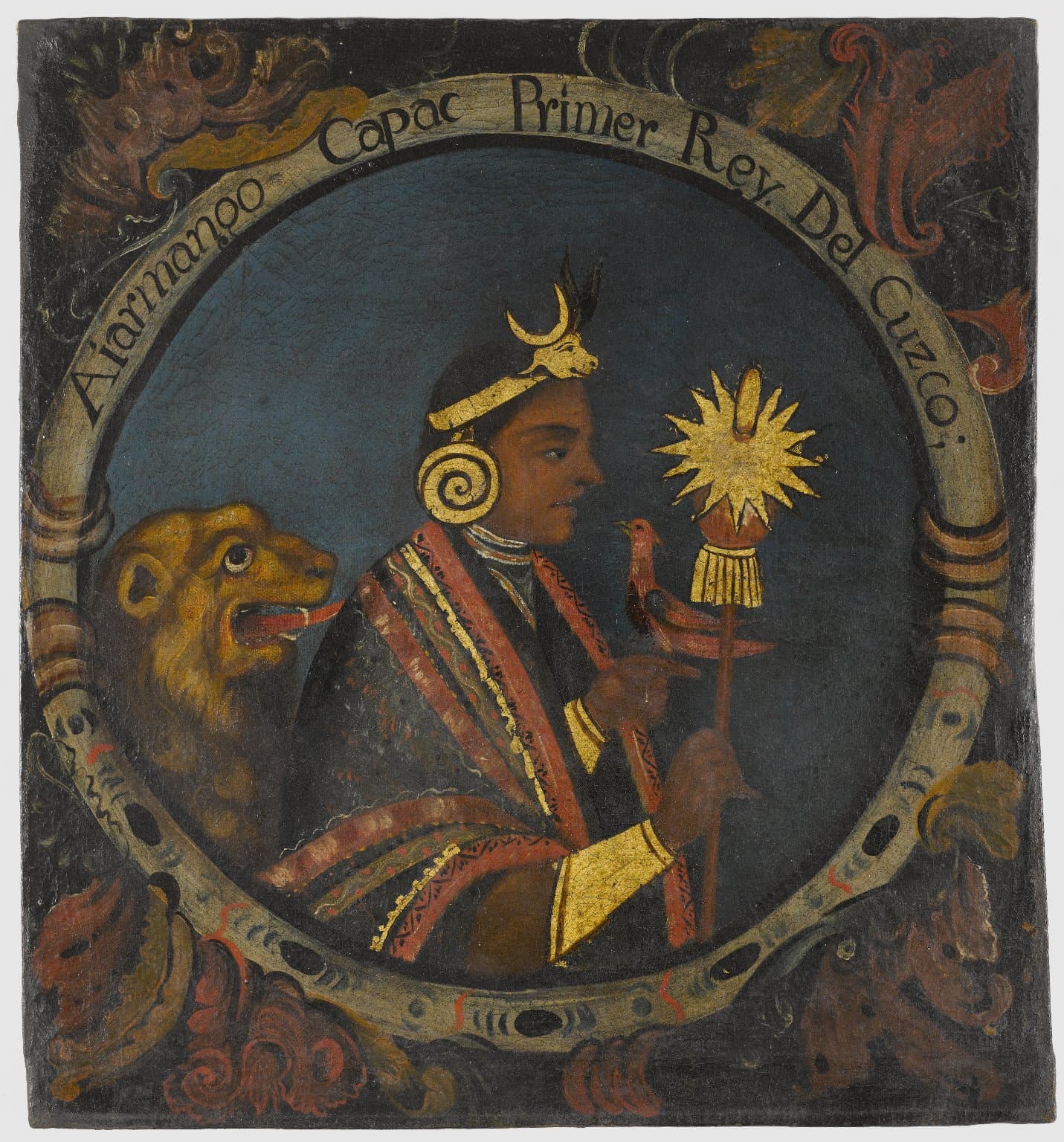
The birth of the Inca Empire began not with vast armies, but with a nomadic band of several dozen families fleeing war, led by a chieftain named Manco Cápac.
In the cold, high-altitude refuge of Tamputoco, where families huddled to escape the violent Aymaran expansions fracturing the Andean altiplano, a small band of nomadic pastoralists began a journey that would reshape the geography of western South America. At their head was Manco Cápac, a man who occupied the fragile, shifting boundary between flesh-and-blood history and the grand, gilded theater of state myth. To the later chroniclers of the Spanish empire and the descendants of the Andes, he was the primordial ancestor, the first governor, and the architect of Cusco. Yet in the early thirteenth century, if he existed as a single historical figure, he was something far more precarious: the leader of a few dozen nomadic families, organized into a kinship group known as an ayllu, searching for a fertile valley where they might finally plant roots and survive.
This nomadic band was led initially by Manco’s father, Apu Tambo, the head of the tribal ayllu. Upon his death, Manco Cápac assumed leadership of a vulnerable flock. Their migration through the high-altitude landscape was a slow, dangerous trek across a territory contested by larger, more entrenched populations. When Manco Cápac and his followers finally descended into the Cusco valley, they did not find an empty paradise awaiting its chosen rulers. Instead, they encountered three established, small tribes—the Sahuares, the Huallas, and the Alcahuisas. Through skirmishes and negotiations, the newcomers defeated these groups and laid claim to a swampy, waterlogged basin nestled between two small streams. Here, Manco Cápac cleared the boggy earth to establish a settlement, dividing the fledgling town into four quarters: Chumbicancha, Quinticancha, Sairecancha, and Yarambuycancha. This rudimentary outpost, built on mud and determination, was the modest seed of Cusco.
Survival in the valley was a perpetual struggle. The young settlement occupied only a small pocket of the region, surrounded by formidable neighbors who viewed Manco Cápac’s people as dangerous intruders. To the north loomed a powerful, confederated lordship of the Ayarmacas and Pinaguas, who launched frequent raids against the young enclave. Manco Cápac, and later his son and successor Sinchi Roca, spent their lives fighting defensive actions, fortifying their precarious foothold in the valley. When Manco Cápac died of natural causes, his body was mummified—a practice that would become central to Inca statecraft—and preserved in the city until centuries later, when the great emperor Pachacuti ordered the mummy transported to the sacred Temple of the Sun on Isla del Sol, leaving a stone statue in Cusco to stand in his stead.
Yet the historical reality of a thirteenth-century chieftain struggling against local rivals is only half of the story of Manco Cápac. Over the centuries, as the small kingdom of Cusco expanded into the colossal, highly organized empire of Tawantinsuyu, the historical Manco was elevated into a cosmic deity. The transition from history to myth is preserved in several competing legends, recorded after the Spanish conquest by indigenous and mestizo writers who sought to piece together the oral histories of a civilization without a written alphabet.
Connected to
- citizen ofInca Empire1438 CE
+ 9 further connections to entries not yet ingested