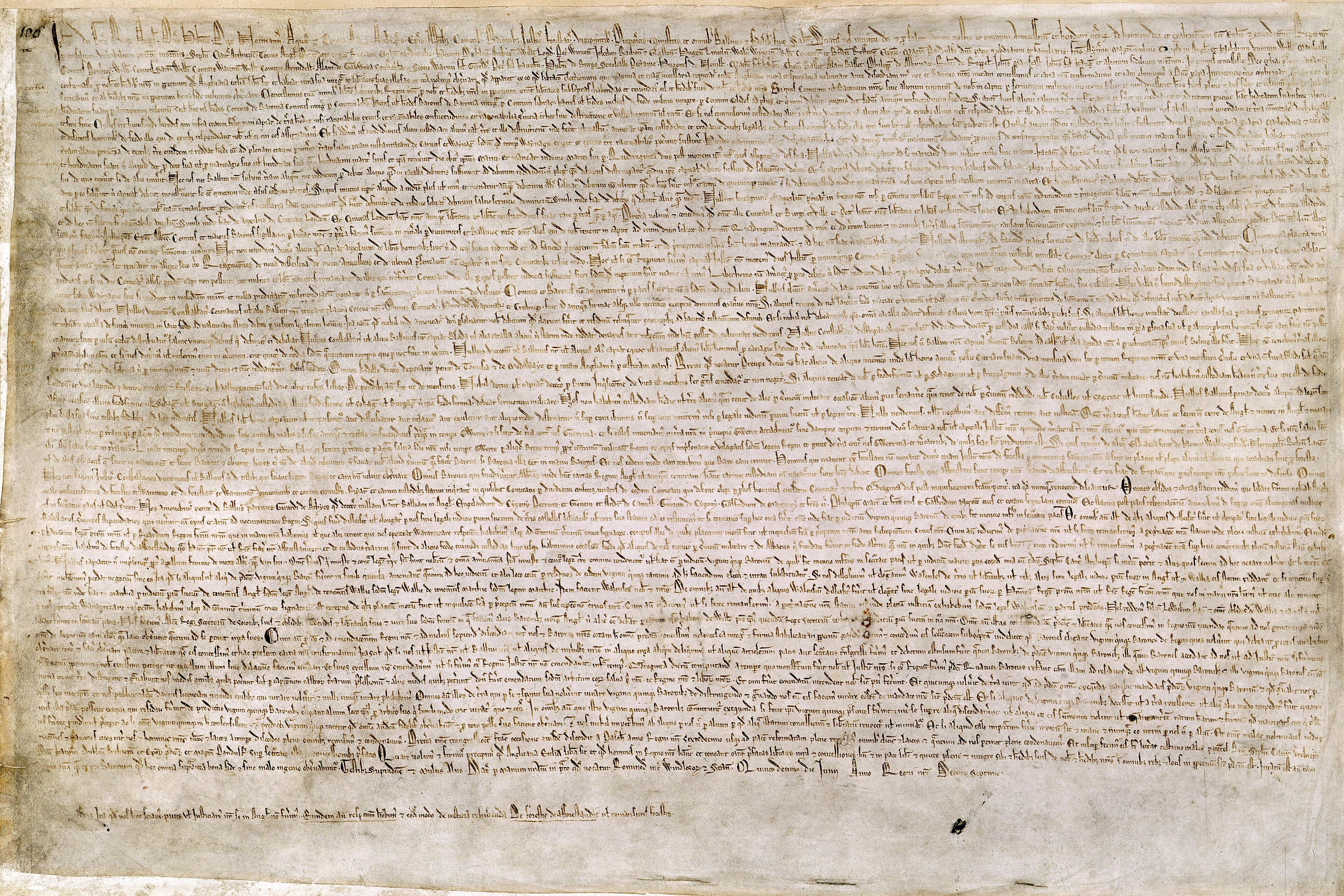
In the damp meadow of Runnymede on 15 June 1215, an unpopular English monarch met a group of rebellious barons to seal a document born of desperation.
In the damp, low-lying water-meadow of Runnymede, where the River Thames bends between the royal stronghold of Windsor Castle and the rebel outpost at Staines, two profoundly distrustful factions met in the summer of 1215. On one side stood King John, the third of the Angevin monarchs, a ruler whose treasury was depleted and whose reputation was ruined by a disastrous, expensive attempt to reclaim his ancestral lands in France. On the other side stood a heavily armed coalition of rebel barons, unified not by a cohesive vision of political theory, but by a shared, burning anger toward a king who had ruled by vis et voluntas—force and will. They met on this neutral ground because neither side dared to trust the other in a fortified space. There, on June 15, John affixed his great seal to a rough draft of demands known as the Articles of the Barons. Over the next four days, through the frantic, pragmatic mediation of Stephen Langton, the Archbishop of Canterbury, these raw grievances were hammered into a formal royal charter. It was a peace treaty designed to avert a civil war, yet it would eventually mutate into the most enduring secular myth in the history of the English-speaking world.
The crisis that led to Runnymede was decades in the making, born of a structural flaw in the Anglo-Norman state. The kings of England possessed a robust administrative machine, but no constitutional mechanism existed to restrain a monarch who chose to ignore custom and law. John’s predecessor and father, Henry II, had built a powerful executive, but John pushed the system to its breaking point. Having lost Normandy to King Philip II of France in 1204, John spent a decade squeezing his subjects for every penny to fund a war of reconquest. He ordered a massive inquiry in 1212 to extract maximum revenue from his vassals, demanded unprecedented scutages—feudal taxes paid in lieu of military service—at the exorbitant rate of three marks per knight’s fee, and routinely took the children of his barons as hostages to ensure compliance. When his grand continental coalition was decisively crushed at the Battle of Bouvines in July 1214, John returned to England defeated, insolvent, and utterly exposed.
The resistance began in the north and east, led by a group of insular barons who held no land in France and saw no reason to pay for the King’s failed foreign wars. They gathered at Bury St Edmunds in November 1214, swearing a solemn oath upon the high altar to withdraw their allegiance unless John restored their rightful liberties. The rebel leaders were not forward-thinking democrats; by the standards of any age, they were an unimpressive and often disreputable lot, unified primarily by personal grievances. Their chosen commander, Robert Fitzwalter, was a man implicated in a 1212 plot to assassinate the King, who claimed publicly that John had tried to rape his daughter. To give their rebellion a veneer of ancient legitimacy, the barons demanded that John confirm the century-old Charter of Liberties of Henry I, a document that Langton had produced as a template for good government during a national council at St. Paul’s in 1213. John tried every diplomatic maneuver to divide his enemies: he granted freedom of election to the English Church, took an oath to become a crusader to secure the legal protection of the Pope, and offered to submit the dispute to papal arbitration. But when the rebels marched on London in May 1215 and the capital opened its gates to them, the King was forced to his knees.
6 links to entries not yet ingested in the Library.
The document that emerged from the negotiations at Runnymede, later named the Magna Carta, or "Great Charter," to distinguish it from a smaller forestry charter, was highly specific, thoroughly medieval, and decidedly unrevolutionary. It did not advocate for the overthrow of the monarchy or the establishment of a republic. Instead, it focused on the practical grievances of free men—most notably the barons themselves—with brief concessions to the rights of merchants, the liberties of the Church, and minor protections for serfs. It restricted the King’s ability to demand feudal payments without baronial consent, promised that justice would not be sold or delayed, and declared that free men would be protected from illegal imprisonment. To ensure the King kept his word, the charter included "clause 61," a radical "security clause" establishing a council of twenty-five barons empowered to seize the King's castles and lands if he violated the agreement. It was a crude, destabilizing mechanism that practically guaranteed further conflict, legalizing collective coercion against the sovereign.
Predictably, the peace of Runnymede lasted barely a few weeks. Neither side had any intention of honoring the treaty. John wrote to his protector, Pope Innocent III, who promptly declared the charter null, void, and entirely unjust, freeing the King from his oath. The First Barons’ War erupted before the ink on the parchment was dry. It was only after John’s death in late 1216 that the charter survived its infant mortality. The regency government of John’s young son, Henry III, reissued a stripped-down version of the document, removing the radical security clause and other inflammatory terms, in a bid to win over moderate rebels. It was reissued again in 1217 as part of the peace treaty of Lambeth, and once more in 1225 in exchange for a vital grant of new taxes. By the time Henry’s son, Edward I, confirmed the charter in 1297, it was formally inscribed into England’s statute law. It became a regular feature of medieval political life, routinely confirmed by successive monarchs as a symbolic gesture of good faith.
For centuries, the charter lay relatively dormant, a relic of medieval estate management that grew increasingly obsolete as a developing Parliament passed modern laws. But at the end of the sixteenth century, the document underwent a spectacular resurrection. Faced with the absolutist ambitions of the Stuart kings, James I and Charles I, legal antiquarians and politicians led by the jurist Sir Edward Coke reinvented the Magna Carta. They constructed a sweeping historical myth: that there existed an "ancient constitution" dating back to the Anglo-Saxons which protected individual English freedoms; that the Norman Conquest of 1066 had unlawfully suppressed these rights; and that the Magna Carta was a heroic, popular restoration of this lost golden age. Though this narrative was historically groundless—the barons of 1215 had been defending their own feudal privileges, not the universal rights of the common Englishman—it became a potent weapon against the divine right of kings. Coke and his allies used the charter to justify the primacy of Parliament and to anchor the concept of habeas corpus.
This romanticized, mythic version of the Magna Carta crossed the Atlantic with the early English colonists. It deeply influenced the intellectual framework of the American Revolution and helped shape the United States Constitution, transforming a medieval treaty between a king and his barons into a universal symbol of constitutional liberty. By the nineteenth century, when Victorian historians finally began to dissect the original 1215 text, they revealed that almost none of its sixty-three clauses had any direct relevance to modern democracy. Yet, even as the British Parliament systematically repealed nearly all of its archaic clauses from the statute books in the nineteenth and twentieth centuries, the document's symbolic power only grew.
Today, only three clauses of the 1297 reissue remain law in England and Wales, yet the Magna Carta is widely revered as the foundational cornerstone of Western civil liberties. The physical remnants of that June week in 1215—four surviving original exemplifications, written in cramped Latin script on sheepskin parchment, now preserved at the British Library, Salisbury Cathedral, and Lincoln Castle—are treated as sacred artifacts of human progress. The charter's true legacy lies not in the specific feudal anxieties of the men who met at Runnymede, but in the enduring principle they inadvertently set in motion: the radical, simple idea that the ruler is subject to the law, and that power, no matter how absolute it claims to be, has limits.