Person · 1384 CE – 1433 CE · Southeast Asian Empires
Lê Thái Tổ
- Also known as
- Bình Định vương
- Kaisar Le Thai To
- Le Loi
- Le Loi
- Le Loi
- Le Loi
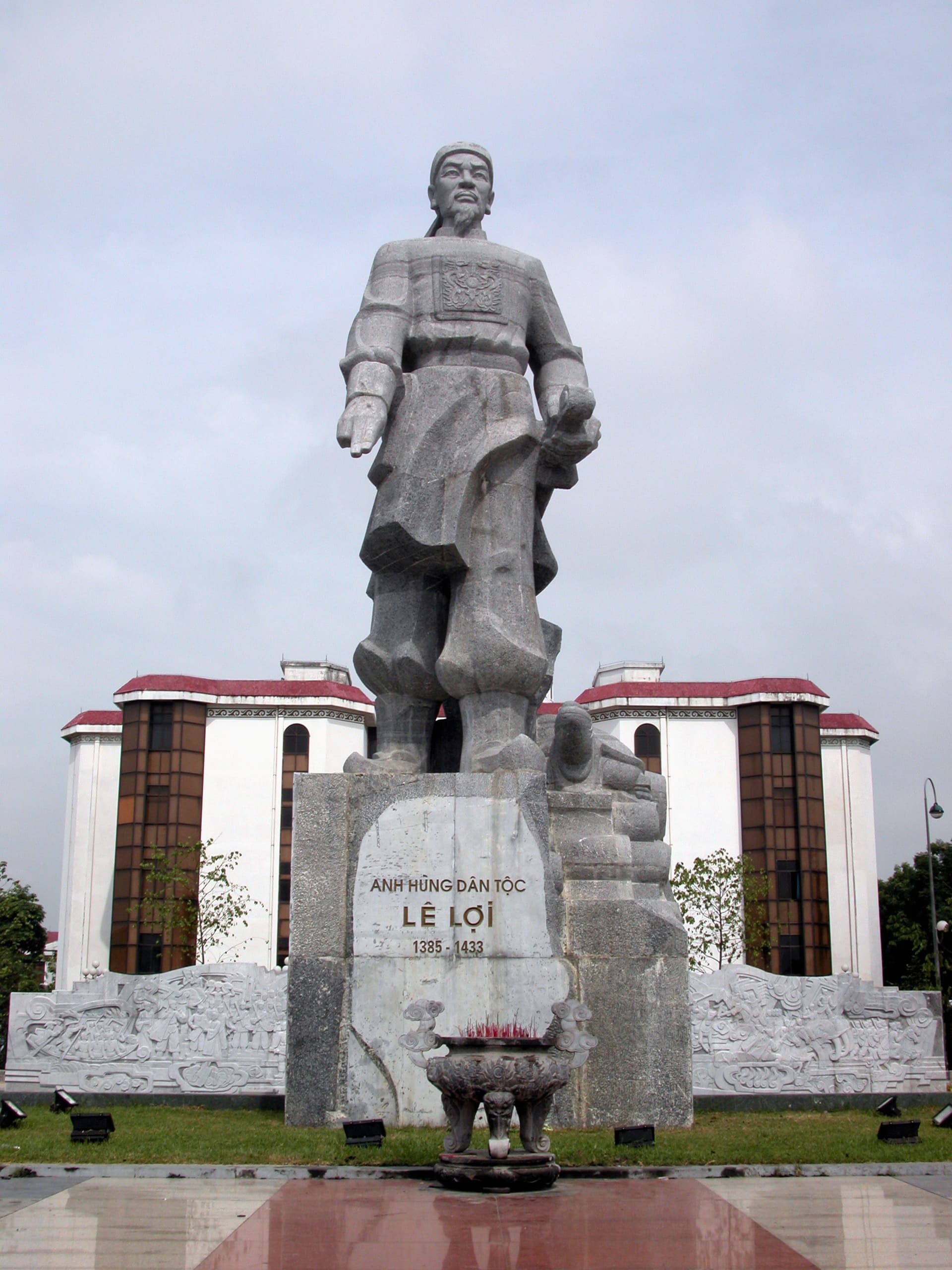
In 1406, more than two hundred thousand Chinese Ming troops crossed the border into Vietnam, quickly toppling the ruler, renaming the country Jiaozhi, and initiating a strict program of cultural assimilation.
In the early fifteenth century, the southern reaches of the Ming Empire's newly annexed province of Jiaozhi were haunted by a phantom army. The Chinese occupation, initiated in 1406 under the guise of restoring the deposed Trần dynasty, had quickly hardened into a program of total assimilation. The local Vietnamese population was forced to wear Chinese garments, adopt Ming customs, and watch their historical wealth and intellectual elites—including the brilliant weapons designer Hồ Nguyên Trừng—carted off to Peking. For a decade, thirty-one separate rebellions flickered and died across the lowlands, ruthlessly extinguished by the superior discipline and firearms of the Ming garrisons. Yet in the rugged, forested highlands of Thanh Hóa, a wealthy landowner named Lê Lợi was forging a different kind of resistance. He did not attempt to match the Chinese in open, set-piece battles. Instead, his small bands of irregulars existed as ghosts in the hills, constantly striking from the brush and dissolving back into the mist, moving their camps night after night to evade a foe that possessed the most advanced military technology of the age.
Lê Lợi’s transformation from a local aristocrat into a symbol of national survival was born of personal grievance and political betrayal. Born in 1385 to a powerful, wealthy family in the village of Lam Sơn, he grew up during a period of profound ecological and social collapse. The Trần dynasty had withered, replaced by the short-lived usurpation of Hồ Quý Ly, which in turn provoked the massive Ming invasion of 215,000 troops. Though Lê Lợi initially attempted to navigate the occupation, serving briefly as a translator and administrative tutor for the colonial government, the reality of foreign rule soon shattered his complicity. A neighboring rival denounced him to the authorities, forcing him into the forests. The cruelty of the occupiers struck closer to home when a Chinese eunuch, Ma Ji, seized Lê Lợi’s nine-year-old daughter to send her to the imperial harem in Peking—an act of wanton humiliation that would later be cited by Chinese grand secretaries as the catalyst for the conflagration that followed. On the day after the New Year festival of 1418, Lê Lợi raised the banner of revolt at Lam Sơn, declaring himself the Bình Định vương, the "King of Pacification."
The initial years of the Lam Sơn uprising were defined by brutal lessons in survival. The Ming military machine was formidable, occupying thirty-nine well-fortified citadels clustered around the fertile Red River Delta. Furthermore, the Chinese had institutionalized the use of the "magic handgun"—a sophisticated musket designed by Vietnamese captives but manufactured in imperial arsenals. Lê Lợi’s early campaigns were plagued by betrayal; in 1418, a turncoat revealed his hidden position on the upper Chu River to a Ming patrol, nearly ending the rebellion in its infancy. In 1421, a multi-pronged assault trapped his forces between a large Ming army and thirty thousand Laotian troops with one hundred war elephants, whom Lê Lợi had mistakenly believed to be his allies. By 1422, utterly defeated, exhausted, and starving, Lê Lợi was forced to sue for peace, paying a heavy indemnity in exchange for food, salt, and basic farm tools. It was a humiliating retreat, made worse when the Ming violated the temporary truce by arresting his messenger, signaling that total submission or total war were his only remaining options.
The turning point of the war came not from a battlefield victory, but from a transition of power thousands of miles away in Peking. The death of the Yongle Emperor in 1424 brought his son, Zhu Gaozhi, and later his grandson, Zhu Zhanji, to the dragon throne. Both emperors possessed a deep aversion to the costly, draining colonial adventures of their predecessor. They recalled the moderate administrator Huang Fu, lowered the priority of garrisoning Jiaozhi, and sought a way to extract themselves from the Vietnamese quagmire. Sensing this shift in imperial resolve, Lê Lợi rebuilt his partisan army and abandoned the heavily guarded northern highlands. Guided by the strategic brilliance of his comrade Nguyễn Chích, he marched south through the mountains into Nghệ An, ambushing Ming patrols and systematically isolating the major Chinese garrisons.
Crucial to this southern strategy was the collaboration of Nguyễn Trãi, a brilliant Confucian scholar who helped Lê Lợi craft a war of political legitimacy alongside the military campaign. In Nghệ An, Lê Lợi forbade his soldiers from plundering the countryside, winning the trust of the local Kinh population through strict discipline and tax relief. By the end of 1425, the rebels had swept through modern Quảng Bình, Quảng Trị, and Thừa Thiên, effectively liberating the entire southern territory and leaving the remaining Ming forces besieged within isolated coastal citadels. The rebels even established their own arsenals, successfully copying the captured Ming firearms to turn the occupiers' technological advantage against them.
By 1426, the Ming court was openly debating whether to abandon Jiaozhi altogether and restore the Trần dynasty as a tributary state. When Zhang Fu, the legendary general who had originally conquered the region, requested permission to return to the field to crush Lê Lợi, the emperor refused, fearing a prolonged escalation. Instead, the Ming court offered a general amnesty, hoping to negotiate an honorable exit from a war that had become both financially ruinous and militarily exhausting. Lê Lợi, now commanding a highly disciplined, native army fueled by the momentum of liberation, pushed north toward the Red River Delta. The long, bloody decade of guerrilla warfare had forged a unified Vietnamese identity from the ashes of the old Trần state, setting the stage for the rebirth of an independent Đại Việt under the Later Lê dynasty. Lê Lợi's legacy would survive not merely in the chronicles of his military victories, but in the collective memory of a people who had successfully resisted the southward expansion of the world's most powerful empire.
Connected to
11 links to entries not yet ingested in the Library.