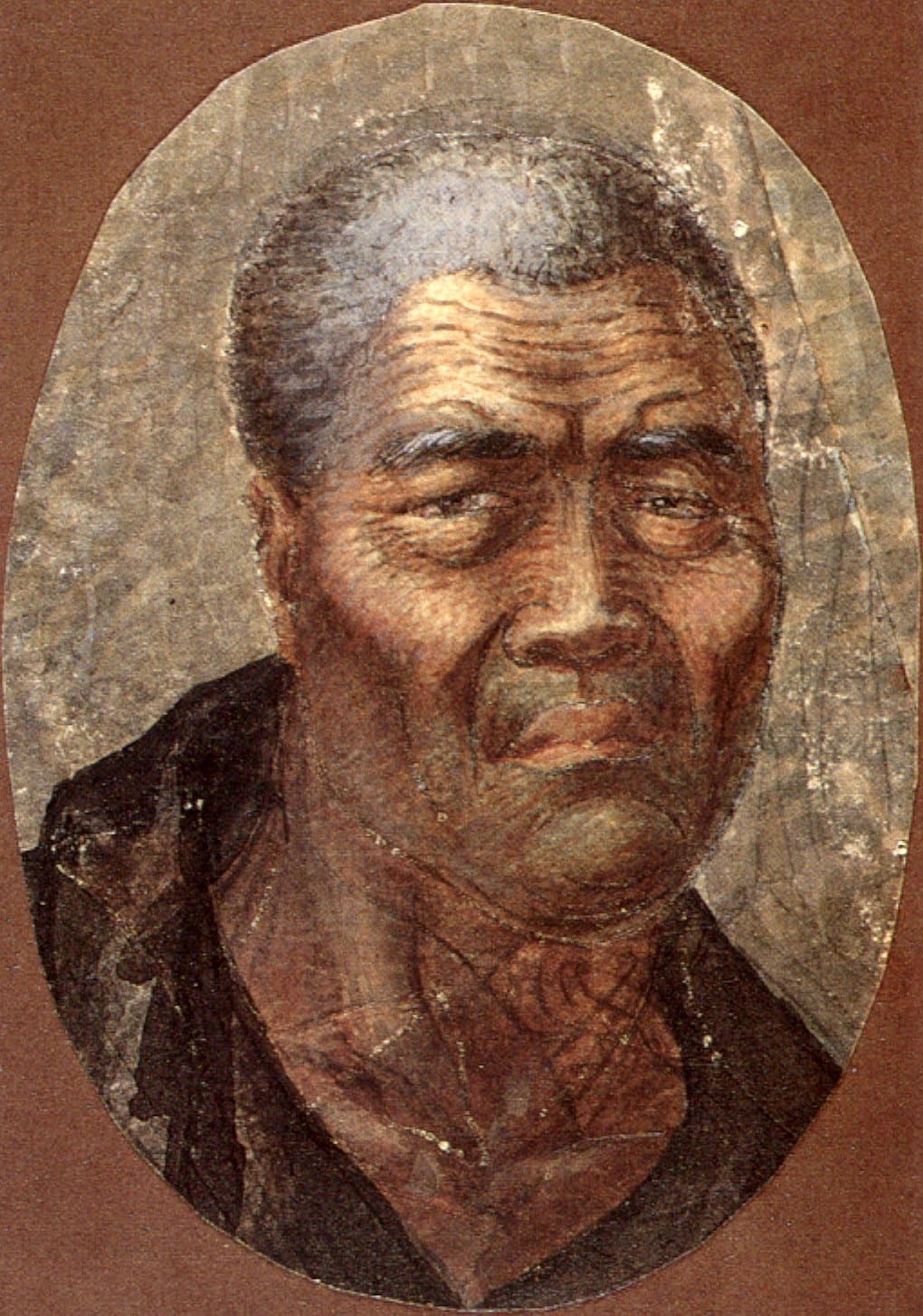
Kalani Paiʻea Wohi o Kaleikini Kealiʻikui Kamehameha o ʻIolani i Kaiwikapu kaui Ka Liholiho Kūnuiākea
Kalani Paiʻea Wohi o Kaleikini Kealiʻikui Kamehameha o ʻIolani i Kaiwikapu kaui Ka Liholiho Kūnuiākea
Kalani Paiʻea Wohi o Kaleikini Kealiʻikui Kamehameha o ʻIolani i Kaiwikapu kaui Ka Liholiho Kūnuiākea
Kamehameha
Kamehameha
Wikimedia Commons · Kamehameha I
Prophecy and political intrigue swirled around the birth of the child first named Paiʻea, born into a fractured landscape of warring chiefs on the island of Hawaii.
In the autumn or winter of an unrecorded year in the mid-eighteenth century, a child named Paiʻea was born into the high aristocracy of the island of Hawaiʻi. His birth occurred amidst the structural chaos that defined the archipelago before its unification—a period of endemic civil warfare triggered by the death of the island’s great chief, Keaweʻīkekahialiʻiokamoku. The infant’s lineage was a tapestry of competing royal claims and whispered scandals. While Keōua Kalanikupuapa'ikalaninui was acknowledged as his father, oral traditions recorded by the nineteenth-century native historian Samuel Kamakau asserted that the Maui monarch Kahekili II had adopted the boy at birth under the hānai custom, and was indeed his biological father—a claim later dismissed by King Kalākaua as the product of courtly jealousy. To preserve his life from the murderous rivalries of the usurping ruler Alapainui, the infant was hidden away immediately after his birth in the remote, wind-swept cliffs of Kohala, raised in seclusion until it was safe for him to emerge into the royal court of his uncle, Kalaniʻōpuʻu. He would eventually take the name Kamehameha: "The Lonely One."
His rise to geopolitical prominence began with a death and a religious custody dispute. When Kalaniʻōpuʻu died in 1782, the temporal sovereignty of the island of Hawaiʻi passed to his son, Kīwalaʻō. Kamehameha, who had grown into a formidable warrior of towering physical presence, was granted a secondary but highly volatile prize: guardianship of the fearsome war god Kūkaʻilimoku, along with personal control of the strategic Waipiʻo Valley. The delicate equilibrium between the two cousins shattered during a sacred temple dedication, where Kamehameha arrogated the privilege of offering sacrifices to the gods—a ritual duty reserved for the sovereign. Armed with the backing of five powerful chiefs from the Kona district, including his warrior instructor Kekūhaupiʻo and his influential father-in-law Keʻeaumoku Pāpaʻiahiahi, Kamehameha challenged the established order. Kīwalaʻō was defeated and killed at the Battle of Mokuʻōhai. Yet this victory did not grant Kamehameha total dominion; instead, it fractured the island of Hawaiʻi into three competing polities. To the south and east, the districts of Kaʻū and Puna fell under the rule of his rival cousin, Keōua Kūʻahuʻula, while the high chief Keawemaʻuhili retained Hilo.
The stalemate was broken by the sudden, violent intrusion of the outside world. By the late eighteenth century, European and American maritime fur traders, seeking provisions and sandalwood on their journeys between the Pacific Northwest and Qing Dynasty China, had begun using the Hawaiian Islands as a vital mid-ocean harbor. In 1790, this contact erupted into catastrophe. Simon Metcalfe, captaining the American fur-trading vessel , anchored off Maui. Infuriated by the theft of a small boat and the murder of a crewman, Metcalfe lured hundreds of native villagers—men, women, and children—to the shores of Olowalu under the pretense of peaceful trade. Once the canoes crowded around his ship, Metcalfe ordered his broadside cannons to open fire. Over one hundred Hawaiians were slaughtered in the shallows.
Six weeks later, the Eleanora’s smaller consort vessel, the Fair American, captained by Metcalfe’s young son Thomas, ran aground near the Kona coast of Hawaiʻi. Chief Kameʻeiamoku, seeking vengeance for an earlier physical assault by the elder Metcalfe, intercepted the vessel, slaughtering the younger Metcalfe and his entire crew, save for a single sailor named Isaac Davis. Kamehameha acted swiftly to contain the fallout. He took Davis under his personal protection, seized the Fair American, and also captured John Young, the boatswain of the Eleanora who had gone ashore at Kealakekua Bay. Rather than treating Young and Davis as captives, Kamehameha elevated them to the rank of chiefs, presenting them with land and noble wives. In return, the two mariners became his chief military advisors. They trained his forces in the deployment of Western firearms and mounted the Fair American’s brass cannons onto his war canoes. Kamehameha’s arsenal was further augmented by Captain William Brown of the Butterworth Squadron, who supplied him with gunpowder imported from China and provided the formula for manufacturing it using the natural sulfur, charcoal, and saltpeter deposits found within the Hawaiian volcanic landscape.
With this technological supremacy, Kamehameha launched a war of expansion that forever altered the scale of Pacific warfare. In 1790, his forces crossed the channel to Maui. Employing the captured cannons of the Fair American under the direction of Young and Davis, Kamehameha’s army trapped the Maui forces in the narrow Iao Valley. The ensuing Battle of Kepaniwai was so devastating that the waters of the river were allegedly choked with the bodies of the dead, halting the stream's flow. Although Maui’s ruler, Kahekili II, managed to briefly recapture the island while Kamehameha was distracted by rebellions at home, the tide of unification had become unstoppable.
To secure his domestic rear, Kamehameha turned his attention back to his principal rival on Hawaiʻi Island, Keōua Kūʻahuʻula. In 1790, while marching to confront Kamehameha's forces, Keōua’s army was decimated when the Kīlauea volcano erupted, suffocating scores of his warriors with toxic gas. Sensing that the gods had turned against him, and perhaps dispirited by his mounting losses, Keōua agreed to a meeting in 1791 at the newly constructed, monumental temple of Puʻukoholā Heiau, built by Kamehameha to appease the war god Kūkaʻilimoku. Recognizing his likely fate, Keōua reportedly mutilated himself before stepping ashore to render his body an imperfect, spoiled sacrificial victim. It was a futile gesture. As his canoe touched the beach, one of Kamehameha’s chiefs hurled a spear; though Keōua allegedly dodged it, he was immediately cut down by musket fire. His bodyguards were slaughtered, and with his death, the entire island of Hawaiʻi fell under Kamehameha’s uncontested rule.
The final phase of the conquest began in 1794 with the death of the aging Maui monarch Kahekili II. His empire was split between his son Kalanikūpule on Oʻahu and his brother Kāʻeokūlani, but the inheritance devolved into a bitter civil war. Kalanikūpule emerged victorious, but his forces were exhausted. Seizing the moment, Kamehameha assembled an unprecedented invasion fleet in 1795: an armada of 960 war canoes carrying 10,000 disciplined soldiers, many equipped with European muskets.
He swept through the lightly defended islands of Maui and Molokaʻi before landing his forces on the beaches of Oʻahu at Waiʻalae and Waikīkī. The decisive clash took place in the Nuʻuanu Valley, where Kalanikūpule’s warriors made their final stand. Outgunned and outmaneuvered by Kamehameha’s artillery-supported infantry, the defenders were driven back up the steep valley slopes until they reached the sheer, thousand-foot cliffs of the Nuʻuanu Pali. There, hundreds of Oʻahu warriors were driven over the precipice to their deaths on the jagged rocks below. Kalanikūpule fled into the mountains but was eventually captured and sacrificed, leaving Kamehameha the undisputed master of the windward islands.
By 1800, Kamehameha had transitioned from a conqueror of individual islands to the sovereign of a unified state. Only the westernmost island kingdom of Kauaʻi and Niʻihau remained outside his direct control. Two massive invasion fleets launched by Kamehameha to subdue Kauaʻi were thwarted—the first by a devastating storm in the Kauai Channel, and the second by a virulent foreign epidemic that ravaged his army. Ultimately, diplomacy achieved what military might could not. In 1810, through the mediation of Western traders, Kaumualiʻi, the ruler of Kauaʻi, agreed to recognize Kamehameha’s suzerainty, avoiding further bloodshed and completing the political unification of the Hawaiian chain.
As the first monarch of the Kingdom of Hawaiʻi, Kamehameha proved as adept at statecraft as he was at war. He established a centralized bureaucracy, appointing governors for each island to curb the traditional autonomy of the regional chiefs, and retained a monopoly on the highly lucrative international sandalwood trade. He instituted the Māmalahoe Kānāwai, or the Law of the Splintered Paddle—one of the world's earliest codified human rights decrees—which guaranteed that the elderly, women, and children could travel and sleep by the roadside in absolute safety, a direct response to the horrific civilian casualties he had witnessed during his rise to power.
When Kamehameha died in May of 1819, his trusted companions conformed to ancient ritual, secreting his bones away to an undisclosed, sacred burial cave in the cliffs of Kona so that his spiritual power, or mana, could never be stolen or desecrated. He left behind a consolidated kingdom that had successfully navigated the first, turbulent wave of Western contact. By synthesizing traditional Hawaiian religious authority with the technology and commerce of the industrializing West, Kamehameha did not merely conquer an archipelago; he forged a sovereign nation capable of commanding respect on the global stage, resisting outright colonization for nearly a century after his death.
“To secure his domestic rear, Kamehameha turned his attention back to his principal rival on Hawaiʻi Island, Keōua Kūʻahuʻula. In 1790, while marching to confront Kamehameha's forces, Keōua’s army was decimated when the Kīlauea volcano erupted, suffocating scores of his warriors with toxic gas. Sensing that the gods had turned against him, and perhaps dispirited by his mounting losses, Keōua agreed to a meeting in 1791 at the newly constructed, monumental temple of Puʻukoholā Heiau, built by Kamehameha to appease the war god Kūkaʻilimoku. Recognizing his likely fate, Keōua reportedly mutilated himself before stepping ashore to render his body an imperfect, spoiled sacrificial victim. It was a futile gesture. As his canoe touched the beach, one of Kamehameha’s chiefs hurled a spear; though Keōua allegedly dodged it, he was immediately cut down by musket fire. His bodyguards were slaughtered, and with his death, the entire island of Hawaiʻi fell under Kamehameha’s uncontested rule.”
missing
“The final phase of the conquest began in 1794 with the death of the aging Maui monarch Kahekili II. His empire was split between his son Kalanikūpule on Oʻahu and his brother Kāʻeokūlani, but the inheritance devolved into a bitter civil war. Kalanikūpule emerged victorious, but his forces were exhausted. Seizing the moment, Kamehameha assembled an unprecedented invasion fleet in 1795: an armada of 960 war canoes carrying 10,000 disciplined soldiers, many equipped with European muskets.”
missing
“He swept through the lightly defended islands of Maui and Molokaʻi before landing his forces on the beaches of Oʻahu at Waiʻalae and Waikīkī. The decisive clash took place in the Nuʻuanu Valley, where Kalanikūpule’s warriors made their final stand. Outgunned and outmaneuvered by Kamehameha’s artillery-supported infantry, the defenders were driven back up the steep valley slopes until they reached the sheer, thousand-foot cliffs of the Nuʻuanu Pali. There, hundreds of Oʻahu warriors were driven over the precipice to their deaths on the jagged rocks below. Kalanikūpule fled into the mountains but was eventually captured and sacrificed, leaving Kamehameha the undisputed master of the windward islands.”
missing
“By 1800, Kamehameha had transitioned from a conqueror of individual islands to the sovereign of a unified state. Only the westernmost island kingdom of Kauaʻi and Niʻihau remained outside his direct control. Two massive invasion fleets launched by Kamehameha to subdue Kauaʻi were thwarted—the first by a devastating storm in the Kauai Channel, and the second by a virulent foreign epidemic that ravaged his army. Ultimately, diplomacy achieved what military might could not. In 1810, through the mediation of Western traders, Kaumualiʻi, the ruler of Kauaʻi, agreed to recognize Kamehameha’s suzerainty, avoiding further bloodshed and completing the political unification of the Hawaiian chain.”
missing
“As the first monarch of the Kingdom of Hawaiʻi, Kamehameha proved as adept at statecraft as he was at war. He established a centralized bureaucracy, appointing governors for each island to curb the traditional autonomy of the regional chiefs, and retained a monopoly on the highly lucrative international sandalwood trade. He instituted the Māmalahoe Kānāwai, or the Law of the Splintered Paddle—one of the world's earliest codified human rights decrees—which guaranteed that the elderly, women, and children could travel and sleep by the roadside in absolute safety, a direct response to the horrific civilian casualties he had witnessed during his rise to power.”
missing
“When Kamehameha died in May of 1819, his trusted companions conformed to ancient ritual, secreting his bones away to an undisclosed, sacred burial cave in the cliffs of Kona so that his spiritual power, or mana, could never be stolen or desecrated. He left behind a consolidated kingdom that had successfully navigated the first, turbulent wave of Western contact. By synthesizing traditional Hawaiian religious authority with the technology and commerce of the industrializing West, Kamehameha did not merely conquer an archipelago; he forged a sovereign nation capable of commanding respect on the global stage, resisting outright colonization for nearly a century after his death.”