Person · 100 BCE – 44 BCE · Roman Republic and Empire
Julius Caesar
- Also known as
- Caesar
- Jules César
- يوليوس قيصر
- ユリウス・カエサル
- 尤利乌斯·凯撒
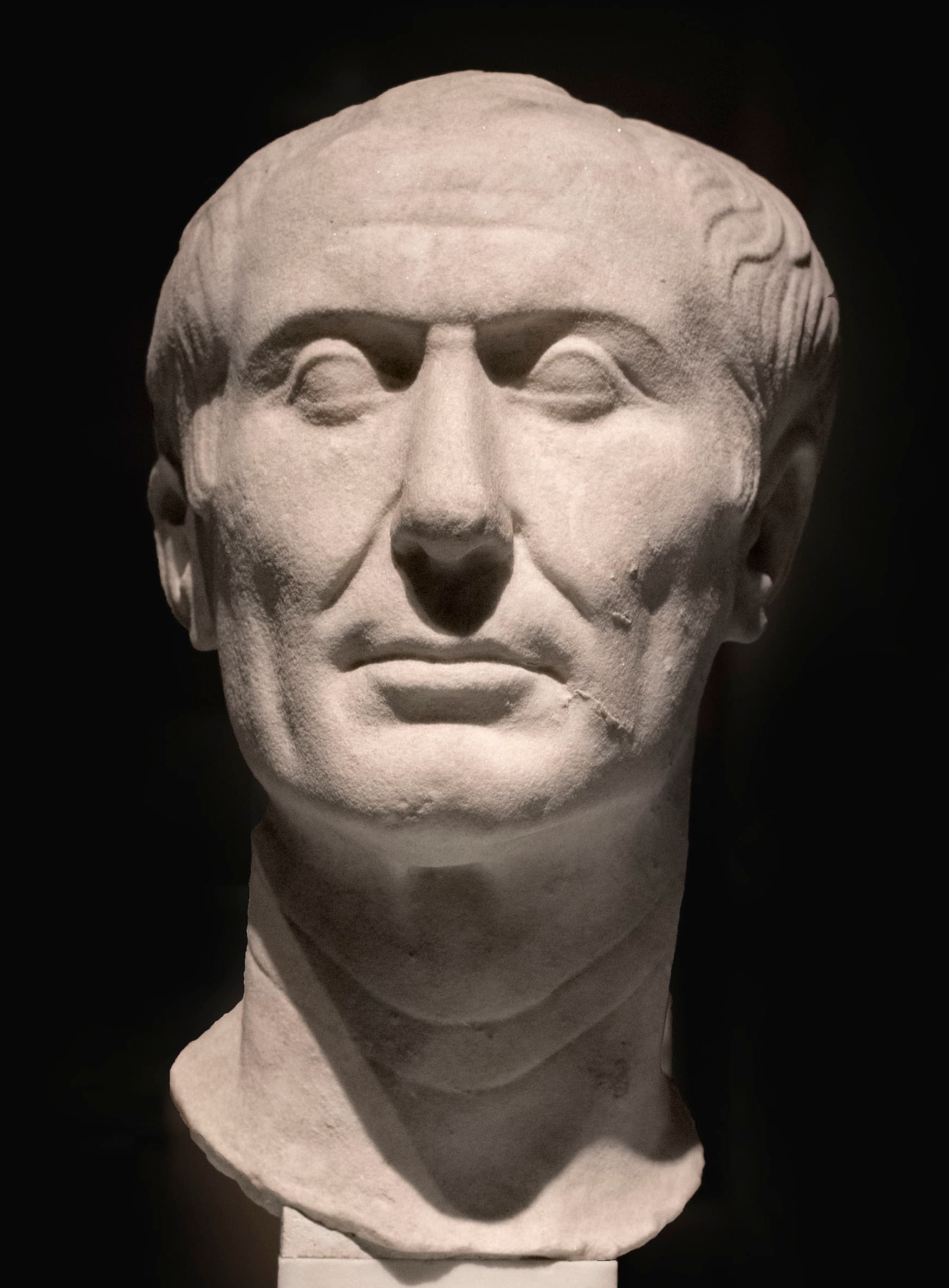
When Gaius Julius Caesar crossed the Rubicon in January of 49 BCE, he did more than launch an army toward Rome; he set in motion the unraveling of the Roman Republic itself.
To be born a patrician in first-century Rome was to inherit a legacy of divine ancestors and modest actual influence. Gaius Julius Caesar, born on the twelfth or thirteenth of July in 100 BCE, belonged to the gens Julia, a clan that traced its lineage through Julus, the founder of Alba Longa, back to Aeneas, and ultimately to the goddess Venus. Yet this celestial pedigree did little to guarantee political dominance in a Republic where power was brokered in the forum and on the battlefield. The Julii Caesares had produced only a handful of consuls over the centuries, and Caesar’s own father, though moderately successful as a praetor and governor of Asia, died suddenly when his son was only sixteen, leaving behind a family of ancient name but unremarkable fortune. The young Caesar’s prospects seemed defined by tradition rather than radical ambition; he was married to Cornelia, the daughter of the dominant political figure Lucius Cornelius Cinna, and was appointed flamen Dialis, a priest of Jupiter. It was an office of immense prestige but stifling religious taboos, designed to keep him permanently sidelined from the rough-and-tumble of Roman military and political life.
The trajectory of Caesar’s life was shattered and remade by the violent shifting of Rome's political tides. When the dictator Sulla emerged victorious in the civil war of 82 BCE, he set about dismantling the legacy of his rivals, demanding that Caesar divorce Cinna’s daughter and abdicate his priesthood. Caesar’s refusal was his first public act of defiance, a quiet rebellion that stripped him of his office and his property, and very nearly cost him his life. Only the frantic intervention of influential relatives and the Vestal Virgins saved him from Sulla’s proscription lists. Deprived of his priesthood, Caesar was suddenly free to pursue a conventional public career, which he began on the eastern fringes of the Roman world. He served on the military staff in Asia, winning the civic crown—a highly coveted honor awarded for saving a fellow citizen’s life—at the siege of Mytilene. When Sulla died in 78 BCE, Caesar returned to Rome, using the law courts to attack the corrupt provincial governors of the Sullan aristocracy. Even when captured by pirates in the Mediterranean, he maintained a supreme, almost theatrical confidence, allegedly demanding they raise his ransom to fifty talents before returning with a fleet to capture and execute them. He was a man building a reputation through sheer force of personality, reconciling his family's Marian past with the realities of a post-Sullan Rome.
By the late 70s BCE, Caesar had aligned himself with the rising star of Gnaeus Pompeius Magnus, supporting the restoration of tribunician rights and extraordinary commands for Pompey in the Mediterranean and the East. Elected as a curule aedile in 65 BCE, Caesar captivated the Roman public by staging lavish games and restoring the public trophies won by his uncle-by-marriage, the great general Gaius Marius, which Sulla had torn down. These acts of filial piety and popular spectacle cost fortunes, plunging Caesar deep into debt, but they secured him the devotion of the Roman plebeians. His political gamble paid off spectacularly in 63 BCE when he was elected Pontifex Maximus, the chief priest of Rome, a lifetime appointment that cemented his status as a central player in the Republic's affairs. In 60 BCE, seeking to bypass the stubborn opposition of conservative senators like Cato the Younger, Caesar forged an informal political alliance with Pompey and the fabulously wealthy Marcus Licinius Crassus. This First Triumvirate dominated Roman politics, securing Caesar the consulship for 59 BCE and subsequently a proconsular command over Gaul.
Connected to
- father ofAugustus63 BCE
- citizen ofRoman Empire27 BCE
+ 4 further connections to entries not yet ingested