Person · 1412 CE – 1431 CE · Medieval Europe
Joan of Arc
- Also known as
- Chuana d'Arco
- d Jungfrau vo Orléans
- de Maagd van Orléans
- Devica Orleanska
- die Jungfrau von Orléans
- Doncela de Orleán
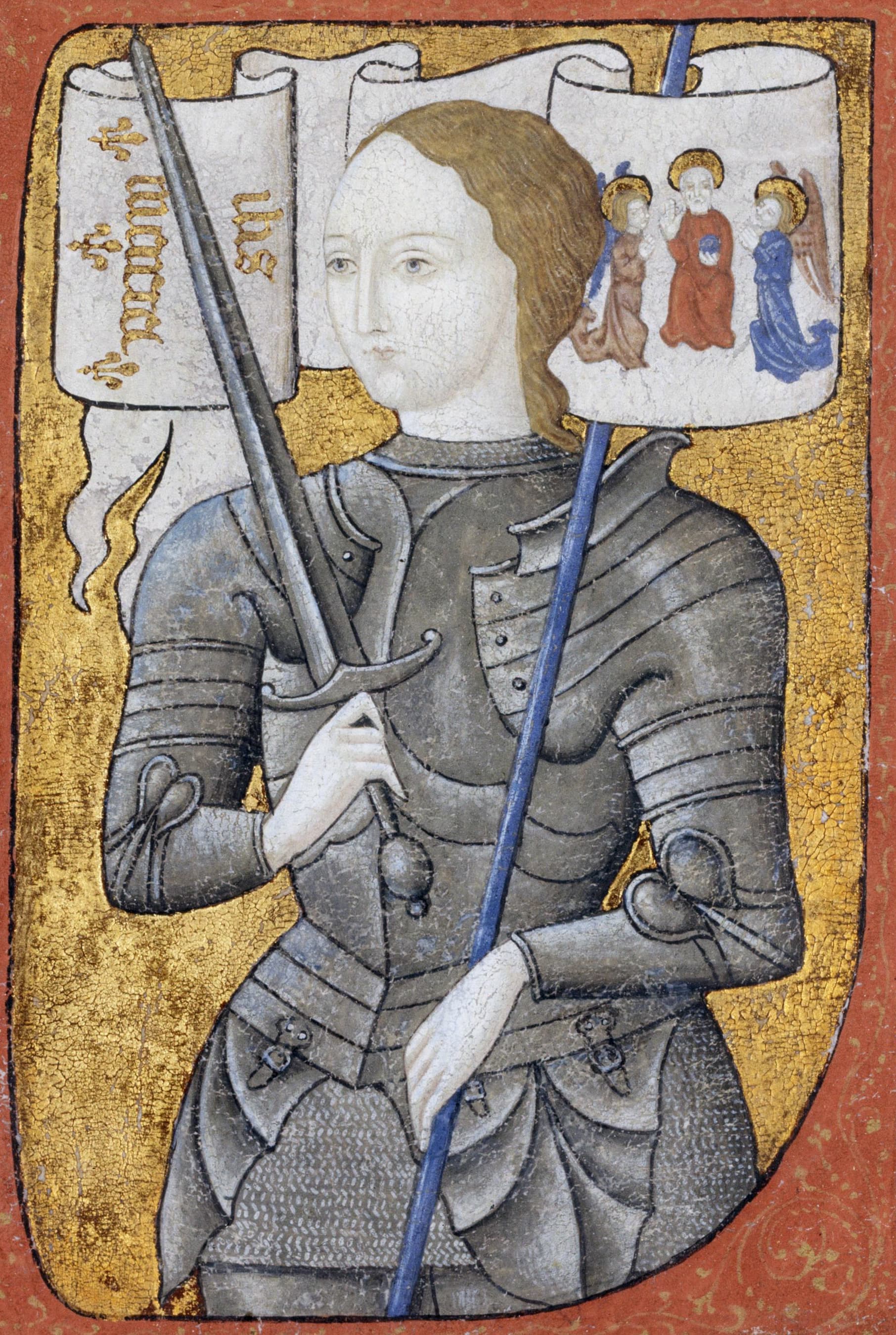
In the spring of 1429, a seventeen-year-old peasant girl from Domrémy arrived at the besieged city of Orléans, carrying a banner and a conviction that would reshape the map of Europe.
In the mid-fifteenth century, a prophecy drifted through the scorched, divided valleys of eastern France: a kingdom ruined by a woman would be restored by an armed virgin from the marches of Lorraine. It was a useful bit of folklore for a population enduring the interminable grinding of the Hundred Years’ War, where the line between Frenchmen was drawn in blood between those loyal to the Armagnac faction of the Dauphin Charles, and those allied with the Burgundians and their English patrons. In the small Meuse valley village of Domrémy, tucked into a contested borderland of unclear feudal status, the prophecy was more than a rumor; it was a map. In 1425, after a Burgundian raid swept through the village, stealing cattle and leaving the fields in ruin, a thirteen-year-old peasant girl named Joan had her first vision in her father’s garden. Surrounded by a blinding light, a figure she recognized as Saint Michael told her of the suffering of France. He was soon joined by Saint Catherine of Alexandria and Saint Margaret of Antioch—two virgin martyrs who had preserved their virtue against powerful tyrants to the death. Joan wept when they left, wishing they would take her with them, and secretly swore a vow of virginity to her voices.
The girl who would become known to history as Joan of Arc could neither read nor write, spent her days spinning wool, and strongly resented being called a shepherdess, preferring the domestic mastery of the needle. To her neighbors, she was Jeanne; to herself, she was la Pucelle—the Maiden. By 1428, as the English laid siege to the strategic crown jewel of Orléans, the gateway to the French south, Joan’s voices grew urgent. She traveled to the nearby town of Vaucouleurs to demand an armed escort from the local garrison commander, Robert de Baudricourt. He dismissed her out of hand and sent her home. Yet the war kept encroaching; a subsequent Burgundian raid torched Domrémy’s crops and forced her family to flee. Undeterred, Joan returned to Vaucouleurs in early 1429. Her absolute certainty, combined with her simple, quiet demeanor, began to win over hard-bitten soldiers like Jean de Metz and Bertrand de Poulengy. When Baudricourt finally relented, Joan cut her hair, donned men’s clothes provided by her supporters—garments she would refuse to shed for the rest of her life—and rode out into the winter territory of the enemy, bound for the royal court at Chinon.
At Chinon, the seventeen-year-old peasant girl was brought before the twenty-six-year-old Dauphin Charles, a prince disinherited by his own mother, haunted by rumors of his own illegitimacy, and presiding over a collapsing state. To test her, Charles disguised himself among his courtiers, yet Joan picked him out immediately. In a private audience, she gave him a sign: she revealed to him a secret prayer known only to God and himself, and reassured him that he was indeed the true son of the late King Charles VI. Still, the royal council hesitated. They dispatched her to Poitiers to be examined by a panel of theologians, who found her to be a good Catholic, and a assembly of matrons, who verified her virginity. Deciding her potential to rally a demoralized nation outweighed the theological risks, Charles equipped her with an army of several thousand men. Armed with an ancient sword her voices revealed was buried behind the altar of Saint Catherine de Fierbois, and carrying a white banner of her own design embroidered with lilies and the image of God holding the world, she marched on Orléans. She entered the besieged city on April 29, 1429. Within nine days of her arrival, her sheer bravado and aggressive leadership galvanized the garrison; the English abandoned their siege works and retreated.
Connected to
- in conflictHundred Years' War1337 CE
+ 12 further connections to entries not yet ingested