Person · 1569 CE – 1627 CE · Delhi Sultanate and Mughal
Jahangir I
- Also known as
- Cihangir
- Cihangir Şah
- Djahangir
- Djahangir
- Djehangir
- Djihân Guir
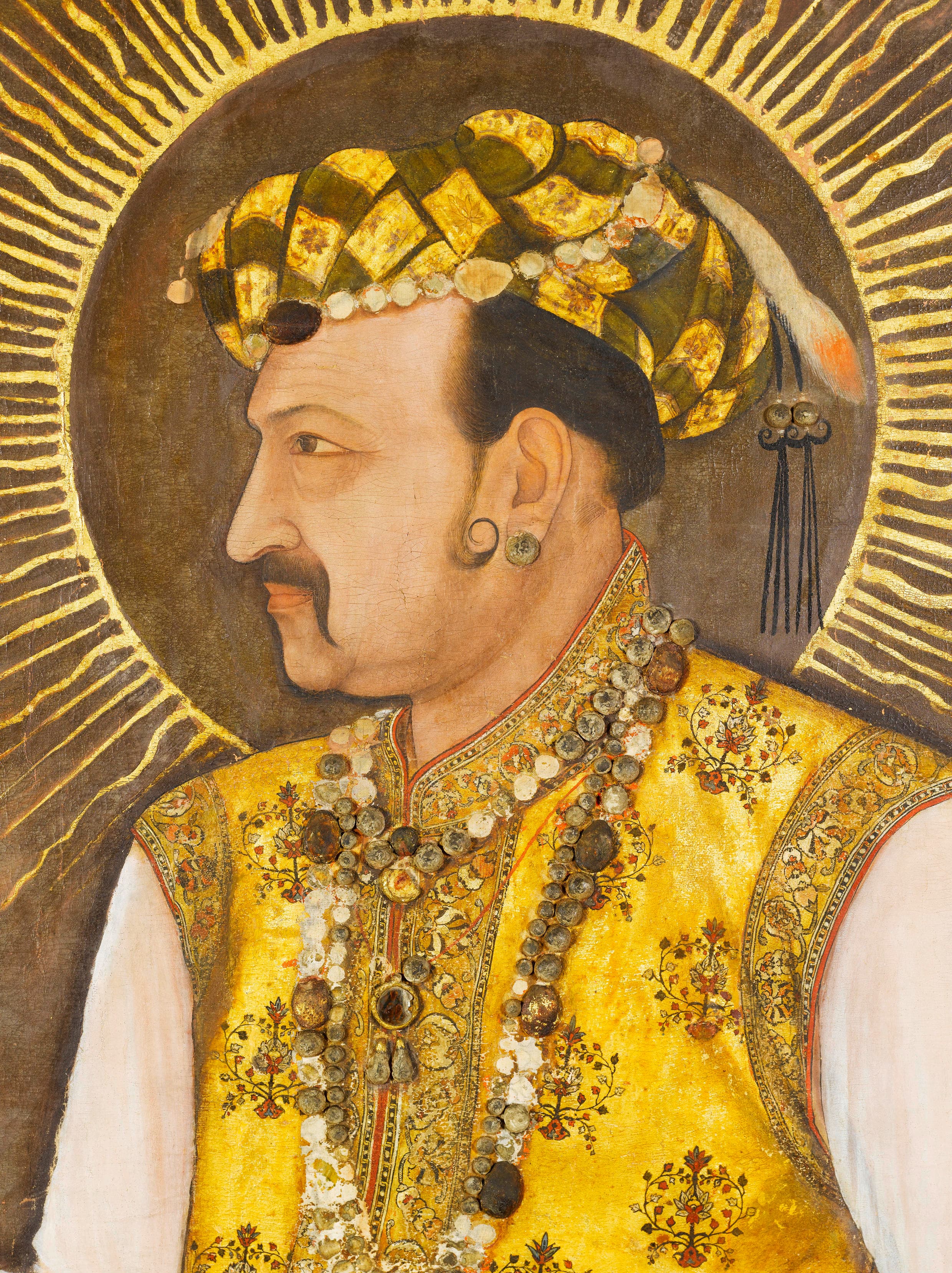
Grief-stricken by the loss of twin sons in infancy, the Mughal Emperor Akbar sought the blessings of a holy man, who promised him three sons who would live to a ripe old age.
On a late summer day in 1569, inside a newly built palace near the sandstone ridges of Fatehpur Sikri, a child was born whose very arrival was treated as a transaction with the divine. His father, the Emperor Akbar, had lost his firstborn twin sons in infancy and, desperate for an heir, had walked barefoot to the shrine of the Sufi mystic Salim Chishti. The saint promised three sons who would live to maturity. When the Empress Mariam-uz-Zamani became pregnant again, she was moved to a residence constructed specifically near the mystic’s lodgings so she might rest in the aura of his holiness. During her pregnancy, the child in her womb suddenly stopped moving. Akbar, then out hunting cheetahs, vowed to God that if the baby resumed kicking, he would never hunt cheetahs on a Friday for the rest of his life. The child stirred, the vow was kept, and when Prince Salim entered the world on August 31, he was named after the mystic whose prayers were believed to have summoned him. Out of astrological caution, Akbar did not look upon his long-awaited son's face for forty-one days, waiting for the celestial alignments to soften before he embraced the future master of the Mughal world.
The boy who would become Jahangir—the "World-Seizer"—was raised inside a cradle of immense luxury and relentless intellectual rigor. Beginning his formal education at the age of five with a lavish state feast, he was handed over to a succession of the empire’s finest minds. He mastered Persian and Hindustani, acquired a respectable command of the court’s ancestral Chagatai Turkish, and studied history, geography, arithmetic, and the sciences. Under the tutelage of his maternal uncle, the Kachhwaha Rajput ruler Bhagwant Das, he learned the brutal mathematics of warfare. Salim proved an able commander early; at twenty-six, he led a twelve-thousand-strong imperial force into the rugged Bundelkhand region to crush the rebel Raja Vir Singh Deo of Orchha. After a series of ferocious engagements, Salim forced the rebel leader to surrender five thousand infantry and a thousand cavalry, transforming Orchha into a Mughal vassal state. To commemorate the victory, the magnificent, multi-storied Jahangir Mahal was erected in Orchha, a monument of stone celebrating the prince who had subdued the wild hills.
Yet the proximity to absolute power bred a dangerous impatience. In 1599, while his father was occupied with military campaigns in the Deccan, Salim staged a coup of quiet defiance. He retired to Allahabad, declared himself emperor under the title "Nur-ud-din Muhammad Jahangir Badshah," began minting coins in his own name, and established a rival court. It was a classic Mughal drama: the aging lion of an empire challenged by his restless cub. Akbar, a ruler of legendary pragmatism and tolerance, chose reconciliation over a war of attrition. Through the diplomatic interventions of influential nobles, including the very Vir Singh Deo Salim had once defeated, the rebellion ended without a decisive clash of arms. By 1604, the prince had expressed his repentance, his father had offered forgiveness, and the domestic storm cleared. When Akbar died the following year, Salim ascended the throne on November 3, 1605, finally legalizing the title he had prematurely claimed: Jahangir.
Jahangir’s court was a theater of immense aesthetic sophistication, where the raw military power of the early Mughals was tempered by an obsessive devotion to the arts and a highly structured concept of imperial justice. He was a man of complex sensibilities. While he possessed the ruthless streak necessary to survive the Mughal court—later executing and imprisoning family members and rivals who threatened his stability—he was also a deeply sensitive naturalist, a patron of delicate, miniature paintings, and an author who recorded his observations of the natural world in his personal memoirs. His court became a cosmopolitan hub, navigating complex diplomatic relationships with the Safavids of Persia, the Ottoman Empire, and a small, persistent delegation from the English East India Company.
His domestic life was an intricate tapestry of political alliances woven through marriage. Jahangir’s imperial household was a sprawling, multi-ethnic assembly of Rajput princesses, Kashmiri noblewomen, and foreign brides, each marriage serving as a treaty stamped with gold and bloodlines. His first wife, Manbhawat Deiji, a Rajput princess of Amber, gave birth to his eldest son, Khusrau, and was honored as Shah Begam before her tragic death in 1605. His second, Jagat Gosain of Jodhpur-Marwar—for whom Salim had fallen at a court social gathering—bore him Prince Khurram, the future Shah Jahan. There were political unions with princesses from Bikaner, Jaisalmer, Kashmir, and even Little Tibet, whose ruler offered his daughter in 1592 specifically to ward off a threatened Mughal invasion. Later in his reign, Jahangir married Mehar-un-Nisa, whom he styled Nur Jahan ("Light of the World"). Highly educated, charismatic, and politically astute, Nur Jahan became the true power behind the throne, managing the administrative machinery of the empire as the Emperor’s health began to falter under the weight of a lifetime of heavy drinking and opium consumption.
The late years of Jahangir’s reign were shadowed by the same curse of filial rebellion that he had visited upon his own father. The stability of the empire was repeatedly rocked by revolts led by his sons, who grew impatient as the Emperor’s health decayed. When Jahangir died on October 28, 1627, his death triggered a swift, tense succession crisis, though the throne ultimately passed to Prince Khurram, who took the name Shah Jahan. Jahangir left behind an empire that had expanded its authority deep into the Deccan and consolidated its hold over the stubborn Rajput kingdoms, yet his most enduring legacy remained written in ink and carved in stone. He left a tradition of imperial patronage that elevated Mughal painting to its zenith, a collection of candid memoirs that revealed the human vulnerabilities of a monarch, and a courtly culture that balanced the raw exercise of power with an exquisite appreciation for the beautiful.
Connected to
- father · child ofAkbar1542 CE
- religionIslam631 CE
- child · father ofShah Jahan1592 CE
+ 12 further connections to entries not yet ingested