When the riders of the Mongol Empire swept across West Asia, they did not merely conquer; they eventually established a state that would resurrect an ancient identity.
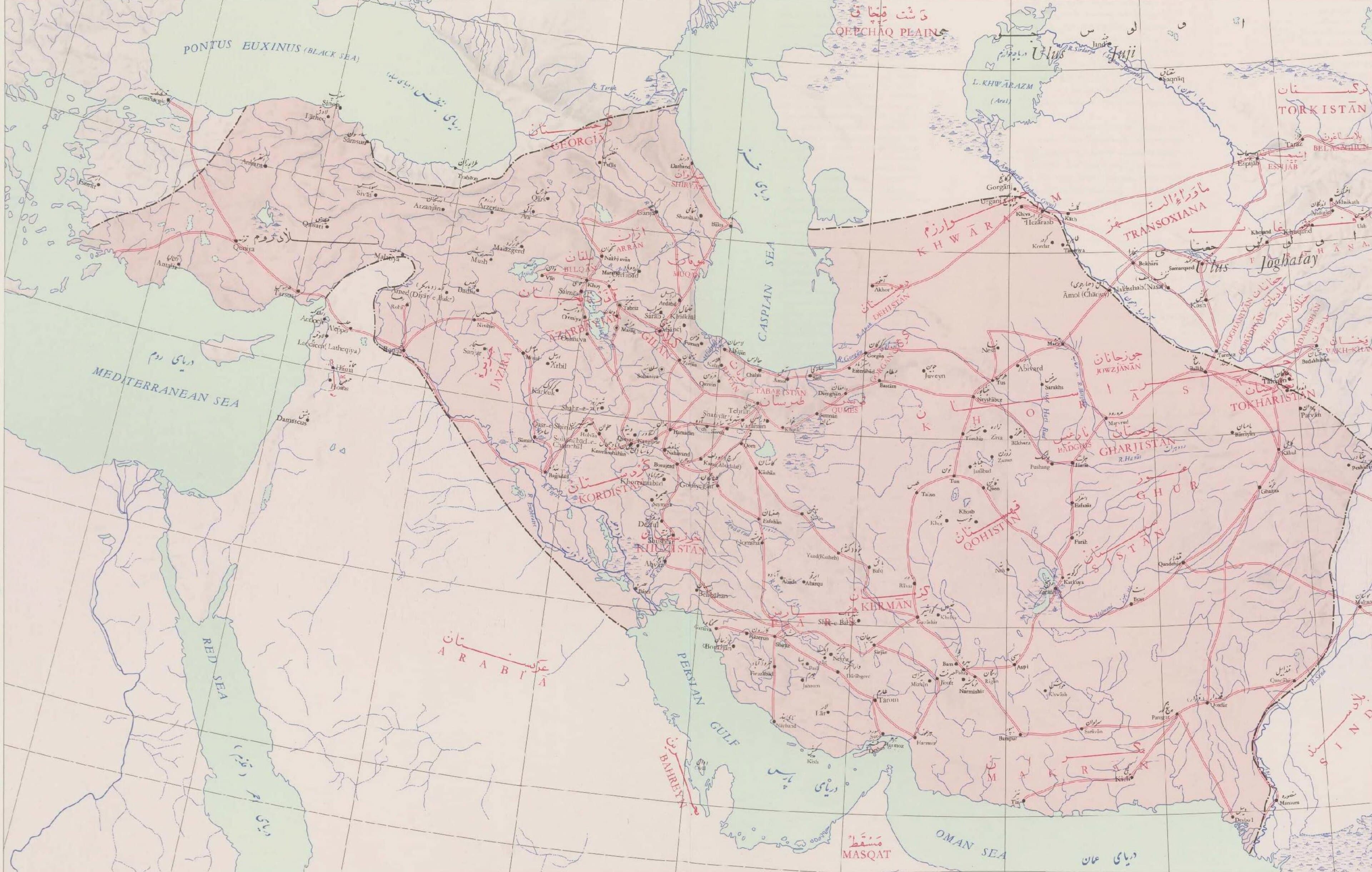
In the mid-thirteenth century, the vast Mongol Empire, though still bound by the legal and ancestral fiction of a single family enterprise, began to fracture along the lines of geography and culture. Among the most distinct of these fragments was the state that took root in the ancient, battered landscape of West Asia: the Ilkhanate. Formally known to the Mongols as the Hülegü Ulus—the people or state of Hülegü—its rulers took the title of ilkhan, meaning "subordinate khan," acknowledging the nominal suzerainty of the Great Khan in faraway China. Yet in practice, this was an empire of its own making. At its zenith, it stretched from the mountains of the Caucasus and the plateaus of Anatolia through the heart of Iraq and Iran, reaching into the dust of Afghanistan and Pakistan. It was a political entity built on the ashes of apocalyptic violence, yet it would ultimately trigger a profound, unexpected resurrection of the very culture it had systematically shattered.
The birth of this state was heralded by unparalleled destruction. In 1219, after the Shah of Khwarazm made the fatal mistake of executing a Mongol trade caravan, Genghis Khan unleashed his armies upon the Islamic world. Major cities were reduced to rubble, and the lands of Iran were thoroughly ravaged by the fast-moving military detachments of Jebe and Subutai. Though a brief, defiant counter-offensive was mounted by the Khwarazmian prince Jalal al-Din Mangburni, it was crushed in 1231 by Chormaqan, an commander dispatched by the Great Khan Ögedei. Slowly, the remnants of the regional powers—from the Seljuk Sultanate of Rûm in Anatolia to the Bagratid Kingdom of Georgia—submitted to Mongol vassalage, while Mongol military governors established their primary camps in the lush Mughan plain of what is now Azerbaijan.
The political shape of the region was permanently altered in the 1250s with the arrival of Hülegü, a grandson of Genghis Khan and brother to the Great Khan Möngke. Tasked with the total subjugation of the Abbasid Caliphate, Hülegü crossed the Oxus River with a fifth of the entire Mongol military machine. His campaign was a relentless, methodical exercise in siege warfare and psychological terror. In 1256, he dismantled the legendary mountain fortresses of the Nizari Ismailis, known to Europe as the Assassins. Two years later, his forces breached the walls of Baghdad. The execution of the last Abbasid Caliph and the sack of the ancient capital of Islam sent shockwaves through the Mediterranean and West Asia, marking the symbolic end of a five-hundred-year-old Islamic golden age. Hülegü pushed as far south as Gaza, briefly absorbing Syria, before the sudden death of Möngke Khan forced him to withdraw the bulk of his army to participate in the succession council in Mongolia. The skeleton force he left behind was decisively beaten by the Egyptian Mamluks at the Battle of Ain Jalut in 1260, establishing a permanent, bloody frontier between the two empires along the Levant.
+ 6 further connections to entries not yet ingested
What followed the initial slaughter was a slow, complex process of assimilation. The early Ilkhanid state was a fragile, nomadic construct superimposed on an ancient agrarian and urban society. Hülegü lived as a nomad in southern Azerbaijan and Armenia, leaving the management of his conquered territories in a state of chaos. It was only with the appointment of Shams al-Din Juvayni as vizier after 1262 that a sustainable civil administration began to take root. Juvayni, a member of the native Persian bureaucratic elite, represented the beginning of a crucial historical pivot: the conquerors were starting to rely on the conquered to run their state.
This reliance on native intellectuals had a profound, unintended side effect. While the Mongol rulers were of foreign, Central Asian origin, they sought to legitimize their rule over their predominantly Persian-speaking subjects by consciously weaving themselves into the fabric of the region’s past. They commissioned elaborate court histories that presented the Mongol khans not as foreign destroyers, but as the rightful, ordained heirs to the ancient Sasanian Empire. Native Persian scholars, desperate to find order in the wake of the cataclysm, interpreted this Mongol unification as a providential revival of their long-lost dynastic traditions. Through this partnership of Mongol sword and Persian pen, the concept of Irān-zamin—the "Land of Iran"—was revived and systematically developed as a territorial and political ideology. It was a conceptual framework that would outlive the Mongols by centuries, serving as the direct blueprint for the rise of the Safavid Empire in the sixteenth century.
For its first few decades, however, the Ilkhanate was defined by deep internal friction and constant warfare. Surrounded by rivals, the Ilkhans found themselves locked in open conflict not only with the Muslim Mamluks to the south, but also with their own cousin states: the Golden Horde to the north in the Russian steppes and the Chagatai Khanate to the east in Central Asia. This multi-front pressure forced the early Ilkhans to seek unconventional alliances. While the Mongol court remained predominantly Buddhist, Shamanist, or Nestorian Christian, they routinely sent embassies to Western Europe, proposing joint military campaigns with Christian crusaders against the Mamluks.
This precarious cultural balancing act began to fracture under the weight of economic ruin and internal rebellion. By the late thirteenth century, the state's finances were in shambles. The reign of Gaykhatu in the early 1290s saw such rampant inflation and treasury exhaustion that his vizier attempted to introduce paper currency modeled on the system used by their allies, the Yuan dynasty of China. The experiment was a disastrous failure, rejected by merchants and population alike, and Gaykhatu was soon overthrown.
The turning point came in 1295 with the accession of Ghazan. Recognizing that a tiny Mongol elite could not indefinitely rule a vast Muslim population while maintaining foreign religions, Ghazan made the monumental decision to convert to Islam under the influence of the Mongol emir Nawrūz. He declared Islam the official state religion, a move that fundamentally altered the social hierarchy of the empire. Non-Muslim subjects lost their equal status; Christians and Jews were subjected to the jizya tax, and Buddhists were faced with the harsh choice of conversion or expulsion, their temples systematically destroyed. Though Ghazan later tempered this severity after executing Nawrūz in 1297, the religious landscape of the Ilkhanate had permanently shifted.
Strangely, this conversion did little to alter the geopolitics of the region. The Muslim Ilkhans remained as bitterly hostile to the Muslim Mamluks as their pagan predecessors had been, continuing their bloody struggles over the plains of Syria. Though Ghazan achieved a spectacular victory over the Mamluks at the Battle of Wadi al-Khaznadar in 1299, the Ilkhans were never able to permanently hold Syrian territory, plagued as they were by the persistent threats of the Chagatai Khanate on their eastern borders.
The end of the Ilkhanate came with terrifying swiftness. In the 1330s, the Black Death swept through the trade routes of Asia, decimating the cities, the courts, and the military camps of the empire. When the last effective ilkhan, Abu Sa'id Bahadur Khan, died in 1335 without a clear heir, the state disintegrated into a patchwork of minor, warring dynasties.
Though the Ilkhanate lasted less than a century, its impact on the geography of human civilization was permanent. The Mongols had entered West Asia as an alien, devastating force, yet in their pursuit of legitimacy, they rebuilt the physical and intellectual borders of ancient Iran. By centralizing authority, patronizing the arts, and embracing the administration of the Persian elite, they forged a distinct territorial identity out of chaos. The Ilkhanate did not merely pass into history; it laid the structural and cultural foundations of the modern Middle East, proving that even the most destructive conquests can leave behind the architecture of a new world.