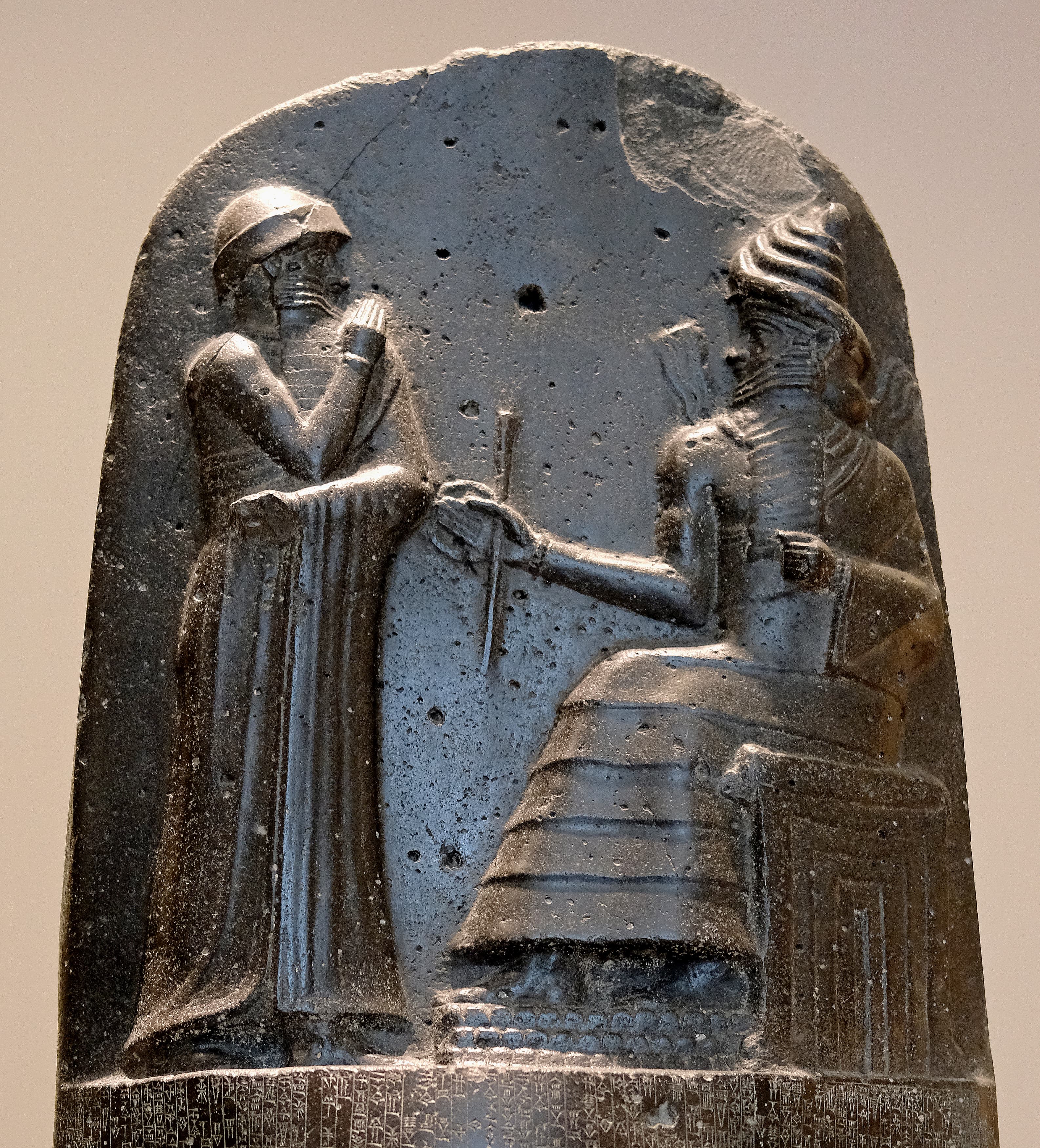
When Hammurabi ascended the throne around 1792 BCE, Babylon was merely a minor city-state, overshadowed by older, grander kingdoms and surrounded by rivals vying for the fertile plains of Mesopotamia.
In the year 1792 BCE, the city-state of Babylon was a minor regional actor in a crowded, violent landscape. Nestled on the central Mesopotamian plain, it was dwarfed by ancient, wealthier, and far more aggressive powers: Elam to the east, Eshnunna along the upper Tigris River, Larsa controlling the river delta to the south, and the expansive northern empire of the Assyrian king Shamshi-Adad I. The kings of Babylon who preceded the young Amorite ruler Hammurabi had established only a modest foothold since the city’s founding in 1894 BCE. Though Hammurabi’s father, Sin-Muballit, had managed to absorb nearby towns like Kish, Borsippa, and Sippar, he was ultimately forced to abdicate due to failing health, leaving his son a kingdom surrounded by predators. Yet within a few decades, this vulnerable enclave would become the center of a unified Mesopotamian empire, and its sixth king would forge a legacy that outlived the very clay and stone of his city.
For the first several years of his reign, Hammurabi chose a path of quiet consolidation. Rather than launching risky military campaigns, he fortified Babylon’s defensive walls, expanded its temples, and watched the shifting alliances of his neighbors. The fragile equilibrium of the plains shattered when the powerful mountain kingdom of Elam swept down from the Zagros Mountains, destroying the kingdom of Eshnunna and threatening to dominate the southern plains. In a bid to secure their conquest, the Elamites attempted to orchestrate a war between Babylon and Larsa. Recognizing the duplicity, Hammurabi formed an alliance with Rim-Sîn I of Larsa to repel the invaders. When Elam was crushed, however, Hammurabi noted with bitter resentment that Larsa had withheld its troops, leaving Babylon to bear the brunt of the defense. Seizing the moment, Hammurabi marched south, invading and annexing Larsa in 1763 BCE, a victory that delivered the entirety of the lower Mesopotamian plain into his hands.
The conquest of the south triggered instability in the north, where Hammurabi’s northern allies, Yamhad and Mari, had sent troops to assist him, leaving their own borders vulnerable. Turning his armies northward, Hammurabi systematically subdued the region. He dismantled Eshnunna, absorbed northern territories, and ultimately conquered his former ally, Mari—possibly securing its surrender without a drop of blood. This expansion culminated in a protracted war of attrition against Ishme-Dagan I of Assyria. Through a complex web of shifting alliances with smaller states, Hammurabi slowly strangled Assyrian power, eventually ousting Ishme-Dagan and forcing his successor, Mut-Ashkur, to pay tribute. In a stunningly brief window of time, the ruler of a minor city-state had united almost the entirety of Mesopotamia under Babylonian hegemony, claiming the expansive title of "King of the Amorites."
12 links to entries not yet ingested in the Library.
While Hammurabi’s military genius reshaped the map, his administrative letters reveal a ruler obsessed with the minutiae of governance. Fifty-five of his personal letters, alongside thousands of contract tablets from his reign, survive to show a king deeply involved in the daily trials of his realm. He was not a distant warlord but an active bureaucrat who personally managed flood control projects, ordered adjustments to a flawed calendar, and directed the movement of Babylon’s massive royal herds of livestock. Under his administration, Akkadian—the everyday language of Babylon—replaced Sumerian as the official language of administration and literature, a deliberate linguistic reform that made the law and the state more accessible to the literate classes.
It was this administrative impulse that yielded Hammurabi’s most enduring monument: a collection of 282 laws inscribed upon a towering black basalt stele. Erected in a prominent public space, the stele was crowned by a relief depicting Hammurabi receiving the laws directly from Shamash, the Babylonian god of justice. The preface declared that Hammurabi had been chosen by the god to bring order to the land, "to destroy the wicked and the evil-doers, so that the strong should not harm the weak." Unlike older Sumerian legal traditions, such as the Code of Ur-Nammu, which prioritized financial compensation for victims, the Code of Hammurabi introduced a revolutionary focus on the physical punishment of the perpetrator. It codified the philosophy of Lex Talionis—"an eye for an eye, a tooth for a tooth"—prescribing precise, physical retributions, disfigurements, and capital punishments for specific offenses. Yet, it also introduced concepts that would shape global jurisprudence for millennia, including one of history's earliest assertions of the presumption of innocence, providing both the accuser and the accused the opportunity to present evidence before a court. Crucially, by setting rigid, standardized penalties, the code sought to limit the cycle of private, unchecked vengeance that often tore societies apart.
The cultural impact of Hammurabi’s reign was so profound that he was declared a god within his own lifetime. Citizens took the name "Hammurabi-ili"—"Hammurabi is my god"—and later generations looked back on his era as the golden age, the ultimate point of reference for all historical events. To the Mesopotamian mind, his conquests were not mere land grabs but a sacred mission to civilize the world and elevate Marduk, the national god of Babylon, to the apex of the pantheon. A stele from Ur recorded his boast of pacifying "obscure" and "distant" peoples: "I myself continued to put straight their confused minds." Babylon itself supplanted the ancient city of Nippur as the holy center of the Mesopotamian world.
Yet the empire Hammurabi built was fragile, bound too tightly to his personal administrative genius. Upon his death in 1750 BCE, his son Samsu-iluna inherited a state that almost immediately began to unravel. In the north, native Akkadian-speaking rulers like Puzur-Sin successfully drove the Amorite-Babylonian administrators out of Assyria. In the far south, along the marshy banks of the Persian Gulf, local leaders threw off Babylonian control to establish the Sealand Dynasty. Hammurabi's successors, beset by internal rebellions and external pressures, steadily lost territory until the empire collapsed entirely.
But while his empire dissolved, Hammurabi’s shadow grew longer. For centuries, scribes across the Near East copied his laws as standard writing exercises, even translating portions of them back into the ancient Sumerian tongue. Subsequent kings throughout the region claimed him as an ancestor to legitimize their own rules, and his military exploits faded in the cultural memory, eclipsed by his image as the archetype of the wise and just lawgiver. When French archaeologists unearthed the stolen law stele in the ruins of the Elamite capital of Susa in 1901, they restored Hammurabi to the global stage. Today, his likeness remains carved into the marble reliefs of the United States Capitol and the Supreme Court building in Washington, D.C.—a testament to a bronze-age king who sought to replace the chaos of private vengeance with the enduring, public rule of law.