Person · 1325 CE – 1389 CE · Persian Empires
Hafez
- Also known as
- Anacreon of Persia
- Chvádže Šamsuddín Muhammad
- Chvádže Šamsuddín Muhammad Háfiz
- Haafez
- Haafiz
- Haafiz
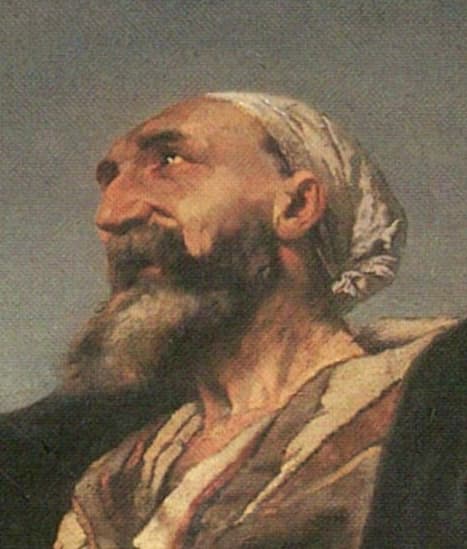
To find a book of fourteenth-century lyric poetry sitting alongside the Quran in a modern Iranian home is not an anomaly, but a centuries-old norm.
In the high, dry air of Shiraz, in what is now southern Iran, the fourteenth century was an age of beautiful violence and fluid loyalties. Dynasties rose and vanished with the seasons; rulers were blinded, poisoned, or exalted by turns, and the city itself frequently changed hands between rival princes. Yet inside the homes of this fractured landscape, and across the centuries that followed, a single voice came to govern the interior life of an entire culture. He was born Shams-od-Din Mohammad, but the world would know him simply as Hafez—a title earned by one who has committed the entire Quran to memory. He was a poet who lived in the narrow, exquisite space where the sacred and the profane lose their margins, writing verses so elusive and resonant that they earned him another title: Lisan al-Ghayb, the Tongue of the Unseen.
To read Hafez is to enter a world where the tavern is a temple, the cupbearer is a spiritual guide, and the dark mole on a beloved’s cheek is worth the ransom of great empires. It is said that when the Central Asian conqueror Timur—who had built pyramids of human skulls to establish his empire—conquered Shiraz, he angrily summoned the poet. Timur demanded to know why Hafez had written in a famous ghazal that he would give away the magnificent imperial cities of Samarkand and Bukhara for the beauty of a Shiraz girl’s mole. “With the blows of my lustrous sword,” Timur allegedly roared, “I have subjugated most of the habitable globe to embellish my capitals, and you would sell them for a speck of skin!” The poet, thin and impoverished, bowed deeply and replied, “Alas, O Prince, it is this very prodigality which is the cause of the misery in which you find me.” The conqueror, disarmed by the wit of a man who owned nothing but his words, dismissed him with handsome gifts.
Though such stories carry the soft, polished edges of legend, they reveal the immense gravity Hafez held in the imagination of his contemporaries and those who came after. His actual biography remains obscured by the passage of time and the unreliability of early biographical sketches, or tazkiras. Scholars generally place his birth between 1315 and 1325 CE. He grew up under the patronage of several successive regimes, navigating the dangerous waters of royal favor. He was supported early on by the young ruler Shah Abu Ishaq, and later reached his creative peak during the twenty-seven-year reign of Jalal ud-Din Shah Shuja. The relationship with Shah Shuja was fruitful but tempestuous; traditional accounts suggest Hafez briefly fell from grace after mocking inferior poets—a dangerous game, given that the Shah himself fancied himself a writer—forcing the poet to flee temporarily to Isfahan and Yazd. He was sought after by courts as far away as Bengal, whose Sultan, Ghiyasuddin Azam Shah, exchanged letters with him and invited him to Sonargaon, though the journey was never made. He lived alongside the great intellectual lights of his age, including the Sunni theologian Adud al-Din al-Iji, whom Hafez praised as one of the great notables of the region.
The core of Hafez’s genius lies in the ghazal, a short, rhyming lyric poem that had long been the standard vessel for Persian love poetry. In his hands, however, the genre became something radically complex. Before Hafez, Persian literary history had witnessed a quiet coup: Sufi mystics had seized the vocabulary of human passion—the wine, the lover's curl, the pain of separation—and used it to describe the soul's longing for God. They believed the ineffable nature of the divine could not be captured in dry theological prose, only in the ecstatic language of love. By the fourteenth century, this mystical vocabulary had become so deeply embedded that it was virtually impossible for a Persian poet to write a simple love song without it being read as an allegory for the divine. While some of his contemporaries rebelled against this fusion by turning to satire, Hafez leaned directly into the ambiguity. He sang a rare, perfectly balanced blend of human and mystical love, crafting verses where the physical and the spiritual are so thoroughly intertwined that they cannot be separated.
This deliberate ambiguity has divided scholars and readers for centuries. When European translators first encountered his work in the late seventeenth and eighteenth centuries, they struggled to categorize him. Francois de Mesgnien Meninski, an interpreter for the Ottoman court, made the earliest translations, followed by Thomas Hyde of Oxford, who translated his work into Latin in 1690 with the aid of Turkish commentaries. By 1771, William Jones had introduced Hafez to the English-speaking world, presenting him as a secular, Petrarchan lyricist of earthly delights. Conversely, later translators like Henry Wilberforce Clarke insisted that Hafez was a purely didactic Sufi mystic whose wine was strictly metaphorical and whose tavern was the monastery of the heart. The American transcendentalist Ralph Waldo Emerson, who declared Hafez "a poet's poet," rejected the purely Sufic interpretation of the wine, while others embraced it. The truth, as modern scholarship suggests, is that Hafez’s power lies precisely in his refusal to choose. His work is "antinomian"—defying strict religious law—and deeply "theosophical" in the medieval sense, meaning it is inspired by mystical insights rather than formal dogmatic theology. His poems celebrate freedom from restraint, exposing religious hypocrisy while exalting the raw sincerity of the lover and the drunkard.
This fluid, oracular quality is why Hafez remains an active, living presence in Persian-speaking homes, far transcending the status of a historical monument. His collected poems, the Divan, compiled after his death, function as a secular scripture. Through a practice known as fal-e Hafez, or bibliomancy, millions of people look to his verses for guidance. During major cultural celebrations like Nowruz (the Persian New Year) or Yalda Night (the winter solstice), family members will close their eyes, make a silent wish or ask a question of the universe, and open the Divan to a random page. The poem that meets their eye is read aloud and interpreted as an answer, a warning, or a promise for the future. It is a tradition reminiscent of the Roman Sortes Vergilianae, yet it is practiced not by scholars in libraries, but by families sitting around living room carpets.
The legacy of these verses has rippled far beyond the borders of Shiraz. In the West, his poetry captured the imagination of Goethe, whose West-östlicher Divan was directly inspired by Hafez, as well as thinkers like Henry David Thoreau, W. B. Yeats, and even Friedrich Engels, who remarked on the poet's genius in an 1853 letter to Karl Marx. In India, his verses found a profound home in Bengal; Debendranath Tagore, the father of the Nobel laureate Rabindranath Tagore, committed the poems to memory and chanted them in his daily devotions. Years later, in 1932, Rabindranath Tagore himself made a pilgrimage to Shiraz to pay homage at the poet's grave. Musicians across empires and eras have sought to set his words to sound. The Ottoman composer Buhurizade Mustafa Itri composed his masterpiece Neva Kâr based on Hafez’s lyrics; the Polish composer Karol Szymanowski created The Love Songs of Hafiz from German translations; and modern Afghan and Iranian singers, from Ahmad Zahir to the legendary classical vocalists of Iran, have kept his ghazals alive through the non-metered, improvisational art of avaz.
Today, in the Musalla Gardens of Shiraz, the physical remains of Hafez rest beneath an octagonal canopy designed in the late 1930s by the French archaeologist and architect André Godard. The tomb is raised on a dais, surrounded by orange trees, rose gardens, and slow-moving water channels. It is not a place of quiet, museum-like reverence, but a space of lively devotion. Visitors touch the alabaster sarcophagus, which is carved with his own verses, and recite his poetry aloud, their voices carrying over the scent of orange blossoms. In a world of shifting politics and transient empires, the poet who refused to separate the earthly from the divine remains exactly what his contemporaries called him: a voice speaking from the threshold of the unseen, offering solace to the living.
Connected to
- religionIslam631 CE
- citizen ofTimurid Empire1370 CE
+ 10 further connections to entries not yet ingested