Event · 37 BCE – 668 CE · Korean Kingdoms
Goguryeo
- Also known as
- Cao Câu Ly
- Gorjeo
- Goryeo
- Gŏ̤-gău-là̤
- Ko-kù-lê
- Kogurio
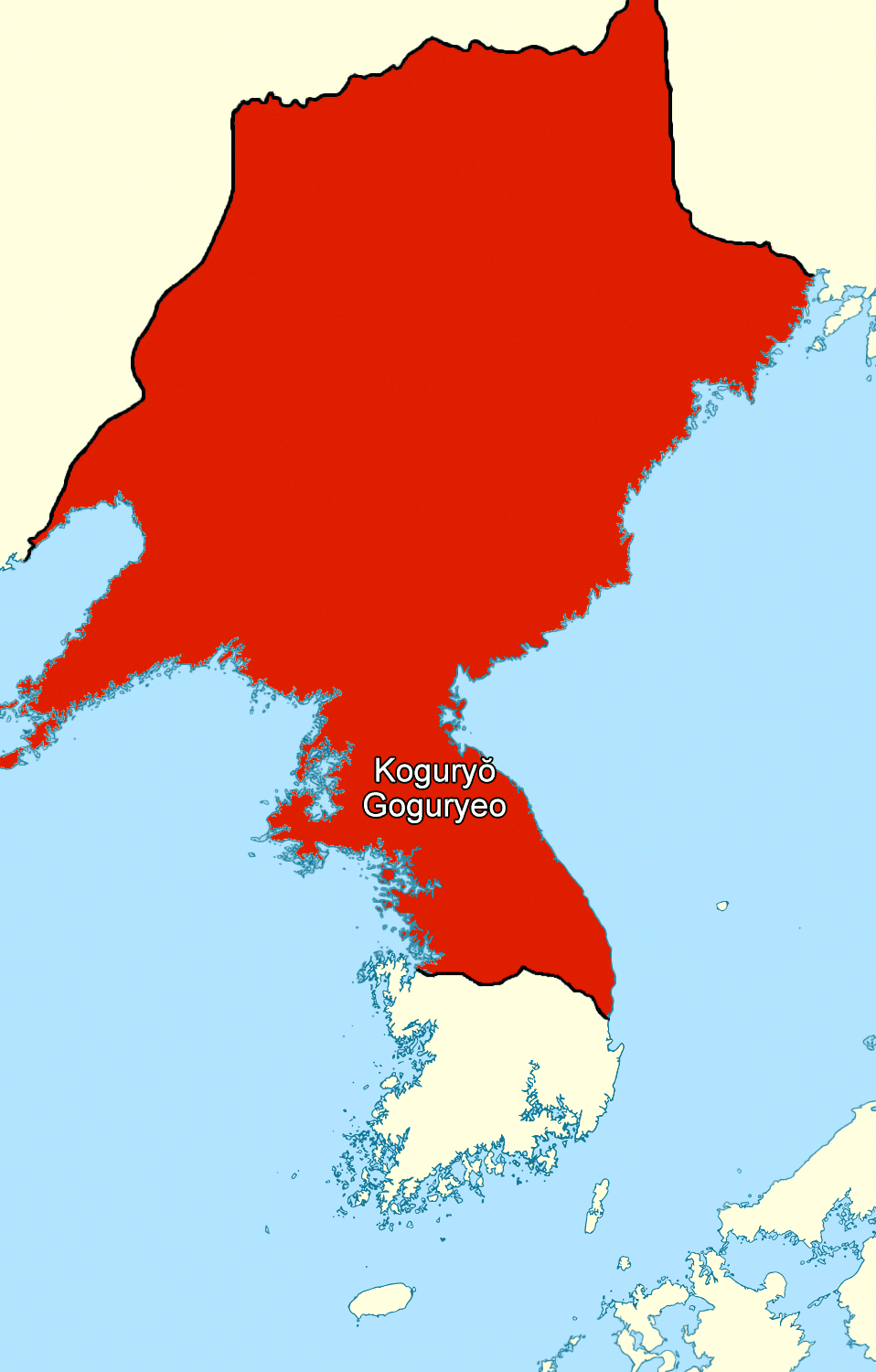
High upon the northern reaches of the Korean peninsula and stretching across the vast, forested expanses of Manchuria, a power emerged that would define the geopolitics of East Asia for over seven centuries.
The kingdom of Goguryeo, which would eventually give its name to the modern concept of Korea, began not as a grand empire but as a rumor of resistance nestled in the jagged, unforgiving river valleys of southern Manchuria. Long before it dominated the northern half of the Korean peninsula, this polity emerged from the shadows of the Han Empire’s expansion. Following the collapse of the ancient kingdom of Gojoseon in 108 BCE, the Chinese Han dynasty carved the region into administrative commanderates, seeking to govern a disparate mosaic of native peoples. Among these were the Yemaek, a resilient, agricultural and pastoral population that inhabited the steep valleys of the Amnok and Hun River basins. In 12 CE, the Han Shu records a moment of fracture: a group labeled as Goguryeo rose in open revolt, severing their ties of vassalage to the regional Chinese administrative center, the Xuantu Commandery. The mountain-dwelling clans had chosen defiance over assimilation, setting into motion a nine-century epic of regional hegemony.
To understand how this rugged league of clans transformed into a highly centralized military state, one must look to the ecological reality of their homeland. Goguryeo’s early territory, situated in what is now southern and central Northeast China and the northern fringes of the Korean peninsula, was breathtakingly mountainous and chronically short of arable land. Unlike the fertile, alluvial plains of the south, this terrain could not easily feed a growing population. Survival required a different strategy. Guided by historical pastoralist tendencies, early Goguryeo society organized itself around the mobilization of resources through raiding, conquest, and the systematic extraction of tribute. To survive was to expand; to thrive was to dominate neighboring tribes who possessed the crops, iron, and manpower that the mountain fortresses lacked.
This existential drive found its spiritual justification in the kingdom’s foundation myth, which bound the ruling dynasty to the heavens and the earth. At the heart of this memory is Jumong—also known in primary inscriptions as Chumo—a prince of exceptional archery skills who fled a deadly succession struggle in the northern kingdom of Buyeo. According to the fourth-century Gwanggaeto Stele, the earliest surviving indigenous record of the kingdom, Jumong was no ordinary refugee; he was the son of a heavenly prince and the daughter of the river god Habaek. Fleeing south, he crossed deep waters that parted for him, arriving in the valley of Jolbon. There, he married Soseono, the influential daughter of a local ruler, whose immense financial and political backing proved essential in unifying the local Yemaek clans into a cohesive statelet. Jumong claimed the royal surname Go—meaning "high"—to reflect his divine lineage, and immediately set about subjugating neighboring tribal territories. Soseono’s legacy would stretch even further south; when Jumong's son from a previous marriage arrived to claim the crown, she departed with her own sons, Biryu and Onjo, who would journey south to found the kingdom of Paekche.
By the mid-first century CE, the loose confederation of mountain clans began to harden into a formidable, centralized state. During the reign of King Taejodae, who ascended to power in 53 CE, the traditional five autonomous tribes of the region were reorganized into five centrally administered districts. The king and the royal court assumed absolute control over military affairs and foreign relations. Taejodae turned this newly organized state apparatus outward, systematically conquering the Okjeo tribes of northeastern Korea and the Dongye of southeastern Manchuria. Rather than destroying these peoples, Goguryeo operated an efficient empire of extraction. Conquered chieftains were permitted to retain local authority, but they were placed under the watchful eye of governors tied to the Goguryeo royal line and subjected to heavy, regular tribute.
The wealth, grain, and conscripts extracted from these coastal and valley populations fueled a dramatic escalation of conflict with China’s borderlands. Flush with new resources, Taejodae’s armies launched bold assaults on the Han Commanderies of Lelang and Xuantu, effectively securing complete independence from Chinese imperial oversight. Within the kingdom, this continuous influx of wealth stabilized the central aristocracy, which absorbed former tribal leaders into a rigid hierarchy of state ranks. Royal succession, once a volatile matter decided between brothers, transitioned to a stable, patrilineal system passed from father to son.
By the time the kingdom shortened its official name to the poetic "Goryeo" in the fifth century—a name translating to "high and beautiful"—it had evolved from a desperate league of mountain rebels into one of the great powers of East Asia. At its zenith, Goguryeo’s borders stretched across the vastness of Manchuria, reaching into eastern Mongolia, Inner Mongolia, and parts of modern-day Russia, while anchoring its southern frontier deep within the Korean peninsula. It was a multi-ethnic empire, where a ruling elite of mounted warriors from the north governed a diverse population of Yemaek farmers, captured Chinese scribes, and Xianbei craftspeople. This vibrant, martial society held its own for centuries against the shifting dynasties of China and its rival peninsular kingdoms, Silla and Paekche, in a relentless three-way struggle for supremacy. Though the kingdom finally succumbed in 668 CE to a devastating joint invasion by the Chinese Tang dynasty and the southern kingdom of Silla—wearied by decades of continuous warfare and internal aristocratic strife—its legacy was permanent. It left behind a cultural and political blueprint that defined the region, ensuring that when later dynasties unified the peninsula, they did so under the name of Goryeo, preserving the memory of the high castles in the northern mountains for the modern world.
Connected to
- religionBuddhism
- in country · containsGoguryeo37 BCE
- had as citizenGwanggaeto the Great374 CE
+ 5 further connections to entries not yet ingested