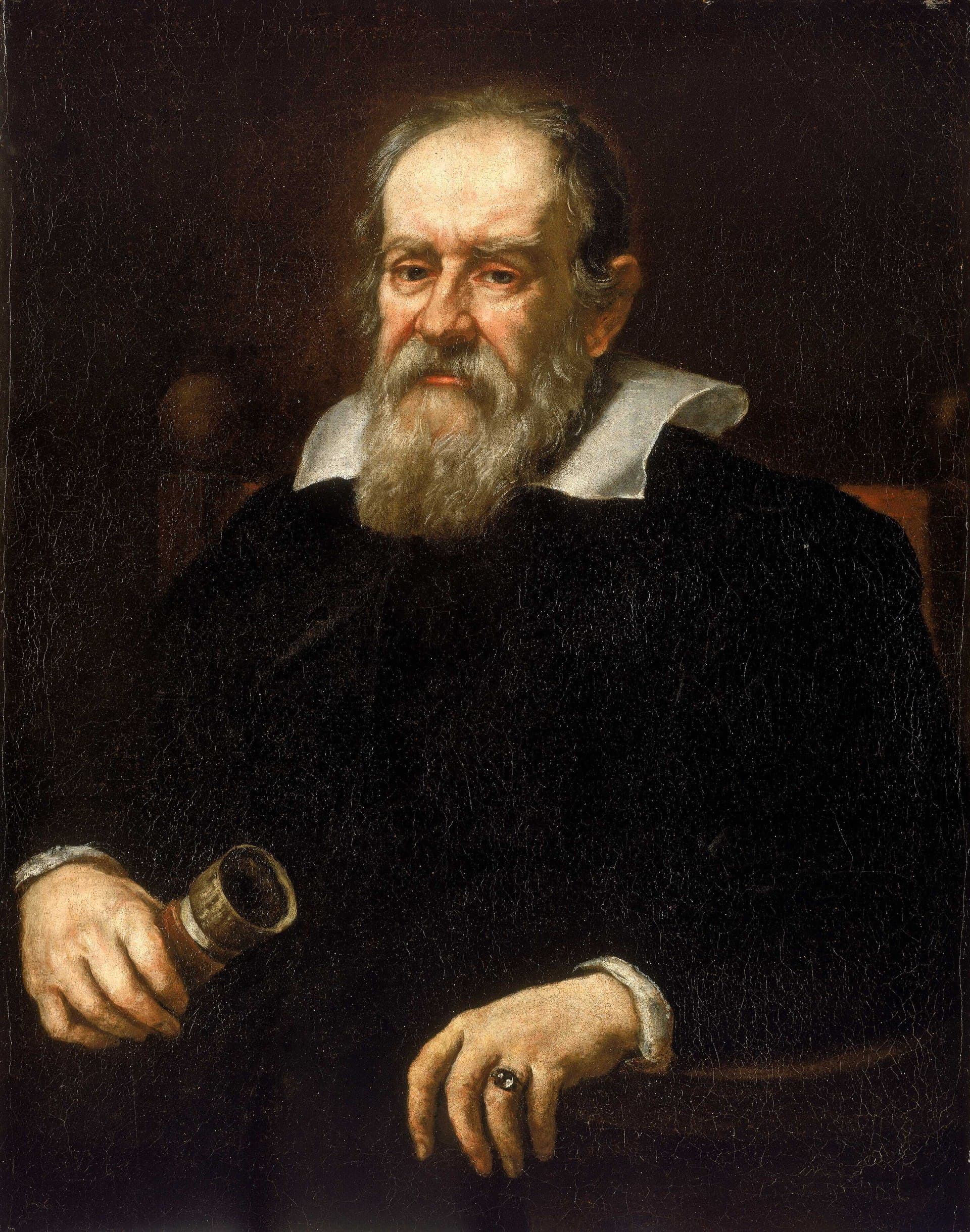
The lute is an instrument of precise mathematical ratios, a truth well understood by the Florentine composer Vincenzo Galilei.
In the autumn of 1581, a seventeen-year-old medical student named Galileo Galilei sat in the cathedral of Pisa, his mind wandering from the liturgy to the slow, rhythmic sweep of a bronze chandelier suspended from the high ceiling. Pushed by stray drafts, the lamp swung in wide arcs, then in smaller ones, as its momentum gradually decayed. Measuring the oscillations against the steady thumping of his own pulse, the youth noticed something that contradicted the intuitive physics of his age: whether the swing was wide or narrow, the time it took to complete a full cycle remained precisely the same. When he returned to his lodgings, he rigged two pendulums of equal length, swinging one in a dramatic sweep and the other in a gentle flutter. They kept perfect time together. This early recognition of isochronism—the property of equal time—was more than a clever observation. It was a crack in the ancient, qualitative universe of Aristotle, where things moved according to their inherent "nature" rather than mathematical laws. For Galileo, who had been deliberately kept away from mathematics by a father who knew that medicine paid far better, it was the first indication of a mind uniquely attuned to the silent geometry of the physical world.
The young man who noticed the swinging lamp was the eldest son of Vincenzo Galilei, an impoverished Florentine nobleman, brilliant lutenist, and musical theorist who had taught his son both the grace of the instrument and a certain intellectual combativeness. Galileo’s early education in the monastery of Vallombrosa had briefly tempted him toward the priesthood, but his father had intervened, enrolling him at the University of Pisa to study medicine. It was a pragmatic choice that failed spectacularily. While supposedly studying Hippocrates and Galen, Galileo accidentally overheard a lecture on geometry delivered by Ostilio Ricci to the pages of the grand-ducal court. Riveted by the elegance of the proofs, Galileo abandoned medicine, convinced his father to let him pursue mathematics, and left the university in 1585 without a degree. Over the next few years, he lived on the margins of Florentine intellectual life, lecturing on the precise dimensions of Dante’s Inferno, designing a hydrostatic balance that brought him his first scholarly notice, and studying disegno at the Accademia delle Arti del Disegno. This training in perspective and light—learned alongside his lifelong friend, the painter Cigoli—would later prove as critical to his scientific breakthroughs as any mathematical formula.
By 1589, Galileo had secured the chair of mathematics at Pisa, a post that paid poorly but offered a stage. It was during this tenure that he began his assault on Peripatetic physics. To the Aristotelians who dominated the universities, the physical world was understood through philosophical deduction: heavy objects must fall faster than light ones because it was in their nature to seek the center of the earth with greater urgency. Galileo chose to test this assertion with ocular demonstration, reportedly using the leaning tower of Pisa to drop bodies of different weights before an audience of skeptical professors and students. He proved that, resistance of the air aside, they fell at the same speed, demolishing the scholastic maxims regarding motion and weight. Yet, while Galileo excelled at proving his opponents wrong, he lacked the temperament to make them allies. His polished, sarcastic rhetoric stung his colleagues, and after he publicly criticized a dredging machine designed by Giovanni de’ Medici, an illegitimate son of the Grand Duke, his position in Pisa became untenable. Hissed at his own lectures, he resigned in 1591, his financial prospects ruined just as his father’s death left him with the sole support of his mother and siblings, including a brother whose musical career required constant, expensive subsidies from Galileo’s pocket.
12 links to entries not yet ingested in the Library.
Salvation came in 1592 with an appointment to the chair of mathematics at the University of Padua, within the tolerant and wealthy borders of the Venetian Republic. Here, Galileo spent eighteen years in what he would later recall as the happiest period of his life. He designed military compasses, patented a horse-powered water pump, and constructed an early air-and-water thermoscope. In Padua, he also fathered three children out of wedlock with Marina Gamba. Because of their illegitimate birth, Galileo deemed his daughters, Virginia and Livia, unmarriageable without ruinous dowries; both were eventually placed in the convent of San Matteo in Arcetri, where Virginia took the name Sister Maria Celeste and became her father’s most devoted correspondent. In the lecture halls of Padua, Galileo's fame grew so great that a hall accommodating two thousand people was required to hold his audiences. Yet, for all his success in mechanics and geometry, his public astronomical teachings remained cautiously Ptolemaic. Though a 1597 letter to Johannes Kepler reveals he had already adopted the heliocentric theory of Copernicus, he kept his views quiet, deterred not by fear of the Church, but by the dread of academic ridicule.
Everything changed in the summer of 1609. Hearing rumors of a Dutch optical toy that made distant objects appear close, Galileo immediately set to work in his Paduan workshop. Without ever seeing the Dutch instrument, he figured out the physics of the lenses, ground his own glass, and constructed a refracting telescope with a threefold magnification, which he soon improved to thirtyfold. On August 25, 1609, he presented an eight-power instrument to the Venetian Senate, who immediately saw its immense military and commercial value for a maritime empire and rewarded Galileo with a lifetime professorship and a doubled salary. But when Galileo turned his tubes of glass and leather toward the night sky, he ceased to be a mere instrument maker and became the explorer of an unsuspected cosmos.
What he saw shattered two thousand years of cosmology. Looking at the Moon on November 30, 1609, he did not see the smooth, translucent, perfect sphere of Aristotelian theology, but a rugged, cratered world of mountains and valleys, whose heights he calculated by the casting of their shadows. When he looked at the Milky Way, the hazy band of light resolved into dense, glittering archipelagoes of stars. Most startling of all, on January 7, 1610, he observed three tiny, bright stars flanking Jupiter in a straight line. Over the succeeding nights, he watched them shift positions, disappear behind the planet, and reemerge. By January 15, he realized he was looking at four moons orbiting Jupiter—bodies that did not circle the Earth. He rushed these discoveries into print in March 1610 in a short, sensational treatise titled Sidereus Nuncius (The Starry Messenger). He named the Jovian moons the "Medicean stars" after Cosimo II de' Medici, Grand Duke of Tuscany, a move of exquisite courtly calculation that secured him the prestigious, highly paid post of Court Mathematician and Philosopher in Florence.
The Starry Messenger made Galileo an international celebrity, but it also drew a target on his back. The existence of Jupiter’s moons proved that the Earth was not the unique center of all celestial motion, while his subsequent observations of the phases of Venus demonstrated that Venus must orbit the Sun. Yet, as Galileo moved to Florence to take up his court post, his discoveries collided with the theological anxieties of Counter-Reformation Europe. In 1614, a Dominican priest named Tommaso Caccini delivered a fiery sermon against Galileo, punning on his name with the biblical verse, "Ye men of Galilee, why stand ye gazing up into heaven?" By 1615, the Roman Inquisition had opened an investigation. The Church’s theological consultors concluded that Copernicanism was philosophically foolish and formally heretical because it contradicted the literal reading of Scripture. In 1616, Galileo was privately admonished by Cardinal Robert Bellarmine and ordered to abandon the Copernican opinion and to cease holding, teaching, or defending it in any way.
For a decade, Galileo remained relatively quiet, working on gravity, projectile motion, and ocean tides. But in 1623, Maffeo Barberini, a highly educated patron of the arts and sciences who had long admired Galileo, was elected Pope Urban VIII. Believing the intellectual climate had softened, Galileo sought and received permission to write a book comparing the Ptolemaic and Copernican systems, provided he treated both as mere mathematical hypotheses and gave them equal weight. The result, published in 1632, was the Dialogue Concerning the Two Chief World Systems. It was a masterpiece of Italian prose, but a disaster of diplomacy. Written in the vernacular rather than scholarly Latin, the dialogue was structured as a debate between Salviati, a brilliant Copernican spokesman; Sagredo, an open-minded layman; and Simplicio, a dogmatic Aristotelian whose name carried an obvious double entendre. To make matters worse, Galileo placed the Pope's own favored arguments regarding the inscrutability of divine omnipotence into the mouth of the foolish Simplicio.
Urban VIII felt personally insulted and politically exposed, especially amidst the theological tensions of the Thirty Years' War. The Pope withdrew his protection, and Galileo, now sixty-nine and in failing health, was summoned to Rome to stand trial before the Inquisition. Found "vehemently suspect of heresy" for having held and taught the Copernican doctrine after the 1616 injunction, Galileo was forced on June 22, 1633, to kneel before the tribunal and formally recant his life’s work, swearing that he "cursed and detested" his past errors.
Condemned to perpetual imprisonment, which the Pope commuted to house arrest, Galileo spent his final years confined to his villa in Arcetri, high in the hills overlooking Florence. It was a period marked by isolation, the devastating death of his daughter Sister Maria Celeste in 1634, and his eventual total blindness. Yet, in the quiet of his confinement, Galileo returned to the physics of his youth. Working in secret, he composed his scientific masterpiece, the Discours Concerning Two New Sciences, which was smuggled out of Italy and published in Protestant Leyden in 1638. In this work, he laid down the principles of kinematics and the strength of materials, describing the mathematical laws of falling bodies and the parabolic trajectories of projectiles. It was the foundation upon which Isaac Newton would build the modern world. Galileo died on January 8, 1642, his body quietly interred in a small chapel in the Basilica of Santa Croce, far from the grand monument his admirers wished to erect. He left behind a world that could no longer look at the sky, or the earth beneath its feet, with the same eyes.