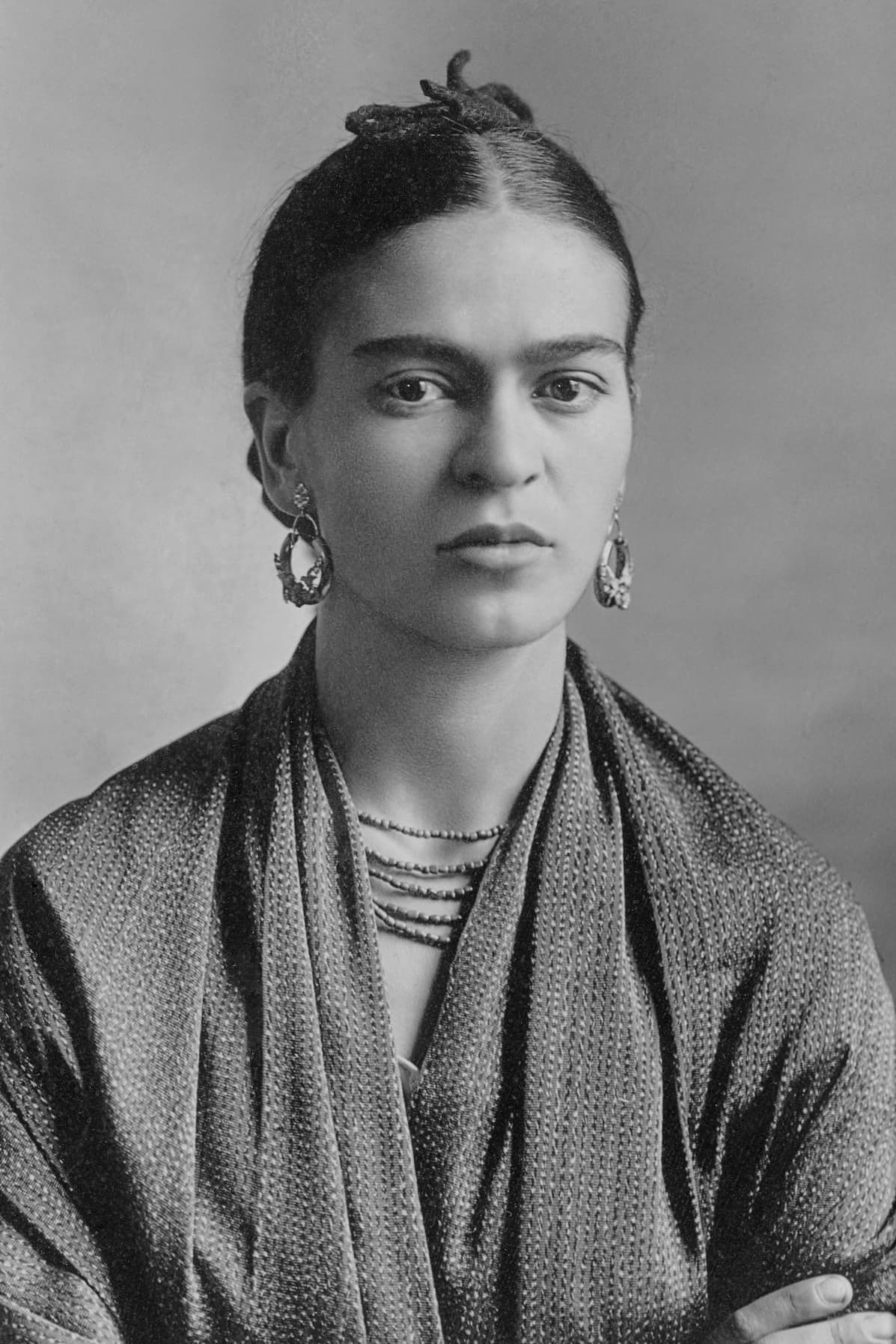
An eighteen-year-old student, once destined for medical school, lay shattered in Coyoacán after a devastating bus accident left her with a lifetime of physical agony.
In September 1925, an eighteen-year-old Mexican girl boarded a wooden bus in Mexico City, her mind set on a future in medicine. She was Magdalena Carmen Frida Kahlo y Calderón, a young woman already intimately acquainted with physical vulnerability, having been left disabled by a childhood bout of polio. She never reached her destination. When the bus collided with a streetcar, a metal handrail pierced her pelvis, fracturing her spine, collarbone, ribs, and pelvis, and shattering her leg. The crash did not kill her, but it permanently dismantled the trajectory of her life. Confined to her bed for three months of agonizing, static recovery, she turned to a childhood interest in drawing to occupy the empty hours. Her mother constructed a specialized easel that allowed her to paint while lying flat on her back, and her father lent her his oil paints. Suspended directly above her face, attached to the canopy of her bed, was a mirror. Confronted daily with her own fractured reflection, she began to paint. "I paint myself because I am often alone," she would later explain, "and I am the subject I know best."
What emerged from that bed of convalescence was not the work of an amateur hobbyist, but a fierce, uncompromising dialogue between the external world and internal agony. Kahlo’s early efforts drew from the structured elegance of Renaissance masters like Botticelli and Bronzino, alongside the sharp, clinical observations of the European avant-garde Neue Sachlichkeit movement. Yet as she healed sufficiently to move through the world again, her gaze shifted inward toward the soil and history of her own country. Following her recovery, she sought out the famous muralist Diego Rivera, whose work she had observed years earlier while he painted a mural in her school auditorium, to ask if her paintings showed enough promise to justify a career. The encounter sparked a tempestuous relationship; the two began a serious courtship and married in 1929. As Mexico underwent a post-revolutionary cultural reclamation—the Mexicayotl movement—Kahlo shed her European stylistic influences. Inspired by a move to Morelos with Rivera, she embraced a naive folk art style, abandoning traditional perspective and weaving together pre-Columbian imagery, Catholic iconography, and the vibrant, flat textures of Mexican popular culture.
This deliberate return to national roots defined her mature work. Rather than painting grand, public murals celebrating historical triumphs as Rivera did, Kahlo worked on a diminutive, intimate scale. She adopted the medium of retablos or votive images—traditional, small paintings on metal sheets used by everyday Mexicans to thank saints for surviving a crisis. For Kahlo, the crisis was life itself. In the early 1930s, while traveling with Rivera in the United States, she distilled her isolation and physical suffering into these small, metallic stages. In Detroit, facing severe health complications from a failed pregnancy and deeply alienated by American capitalist culture, she painted and . These works did not offer the comforting resolution of traditional votive art; instead, they presented a stark, bleeding vocabulary of wounds, anatomical diagrams, and raw maternal grief. While an American newspaper patronizingly described her as the "Wife of the Master Mural Painter" who "Gleefully Dabbles in Works of Art," Kahlo was quietly forging an aesthetic language that was entirely her own, marrying brutal reality with the logic of dreams.
+ 12 further connections to entries not yet ingested
By the late 1930s, Kahlo’s output had reached a fever pitch. A period of separation and subsequent reconciliation with Rivera seemed to unlock an even deeper reservoir of creative energy. Between 1937 and 1938, she produced more paintings than she had during the entirety of her marriage, including masterpieces such as My Nurse and I and What the Water Gave Me. When the high priest of French Surrealism, André Breton, visited Mexico in 1938, he was transfixed by her canvases. He immediately claimed her as one of his own, famously describing her art as "a ribbon around a bomb." Breton facilitated her first solo exhibition at the Julien Levy Gallery in Manhattan later that year. When Kahlo arrived in New York, she was treated as an exotic sensation; her colorful, traditional Mexican Tehuana dresses turned heads on the streets of Manhattan. The exhibition was a triumph. High-society figures and legendary artists like Georgia O'Keeffe attended the opening, and despite the lingering weight of the Great Depression, Kahlo sold half of the paintings on display.
Yet Kahlo remained fiercely protective of her own artistic identity, resisting the European labels thrust upon her. When she traveled to Paris in 1939 for an exhibition organized by Breton, she was quickly disillusioned. She arrived to find her paintings held up in customs, and Breton had not even secured a gallery. Only through the intervention of Marcel Duchamp was the show rescued at the Renou et Colle Gallery. The Parisian art world proved difficult; the gallery refused to show most of her paintings, deeming them too shocking for public viewing, and Breton insisted on displaying her works alongside Mexican market toys, sugar skulls, and pre-Columbian artifacts she regarded as "junk." Still, her genius was recognized by the highest arbiters of European art. Pablo Picasso and Joan Miró embraced her, the fashion designer Elsa Schiaparelli created a dress inspired by her signature style, and the Louvre purchased her self-portrait, The Frame. It was the first work by a Mexican artist ever acquired by the prestigious museum.
Despite these international triumphs, Kahlo’s body was a slow-motion catastrophe. Throughout the 1940s, her physical state steadily deteriorated, demanding dozens of surgeries and keeping her in chronic pain. She returned to Mexico, teaching art at the Escuela Nacional de Pintura, Escultura y Grabado ("La Esmeralda") and helping to found the Seminario de Cultura Mexicana. She continued to paint from her childhood home, La Casa Azul in Coyoacán, translating her physical decline into haunting visual metaphors. In her paintings, she was bound by steel corsets, her flesh pierced by nails, her spine depicted as a cracked, crumbling Ionic column. Her first solo exhibition in her native Mexico did not occur until 1953, only a year before her death at the age of forty-seven. She attended the opening on a stretcher, refusing to let her failing body silence her presence.
When Kahlo died in 1954, she was largely remembered in the wider world as Diego Rivera’s eccentric, tragic wife. But history has a way of correcting its own omissions. Rediscovered in the late 1970s by feminist art historians and political activists, Kahlo’s legacy underwent a massive global resurrection. She became an icon of the feminist movement for her uncompromising, unvarnished depiction of the female experience, infertility, and physical pain. Chicano activists claimed her as a symbol of cultural pride, and the LGBTQ+ community celebrated her fluid identity and defiance of societal norms. Today, her childhood home, La Casa Azul, stands as a museum, a site of pilgrimage for those seeking the source of her singular vision. In death, she achieved a stature that eclipsed many of her contemporaries; her 1940 masterpiece The Dream (The Bed) later set the record for the most expensive work by a female artist ever sold at auction, fetching $54.7 million. Ultimately, Kahlo’s art did not merely document her suffering; it transformed her bed of pain into a sovereign territory where she held absolute dominion over her own identity, leaving behind a legacy that continues to challenge, provoke, and console the world.